

Knowness organises subjects into three levels:
Subject Type → Subject Group → Subject Variant
For example:
GCSE → GCSE Computer Science → GCSE Computer Science (OCR)
1. Subject Types
A subject type describes the type or level of study.
Examples include:
- GCSE: GCSE-level subjects.
- A-Level: A-Level subjects.
- University Tasters: Courses designed to introduce students to university-level subjects.
2. Subject Groups
A subject group brings together the different versions of the same overall subject.
For example, GCSE Computer Science is a subject group.
Opening the subject group shows the variants available within it.
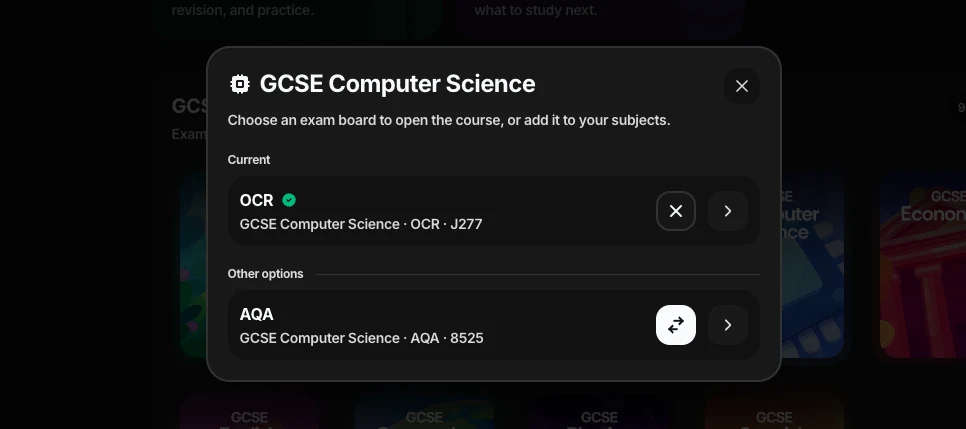
Figure 1. The GCSE Computer Science subject group showing the available subject variants, including OCR and AQA.
3. Subject Variants
A subject variant is a specific version of a subject. For GCSE subjects, variants are commonly based on the exam board specification.
For example, the GCSE Computer Science subject group may contain:
- GCSE Computer Science (AQA)
- GCSE Computer Science (Edexcel)
- GCSE Computer Science (OCR)
This allows you to choose the version that matches the course you are studying.
Variants are not always based on exam boards. Depending on the subject type, they may represent a different qualification route, or another version of the same subject.
Not every subject has multiple variants. If only one version is available, you may be taken directly to that subject.