

General
Biology
The Integumentary System
The integumentary system is the body system that protects the body from external harm and helps regulate body temperature. It includes the skin, hair, and nails.
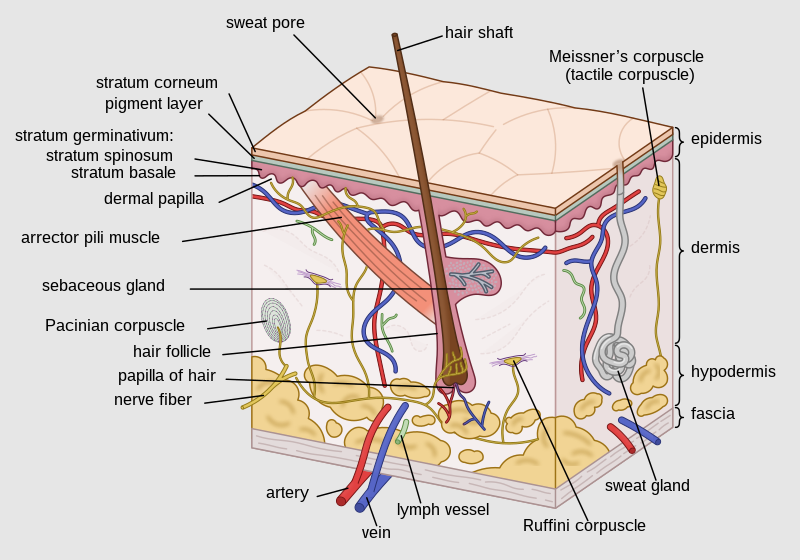
This file is licensed under the Creative Commons Attribution-Share Alike 4.0 International license.
The skin is the largest organA structure made of different tissues working together to perform a specific function. in the body and serves as a barrier to protect the body from external damage. It is made up of three layers: the epidermis, the dermis, and the subcutaneous layer.
The epidermis is the outermost layer and is made up of several layers of cells that are constantly being replaced. The dermis is the middle layer and is made up of connective tissueA group of similar specialised cells working together to perform a function. and contains sweat glands, oil glands, and nerve endings. The subcutaneous layer is the innermost layer and is made up of fat and connective tissue. The skin also helps regulate body temperature and stores water, fat, and vitamin D.
The hair and nails are also part of the integumentary system. Hair is made up of a protein called keratin and is found all over the body, except for the palms of the hands and the soles of the feet.
Hair provides insulation and protection for the head, eyebrows, and eyelashes, and also helps to prevent heat loss from the body. Hair also serves as a way to express identity and personal style. Nails are made up of a protein called keratin and are found on the fingertips and the toes. Nails protect the fingertips and help with grasping objects.
Continue the lesson
This section is available to learners with course access. Continue learning with Knowness to unlock the full explanation, examples, revision tools, and progress tracking.
The remaining lesson content includes further guided explanation, important learning points, and supporting interactive material designed to help you understand and revise this topic.
Unlock this topic to view the full activity, worked examples, common mistakes, and additional revision support.
More content available
Knowness lessons are structured to build understanding step by step. Create an account or upgrade your access to continue from this point.
This preview does not include the hidden lesson text, answers, explanations, or embedded interactions.
Continue learning with Knowness
Sign up to access the full lesson, predicted grades, revision tools, progress tracking, and more.
Create a free account