

General
Biology
The Cell Wall
The cell wallA rigid outer layer that strengthens and supports the cell; made of cellulose in plants and peptidoglycan in bacteria. is a rigid, protective structureThe organisation and order of information in a text. that surrounds the cell membraneA thin, partially permeable barrier surrounding the cell that controls movement of substances in and out. in plant cells. It is a fundamental component of plant cells, and plays a crucial role in maintaining the structural integrity and survival of the cell.
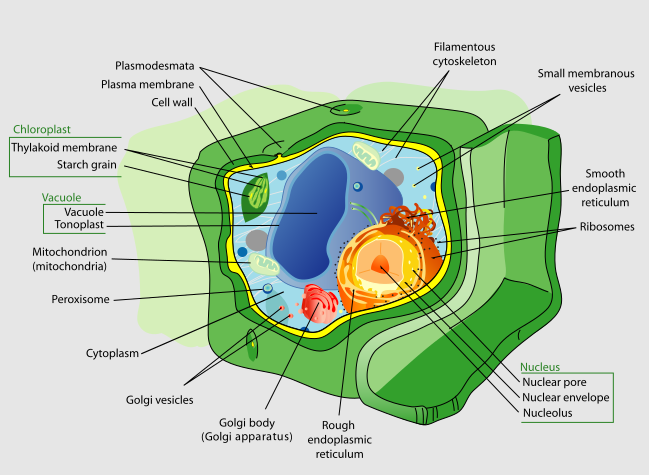
The cell wall is made up of cellulose, which is a complex carbohydrate, and it provides support and protection for the cell. The cell wall is found outside the cell membrane, and it helps to maintain the shape of the cell and to prevent it from bursting under the pressure of the internal contents. This is especially important in plant cells, which are surrounded by a non-living environment and therefore need a strong barrier to protect the cell from the external conditions. The cell wall also provides a barrier against the entry of pathogens and other harmful substances, and it is therefore important for the defense mechanism of the plant.
The cell wall also plays a crucial role in the transport of water and minerals. The cell wall is semi-permeable, which allows the movement of water and dissolved minerals into the cell through the process of osmosisThe movement of water across a partially permeable membrane from a dilute solution to a more concentrated solution.. This is essential for the growth and survival of the plant. Additionally, the cell wall also contains specialized transmembrane proteins known as aquaporins, which facilitate the transport of water across the cell wall.
The cell wall also plays an important role in cell communication and signaling. It contains various signaling molecules and receptors, which allow the plant cell to communicate with its environment and with other cells. Additionally, the cell wall also contains various enzymes, such as cellulose synthase, which are responsible for the synthesisCombining information from more than one text to show comparison. and maintenance of the cell wall.
Continue the lesson
This section is available to learners with course access. Continue learning with Knowness to unlock the full explanation, examples, revision tools, and progress tracking.
The remaining lesson content includes further guided explanation, important learning points, and supporting interactive material designed to help you understand and revise this topic.
Unlock this topic to view the full activity, worked examples, common mistakes, and additional revision support.
More content available
Knowness lessons are structured to build understanding step by step. Create an account or upgrade your access to continue from this point.
This preview does not include the hidden lesson text, answers, explanations, or embedded interactions.
Continue learning with Knowness
Sign up to access the full lesson, predicted grades, revision tools, progress tracking, and more.
Create a free account