

General
Biology
Mutations
A mutation is a change in the sequence of the DNA that can affect the function of the gene. Mutations can be caused by errors during DNA replication or by environmental factors, such as radiation or chemical exposure. Mutations can be classified as point mutations, insertions, deletions, or chromosomal mutations.
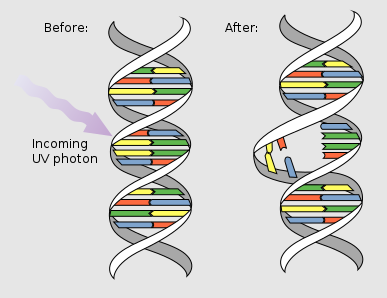
Point mutations are changes in a single base pair in the DNA sequence. Point mutations can cause a change in the amino acid sequence of the protein, and they can affect the function of the protein. Point mutations can be either missense mutations, which change an amino acid but do not alter the function of the protein, or nonsense mutations, which change an amino acid into a stop codon, causing the protein synthesisCombining information from more than one text to show comparison. to be prematurely terminated.
Insertions are the addition of one or more base pairs to the DNA sequence. Insertions can cause a shift in the reading frame of the mRNA, leading to a change in the amino acid sequence of the protein.
Deletions are the removal of one or more base pairs from the DNA sequence. Deletions can also cause a shift in the reading frame of the mRNA, leading to a change in the amino acid sequence of the protein.
Chromosomal mutations are changes in the number or structureThe organisation and order of information in a text. of the chromosomes. Chromosomal mutations can be caused by errors during meiosis, and they can result in changes in the chromosomal complement of the organism. Chromosomal mutations can be either numerical or structural.
Numerical chromosomal mutations are changes in the number of chromosomes in the cell. Numerical chromosomal mutations can be either chromosomal aneuploidies, which are changes in the number of individual chromosomes, or chromosomal polyploidies, which are changes in the number of sets of chromosomes.
Structural chromosomal mutations are changes in the structure of the chromosomes. Structural chromosomal mutations can be either deletions, inversions, translocations, or chromosomal abnormalities.
Mutations can have various effects on the organism, depending on the location and type of the mutation. Some mutations can be beneficial, providing the organism with a new trait or ability that gives it an advantage in its environment. Other mutations can be neutral, having no effect on the function of the gene or the organism. Still, other mutations can be harmful, causing a loss of function or even death of the organism.
Continue the lesson
This section is available to learners with course access. Continue learning with Knowness to unlock the full explanation, examples, revision tools, and progress tracking.
The remaining lesson content includes further guided explanation, important learning points, and supporting interactive material designed to help you understand and revise this topic.
Unlock this topic to view the full activity, worked examples, common mistakes, and additional revision support.
More content available
Knowness lessons are structured to build understanding step by step. Create an account or upgrade your access to continue from this point.
This preview does not include the hidden lesson text, answers, explanations, or embedded interactions.
Continue learning with Knowness
Sign up to access the full lesson, predicted grades, revision tools, progress tracking, and more.
Create a free account