

General
Biology
Cell Division
Cell division is the process by which a parent cell divides into two or more daughter cellsThe two new cells formed after cell division.. There are two main types of cell division: mitosis and meiosis.
Mitosis is the type of cell division that occurs in somatic cells (non-reproductive cells) and results in the production of identical daughter cells with the same number of chromosomes as the parent cell. The main goal of mitosis is to ensure that each daughter cell receives a complete set of chromosomes, which carry the genetic information. The process of mitosis is divided into several stages: interphase, prophase, metaphase, anaphase, and telophase.

During interphase, the cell grows and replicates its DNA. In prophase, the chromosomes condense and become visible. In metaphase, the chromosomes align in the center of the cell. In anaphase, the chromosomes are pulled apart and move to opposite poles of the cell. In telophase, the chromosomes decondense and a new nuclei form in each daughter cell.
Meiosis is a type of cell division that occurs in reproductive cells, such as sperm and egg cells, that results in the production of haploid cells (cells with half the number of chromosomes as the parent cell). The main goal of meiosis is to generate genetic diversity by shuffling and recombining the genetic information. The process of meiosis is also divided into several stages, which include: interphase, prophase I, metaphase I, anaphase I, telophase I, prophase II, metaphase II, anaphase II, and telophase II.
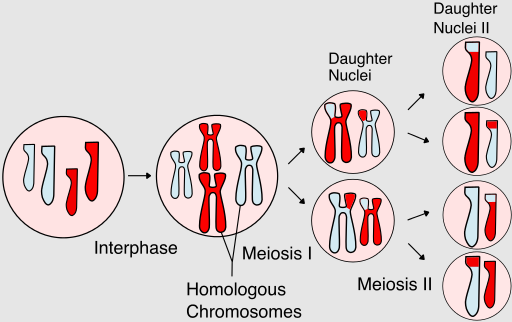
This file is licensed under the Creative Commons Attribution-Share Alike 4.0 International license.
During meiosis, the cell goes through two consecutive rounds of cell division, resulting in four daughter cells with half the number of chromosomes as the parent cell. In prophase I, the chromosomes replicate and become visible. During metaphase I, the chromosomes align in the center of the cell, and then in anaphase I, they are pulled apart and move to opposite poles of the cell. In telophase I, the chromosomes decondense, and the cell divides to form two daughter cells. The second round of cell division is similar to mitosis, but it starts with the already halved number of chromosomes. In prophase II, the chromosomes condense and align in the center of the cell. In anaphase II, the chromosomes are pulled apart and move to opposite poles of the cell. In telophase II, the chromosomes decondense and new nuclei form in each daughter cell.
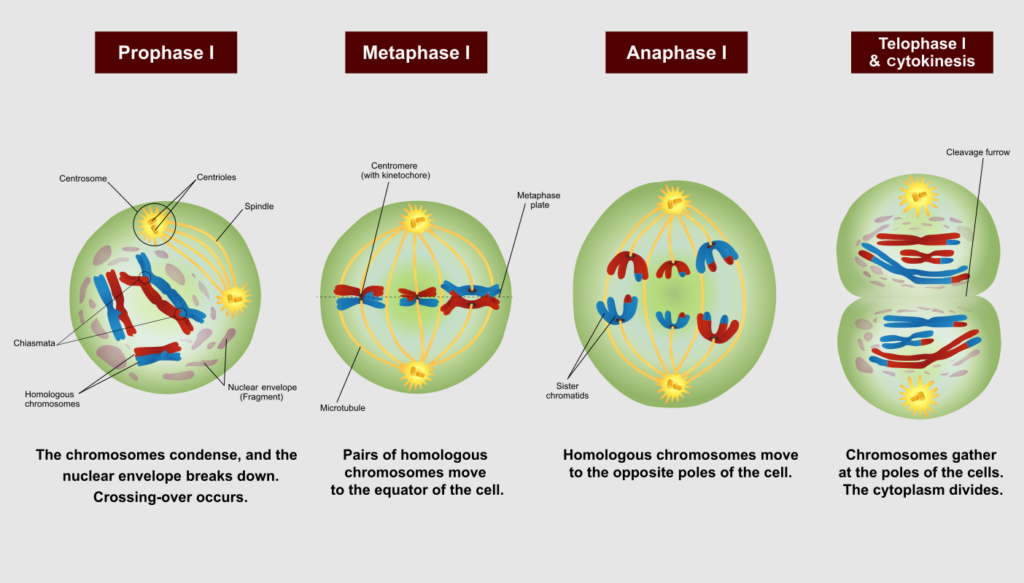
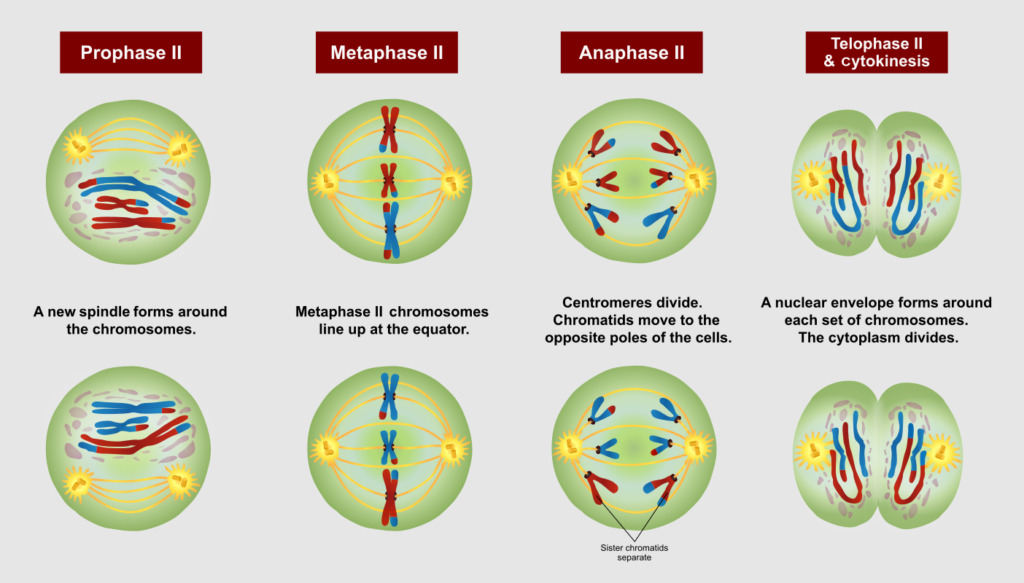
This file is licensed under the Creative Commons Attribution-Share Alike 4.0 International license.
Continue the lesson
This section is available to learners with course access. Continue learning with Knowness to unlock the full explanation, examples, revision tools, and progress tracking.
The remaining lesson content includes further guided explanation, important learning points, and supporting interactive material designed to help you understand and revise this topic.
Unlock this topic to view the full activity, worked examples, common mistakes, and additional revision support.
More content available
Knowness lessons are structured to build understanding step by step. Create an account or upgrade your access to continue from this point.
This preview does not include the hidden lesson text, answers, explanations, or embedded interactions.
Continue learning with Knowness
Sign up to access the full lesson, predicted grades, revision tools, progress tracking, and more.
Create a free account