

General
Biology
The Circulatory System
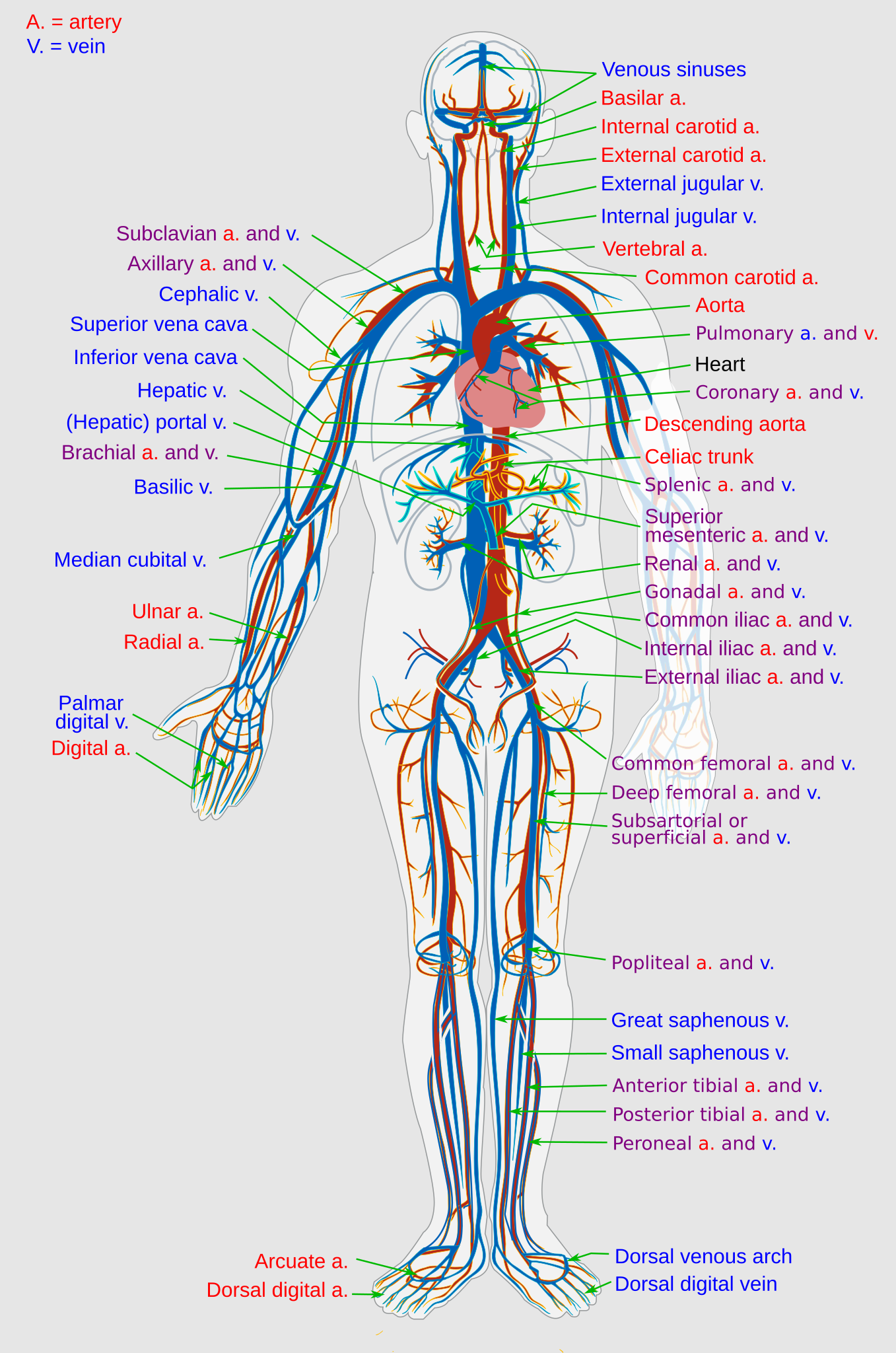
The circulatory system is the body system that transports blood, oxygen, nutrients, and hormones throughout the body. It includes the heart, blood vessels, and blood.
The heart is a muscular organA structure made of different tissues working together to perform a specific function. located in the chest that pumps blood throughout the body. The heart has four chambers: the left and right atria, and the left and right ventricles. The atria receive blood from the body and pump it into the ventricles. The ventricles pump blood out of the heart and into the body. The heart has its own electrical conduction system that coordinates the contraction of the heart muscles and ensures that blood is pumped efficiently.
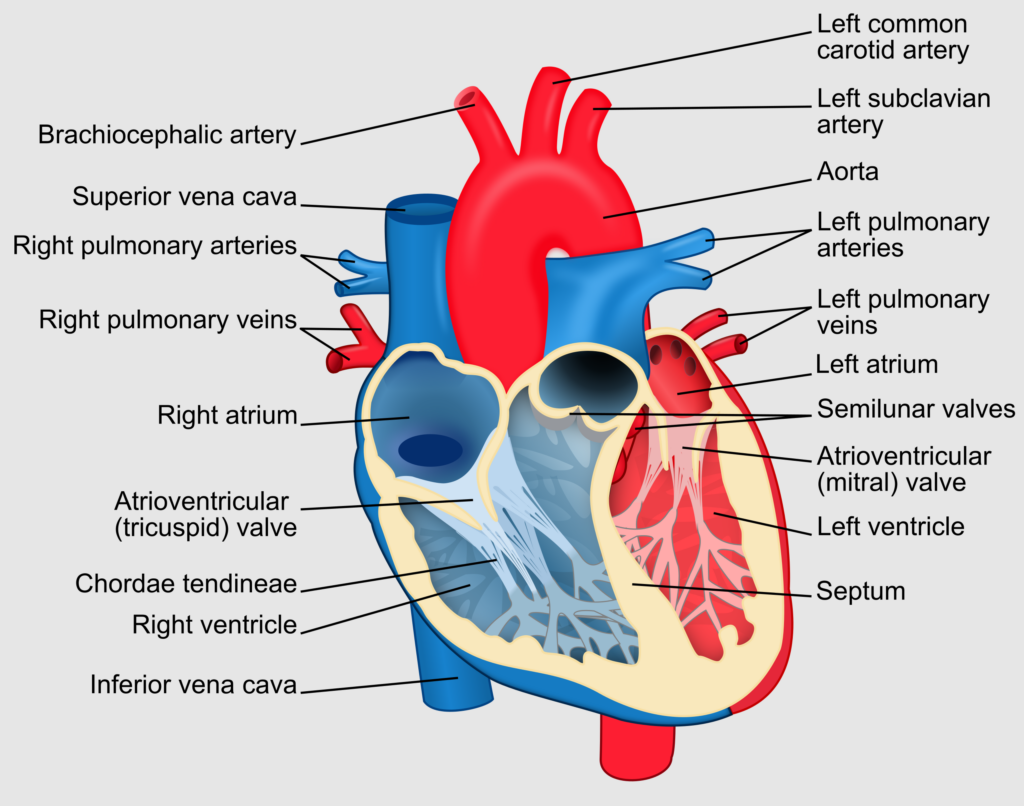
This file is licensed under the Creative Commons Attribution-Share Alike 3.0 Unported license.
The blood vessels are tubes that transport blood throughout the body. There are three main types of blood vessels: arteries, veins, and capillaries. Arteries carry oxygenated blood away from the heart to the body's tissues. Veins carry deoxygenated blood back to the heart from the body's tissues. Capillaries are small, thin-walled blood vessels that allow exchange of gases, nutrients, and waste products between the blood and the body's tissues.
The blood is a fluid that transports oxygen, nutrients, hormones, and waste products throughout the body. Blood is made up of red and white blood cells, platelets, and plasma. Red blood cells contain the protein hemoglobin, which binds to oxygen and transports it to the body's tissues. White blood cells are part of the immune system and help defend the body against infection. Platelets are responsible for blood clotting. Plasma is the liquid portion of the blood and contains dissolved substances such as glucose, electrolytes, and hormones.
Continue the lesson
This section is available to learners with course access. Continue learning with Knowness to unlock the full explanation, examples, revision tools, and progress tracking.
The remaining lesson content includes further guided explanation, important learning points, and supporting interactive material designed to help you understand and revise this topic.
Unlock this topic to view the full activity, worked examples, common mistakes, and additional revision support.
More content available
Knowness lessons are structured to build understanding step by step. Create an account or upgrade your access to continue from this point.
This preview does not include the hidden lesson text, answers, explanations, or embedded interactions.
Continue learning with Knowness
Sign up to access the full lesson, predicted grades, revision tools, progress tracking, and more.
Create a free account