

General
Biology
The Endocrine System
The endocrine system is the body system that produces and secretes hormones. Hormones are chemical messengers that are produced by glands and are released into the bloodstream to regulate various body functions. The endocrine system includes the pituitary gland, thyroid gland, parathyroid gland, adrenal gland, pancreas, and gonads (testes in males and ovaries in females).
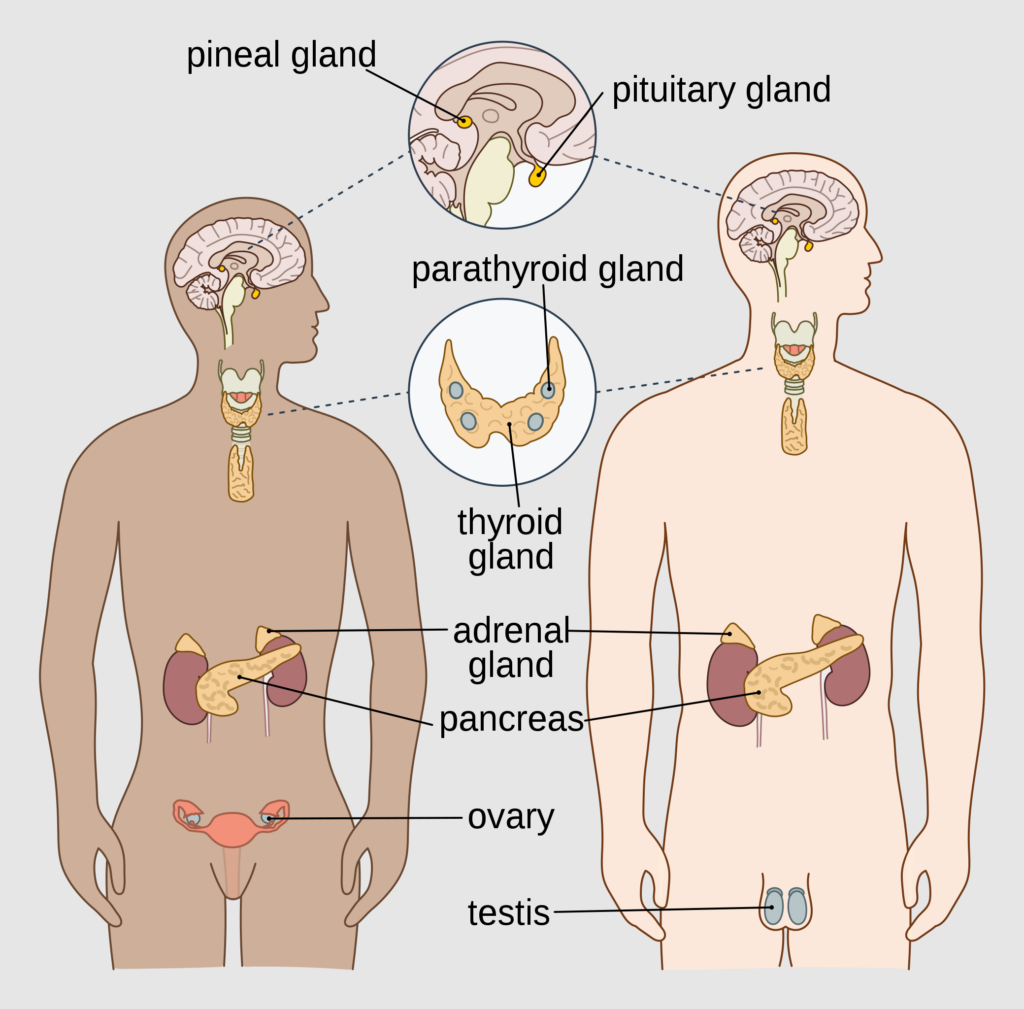
This file is licensed under the Creative Commons Attribution-Share Alike 4.0 International license.
The pituitary gland is located at the base of the brain and is responsible for producing hormones that regulate growth, metabolismChemical reactions within a cell allowing microorganisms to maintain themselves and multiply., and the functioning of other endocrine glands.
The thyroid gland is located in the neck and is responsible for producing hormones that regulate metabolism.
The parathyroid gland is located near the thyroid gland and is responsible for regulating the body's calcium levels.
The adrenal gland is located on top of the kidneys and is responsible for producing hormones that regulate stress responses and metabolism.
The pancreas is located in the abdomen and is responsible for producing hormones that regulate blood sugar levels.
The gonads are responsible for producing hormones that regulate sexual development and function.
Continue the lesson
This section is available to learners with course access. Continue learning with Knowness to unlock the full explanation, examples, revision tools, and progress tracking.
The remaining lesson content includes further guided explanation, important learning points, and supporting interactive material designed to help you understand and revise this topic.
Unlock this topic to view the full activity, worked examples, common mistakes, and additional revision support.
More content available
Knowness lessons are structured to build understanding step by step. Create an account or upgrade your access to continue from this point.
This preview does not include the hidden lesson text, answers, explanations, or embedded interactions.
Continue learning with Knowness
Sign up to access the full lesson, predicted grades, revision tools, progress tracking, and more.
Create a free account