

University Taster
Chemistry – University Taster
6.3 Chromatography
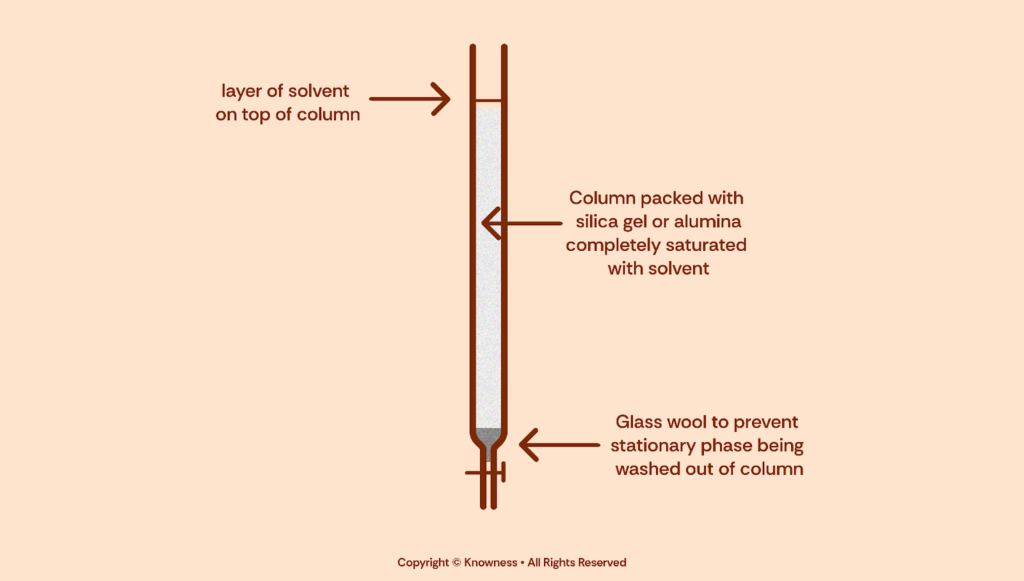
ChromatographyThe separation of compounds using a stationary and mobile phase. is another common separation technique based on the interaction of molecules with the solvent while running through a column commonly filled with silica (very fine silicon dioxide).
The Concept of Chromatography
Chromatography is both a characterisation and a separation technique. It is used to separate mixtures into its constituent compounds. This can be used to purify and extract a particular compound of interest from a mixture, or to identify the different components that make up a mixture.
In chromatographies there is a mobile phase and a stationary phase. The mixture is passed through the stationary phase dissolved in the mobile phase. The different compounds in the mixture have different solubilities in the mobile phase and will adhere to the stationary phase by different amounts. These differences cause each compound in the mixture to travel at different speeds as they move through the stationary phase. This results in the mixture separating over time.
This is how the thin layer chromatography (TLC), which you are probably already familiar with, also works. In this taster course, we will introduce you to column chromatography, a technique you will gain proficiency in as part of a Chemistry degree.
Continue the lesson
This section is available to learners with course access. Continue learning with Knowness to unlock the full explanation, examples, revision tools, and progress tracking.
The remaining lesson content includes further guided explanation, important learning points, and supporting interactive material designed to help you understand and revise this topic.
Unlock this topic to view the full activity, worked examples, common mistakes, and additional revision support.
More content available
Knowness lessons are structured to build understanding step by step. Create an account or upgrade your access to continue from this point.
This preview does not include the hidden lesson text, answers, explanations, or embedded interactions.
Continue learning with Knowness
Sign up to access the full lesson, predicted grades, revision tools, progress tracking, and more.
Create a free account