

University Taster
Chemistry – University Taster
Now that you have a better idea of how electrons behave in atoms, what orbitals are, and how electrons occupy them we can begin to look at what happens when atoms interact with each to form molecules and chemical bonds.
Types of Bonds
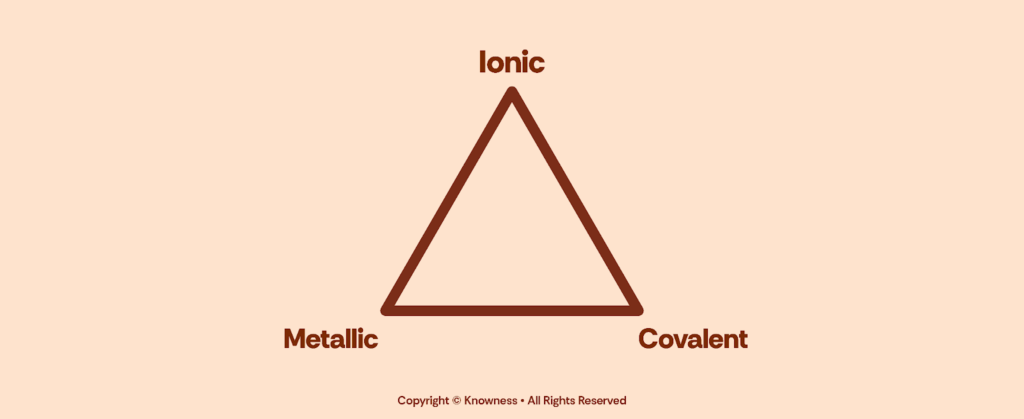
You will have previously encountered the Van Arkel–Ketelaar triangle, which compares the three main types of bonding: covalent, ionic and metallic. What dictates which bonding type will be adopted is the electronegativity of the atoms in the bond. Electronegativity is the ability of an atom to attract electrons.
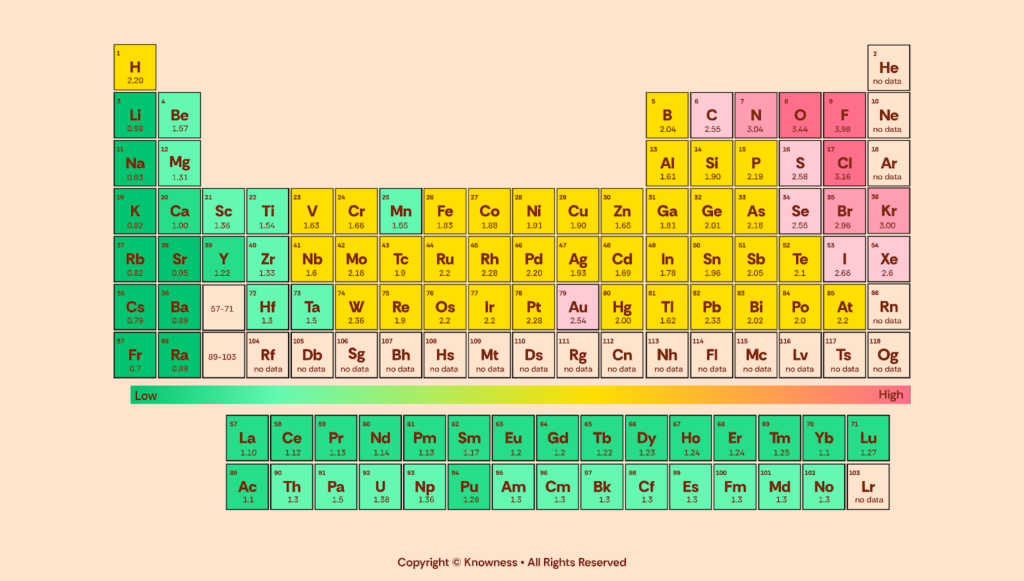
Elements on the bottom-left side of the periodic table are less electronegative or more electropositive, meaning they very weakly attract the electrons of other atoms towards themselves, while they very easily give up their own electrons. Conversely, elements towards the top-right of the periodic table are more electronegative; strongly attracting electrons from other atoms and strongly withholding their own electrons.
Continue the lesson
This section is available to learners with course access. Continue learning with Knowness to unlock the full explanation, examples, revision tools, and progress tracking.
The remaining lesson content includes further guided explanation, important learning points, and supporting interactive material designed to help you understand and revise this topic.
Unlock this topic to view the full activity, worked examples, common mistakes, and additional revision support.
More content available
Knowness lessons are structured to build understanding step by step. Create an account or upgrade your access to continue from this point.
This preview does not include the hidden lesson text, answers, explanations, or embedded interactions.
Continue learning with Knowness
Sign up to access the full lesson, predicted grades, revision tools, progress tracking, and more.
Create a free account