

University Taster
Chemistry – University Taster
4.1 Transition Metal Complexes
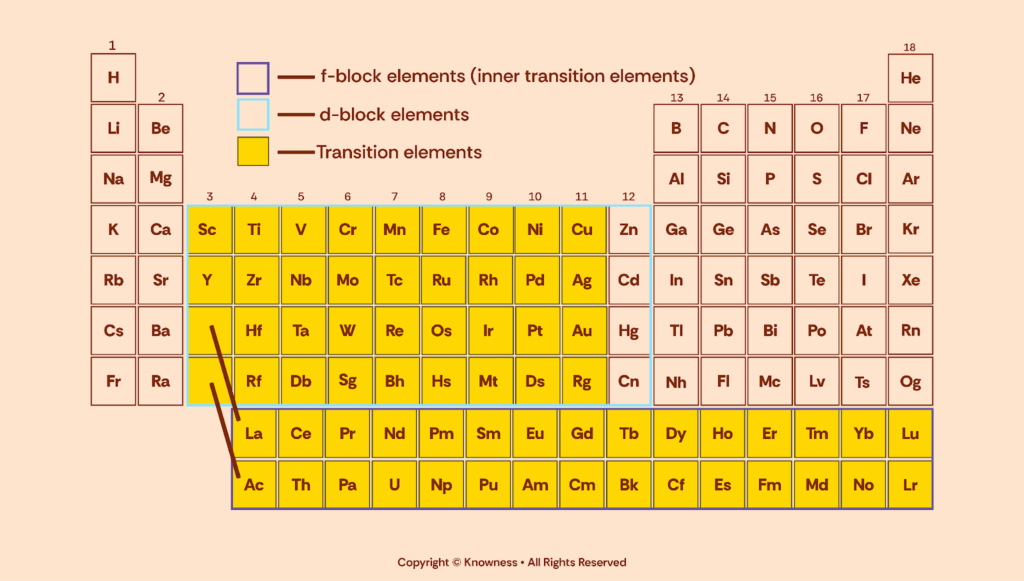
Transition metalsGet their name from the fact that they sit in the d-block in between the highly reactive s-block and less reactive p-block. refers to all of the d-block and f-block metals in the periodic table. An interesting characteristic of such metals is that they like to be surrounded by other molecules to form clusters which are called complexesAre combinations of a metal center and ligands. They are denoted by the use of square brackets [ ]. The central metal atom is always named first. This is sometimes followed by the ligands. Outside the square brackets any counterions or the charge of the complex is listed.. This lesson will help you understand how transition metals are complexed and what effect this has on their electronic structure.
Transition Metal Complexes
Transition metal complexes, also known as coordination complexes, are compounds that contain atoms and/or molecules arranged around a central positive metal ion.
Analogy
Complexes can be seen as a collection of ‘lego’ pieces, The metal center is the base plate on which ligands can be assembled together from smaller parts, which can be easily replaced by different parts or completely disassembled.
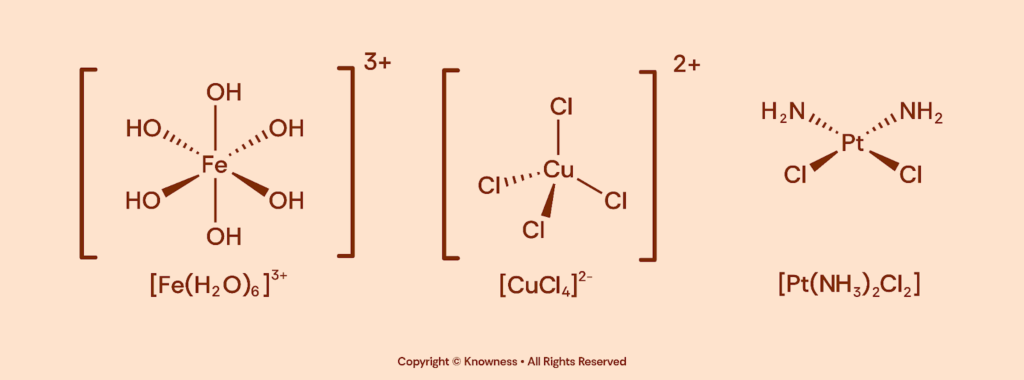
In the diagram above, you can see how different transition metal complexes have been made from different metal centres surrounded by different groups, including combinations of different groups. This allows for the fine-tuning of the properties of transition metal complexes, making them very useful for catalysis and other industrial applications.
Continue the lesson
This section is available to learners with course access. Continue learning with Knowness to unlock the full explanation, examples, revision tools, and progress tracking.
The remaining lesson content includes further guided explanation, important learning points, and supporting interactive material designed to help you understand and revise this topic.
Unlock this topic to view the full activity, worked examples, common mistakes, and additional revision support.
More content available
Knowness lessons are structured to build understanding step by step. Create an account or upgrade your access to continue from this point.
This preview does not include the hidden lesson text, answers, explanations, or embedded interactions.
Continue learning with Knowness
Sign up to access the full lesson, predicted grades, revision tools, progress tracking, and more.
Create a free account