

University Taster
Chemistry – University Taster
3.1 Functional Groups
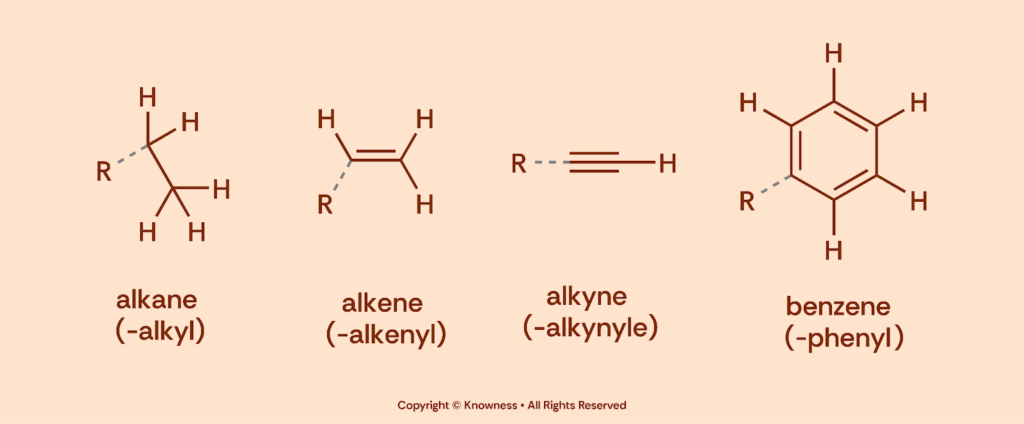
When organic chemists talk about molecules and the chemistry of molecules they often refer to functional groupsAny group of atoms in a molecule that causes the molecule's characteristic chemical reactions. The same functional group will undergo the same or similar chemical reactions regardless of the rest of the molecule's composition.. This lesson will give you a basic understanding of different functional groups and their reactivity, allowing you to both navigate the field and begin thinking and speaking like an organic chemist.
Functional Groups
Now that you have developed an understanding of bonding in atoms, in particular covalent bonding, and have also learned about electronegativity, we can begin to understand how organic chemists view different atoms and atom groups within molecules and how they know what their reactivity and properties might be.
Different atoms and groups of atoms have their own characteristic properties regardless of the molecule they are part of. These atoms and atom groups are called functional groups. Understanding what the different functional groups are and how they behave is crucial as it allows us to design synthetic pathways to create and modify molecules for useful applications.
Continue the lesson
This section is available to learners with course access. Continue learning with Knowness to unlock the full explanation, examples, revision tools, and progress tracking.
The remaining lesson content includes further guided explanation, important learning points, and supporting interactive material designed to help you understand and revise this topic.
Unlock this topic to view the full activity, worked examples, common mistakes, and additional revision support.
More content available
Knowness lessons are structured to build understanding step by step. Create an account or upgrade your access to continue from this point.
This preview does not include the hidden lesson text, answers, explanations, or embedded interactions.
Continue learning with Knowness
Sign up to access the full lesson, predicted grades, revision tools, progress tracking, and more.
Create a free account