

GCSE
Computer Science
-
Introduction to GCSE Computer Science -
1.1 Systems Architecture -
1.2 Memory and Storage -
1.3 Computer Networks, Connections and Protocols -
1.4 Network Security -
1.5 Systems Software -
1.6 Ethical, Legal, Cultural and Environmental Impacts of Digital Technology -
2.1 Algorithms -
2.2 Programming Fundamentals -
2.3 Producing Robust Programs -
2.4 Boolean Logic -
2.5 Programming Languages and Integrated Development Environments
1. Computer Systems
2.1.1 Computational Thinking
In this lesson, we will explore the key principles of computational thinking, including abstraction, decomposition, and algorithmic thinking. Understanding these principles is essential for problem-solving and defining solutions.
Abstraction
Abstraction is a technique used in computational thinking to simplify complex problems by focusing on the most important aspects while ignoring unnecessary details. The goal is to create a general idea of the problem and how to solve it, which is called a model.
Example
The London Tube Map is a great example of abstraction in computational thinking. Instead of displaying the actual geographical locations and distances between stations, the map simplifies the layout by representing stations as evenly spaced points connected by straight lines.

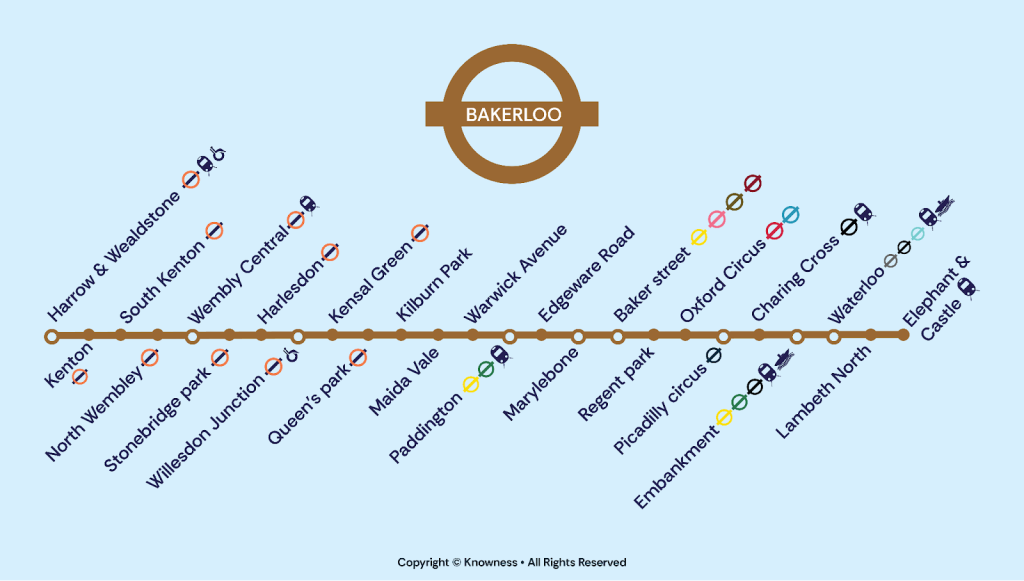
It removes unnecessary details like real-world distances, topographical features, and street layouts, focusing only on essential information: station names, line connections, and transfer points.
By abstracting the complexity of London’s geography, the Tube Map makes it easier for passengers to navigate the transport system efficiently without being overwhelmed by unnecessary details.
Continue the lesson
This section is available to learners with course access. Continue learning with Knowness to unlock the full explanation, examples, revision tools, and progress tracking.
The remaining lesson content includes further guided explanation, important learning points, and supporting interactive material designed to help you understand and revise this topic.
Unlock this topic to view the full activity, worked examples, common mistakes, and additional revision support.
More content available
Knowness lessons are structured to build understanding step by step. Create an account or upgrade your access to continue from this point.
This preview does not include the hidden lesson text, answers, explanations, or embedded interactions.
Continue learning with Knowness
Sign up to access the full lesson, predicted grades, revision tools, progress tracking, and more.
Create a free accountAbstraction
- Abstraction simplifies a problem by removing unnecessary details and focusing only on the important features.
- It helps solve problems by creating a general model that can be reused across similar situations.
Decomposition
- Decomposition breaks down complex problems into smaller, more manageable parts.
- This approach helps in understanding and solving each part independently and efficiently.
- The steps in decomposition include:
- Identify the problem
- Break it into steps or parts
- Examine each part in detail
- Design steps (algorithms) for each part
- Refine steps for clarity
- Use diagrams or flowcharts
Algorithmic Thinking
- Algorithmic thinking is the ability to design logical, step-by-step processes (algorithms) to solve problems.
- It allows you to automate problem-solving and create replicable solutions.
- Cognitive skills of algorithmic thinking include:
- Decomposition: Breaking problems into sub-problems.
- Pattern Recognition: Identifying similarities to simplify complex tasks.