

GCSE
Computer Science
-
Introduction to GCSE Computer Science -
1.1 Systems Architecture -
1.2 Memory and Storage -
1.3 Computer Networks, Connections and Protocols -
1.4 Network Security -
1.5 Systems Software -
1.6 Ethical, Legal, Cultural and Environmental Impacts of Digital Technology -
2.1 Algorithms -
2.2 Programming Fundamentals -
2.3 Producing Robust Programs -
2.4 Boolean Logic -
2.5 Programming Languages and Integrated Development Environments
1. Computer Systems
1.3.2 Roles of Computers in Network Types
In this lesson, we will explore how computers function in networks. We will examine client-server networks, which offer centralised control, and peer-to-peer networks, which are simpler but harder to manage as they grow. In a network, computers can serve different roles based on their configurations: client-server and peer-to-peer.
Client-Server Network
In a client-server network, one or more powerful computers (servers) provide services to multiple client computers.
- Servers manage resources, store data, and respond to client requests for services.
- Clients are devices or computers that access and use the services provided by the servers.
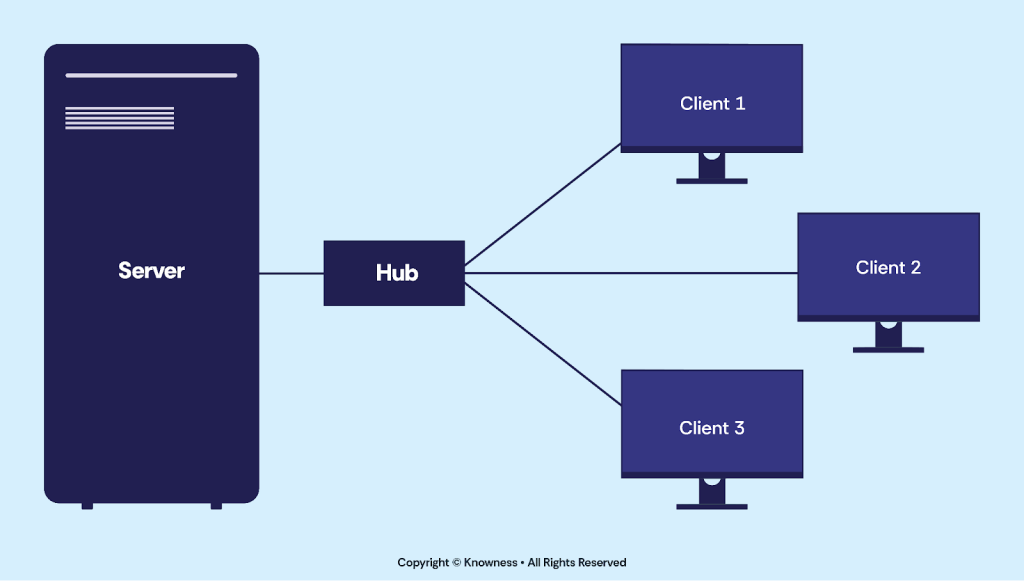
Client-server networks are commonly used in business and on the internet. They allow for centralised management and control, making it easier to ensure data security and system integrity.
| Advantages | Disadvantages |
|---|---|
| Centralised Control: Resources and data are managed centrally, making it easier to enforce security, updates, and backups. | Cost: Setting up and maintaining servers can be expensive, requiring investment in hardware, software, and IT staff. |
| Scalability: Client-server networks can easily accommodate more clients as the network grows. | Single Point of Failure: If the server fails, the entire network can be disrupted, affecting all clients. |
| Efficient Resource Management: Servers can provide high-performance hardware and specialised software, improving the efficiency of resource use. | Complexity: Managing a client-server network can be complex, requiring specialised knowledge and skills. |
| Reliability: Central servers often have redundancy measures, enhancing the reliability and availability of services. | Dependence on the Server: Clients rely on the server for access to resources, so any server issues can impact productivity. |
Continue the lesson
This section is available to learners with course access. Continue learning with Knowness to unlock the full explanation, examples, revision tools, and progress tracking.
The remaining lesson content includes further guided explanation, important learning points, and supporting interactive material designed to help you understand and revise this topic.
Unlock this topic to view the full activity, worked examples, common mistakes, and additional revision support.
More content available
Knowness lessons are structured to build understanding step by step. Create an account or upgrade your access to continue from this point.
This preview does not include the hidden lesson text, answers, explanations, or embedded interactions.
Continue learning with Knowness
Sign up to access the full lesson, predicted grades, revision tools, progress tracking, and more.
Create a free accountClient-Server Network
- In a client-server network, powerful servers provide services to client computers.
- Servers manage resources, data, and services centrally, while clients request access to these services.
- Client-server networks are common in businesses and the internet due to centralised control.
- Advantages of client-server networks include centralised control, scalability, efficient resource management, and reliability.
- Disadvantages include high cost, dependence on the server, complexity, and risk of single point of failure.
Peer-to-Peer Network
- In a peer-to-peer network, all computers are equal and can act as both clients and servers.
- There is no central server; resources are shared directly between devices.
- Peer-to-peer networks are suited to small, decentralised environments like home networks.
- Advantages include cost-effectiveness, simplicity, direct sharing, and no central point of failure.
- Disadvantages include security risks, limited scalability, inconsistent performance, and difficulty managing as the network grows.