

University Taster
Archaeology – University Taster
2.2 Excavation and Stratigraphy
This lesson briefly introduces excavationThe systematic process of uncovering archaeological remains through digging and recording. and stratigraphyThe analysis of soil layers (strata) at archaeological sites to understand the chronological sequence of human activity. - two integral elements of archaeological research. Both of these will be referenced in every other module, and understanding their role and value provides the foundation for all of our understanding.
Excavation
Every day we are surrounded by the echoes of the past. Ancient heritage sites, Victorian railway stations, and motorways that follow Roman roads are all pertinent examples in Britain. So much more than that, however, lies just beneath the ground. Archaeologists access this hidden history by carrying out direct excavation. Module 3. Archaeological Fieldwork will explain how this works in depth, but the fundamental is to reveal the remnants of history using spades, mattocks, and trowels. The footprint of prehistoric houses, the bones of dead livestock, and the scattered cast-offs from industry can all be revealed to demonstrate how people lived, the purpose of different landscapes, and the broad societal and cultural links throughout the world.
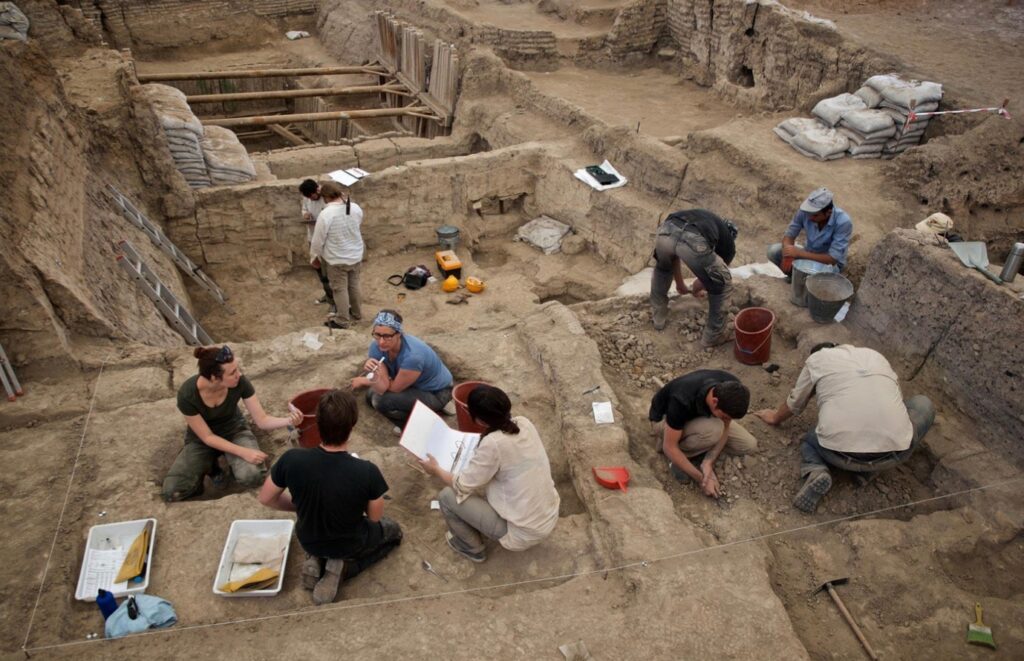
By carefully excavating through different contexts and features, archaeologists can painstakingly record the past while losing as little evidence as possible. The careful and exhaustive nature of the excavation is integral as the process is inherently destructive - once the ground has been removed to reveal an ancient featureA non-portable element of an archaeological site, such as a wall, ditch, or hearth., it cannot be returned and the information cannot be gained again. This becomes all the more important as stratigraphy can be enormously complex.
Continue the lesson
This section is available to learners with course access. Continue learning with Knowness to unlock the full explanation, examples, revision tools, and progress tracking.
The remaining lesson content includes further guided explanation, important learning points, and supporting interactive material designed to help you understand and revise this topic.
Unlock this topic to view the full activity, worked examples, common mistakes, and additional revision support.
More content available
Knowness lessons are structured to build understanding step by step. Create an account or upgrade your access to continue from this point.
This preview does not include the hidden lesson text, answers, explanations, or embedded interactions.
Continue learning with Knowness
Sign up to access the full lesson, predicted grades, revision tools, progress tracking, and more.
Create a free account