

GCSE
Physics
-
Introduction to GCSE Physics (AQA) Coming soon
-
1.1 Energy Stores, Transfers and Power
-
1.2 Conservation and Dissipation of Energy Coming soon
-
1.3 National and Global Energy Resources Coming soon
-
2.1 Current, Potential Difference and Resistance Coming soon
-
2.2 Series and Parallel Circuits Coming soon
-
2.3 Domestic Uses and Safety Coming soon
-
2.4 Energy Transfers Coming soon
-
2.5 Static Electricity Coming soon
-
3.1 Changes of State and the Particle Model Coming soon
-
3.2 Internal Energy and Energy Transfers Coming soon
-
3.3 Particle Model and Pressure Coming soon
-
4.1 Atoms and Isotopes Coming soon
-
4.2 Atoms and Nuclear Radiation Coming soon
-
4.3 Hazards and Uses of Radioactive Emissions and of Background Radiation Coming soon
-
4.4 Nuclear Fission and Fusion Coming soon
-
5.1 Forces and their Interactions Coming soon
-
5.2 Work Done and Energy Transfer Coming soon
-
5.3 Forces and Elasticity Coming soon
-
5.4 Moments, Levers and Gears Coming soon
-
5.5 Pressure and Pressure Differences in Fluids Coming soon
-
5.6 Forces and Motion Coming soon
-
5.6.1 Describing Motion Along a Line
-
5.6.2 Distance and Displacement
-
5.6.3 Speed
-
5.6.4 Velocity
-
5.6.5 The Distance–Time Relationship
-
5.6.6 Acceleration
-
5.6.7 Forces, Accelerations and Newton's Laws of Motion
-
5.6.8 Newton's First Law
-
5.6.9 Newton's Second Law
-
5.6.10 Newton's Third Law
-
5.6.11 Forces and Braking
-
5.6.12 Stopping Distance
-
5.6.13 Reaction Time
-
5.6.14 Factors Affecting Braking Distance
-
5.6.1 Describing Motion Along a Line
-
5.7 Momentum [HT] Coming soon
-
6.1 Waves in Air, Fluids and Solids Coming soon
-
6.2 Electromagnetic Waves Coming soon
-
6.3 Black Body Radiation Coming soon
-
7.1 Permanent and Induced Magnetism, Magnetic Forces and Fields Coming soon
-
7.2 The Motor Effect Coming soon
-
7.3 Induced Potential, Transformers and the National Grid [HT] Coming soon
-
8.1 Solar System; Stability of Orbital Motions; Satellites Coming soon
-
8.2 Red-Shift Coming soon
-
9.1 Required Practicals Coming soon
-
9.1.1 Required Practical Activity 1
-
9.1.2 Required Practical Activity 2
-
9.1.3 Required Practical Activity 3
-
9.1.4 Required Practical Activity 4
-
9.1.5 Required Practical Activity 5
-
9.1.6 Required Practical Activity 6
-
9.1.7 Required Practical Activity 7
-
9.1.8 Required Practical Activity 8
-
9.1.9 Required Practical Activity 9
-
9.1.10 Required Practical Activity 10
-
9.1.1 Required Practical Activity 1
1. Energy
7.3.1 Induced Potential HT
In this lesson, we will explore the concept of induced potential, the generator effect, and how factors influence the magnitude and direction of the induced potential difference and current.
The Generator Effect
The generator effect refers to the induction of a potential difference and the subsequent flow of current when a conductor moves relative to a magnetic field or when there is a change in the magnetic field around a conductor.
This effect forms the basis of electrical generators and other devices that convert mechanical energy into electrical energy.
Factors Affecting the Direction of Induced Potential Difference and Current
The induced current generates a magnetic field that opposes the original change.
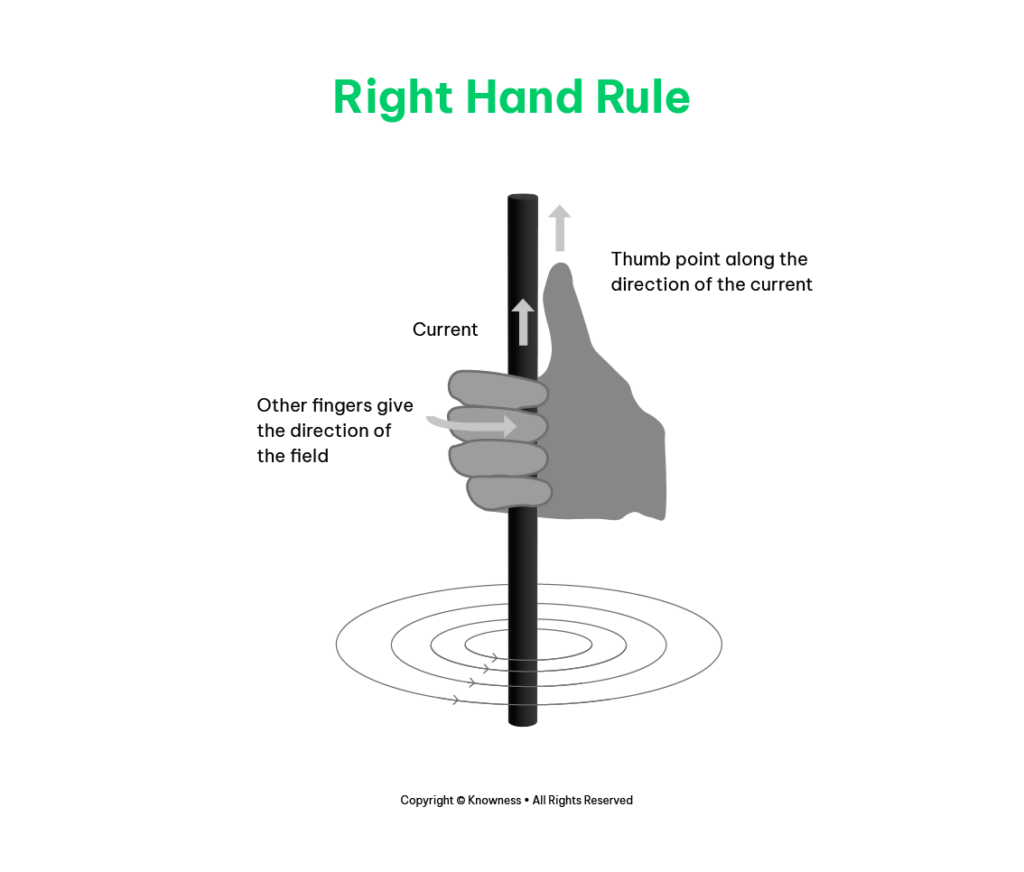
The direction of the induced current is determined by the right-hand rule, which states that if you point your thumb in the direction of motion or the change in magnetic field, the curled fingers represent the direction of the induced current.
Factors Affecting the Magnitude of Induced Potential Difference and Current
Several factors influence the size of the induced potential difference and current:
- Magnetic Field Strength: A stronger magnetic field leads to a greater induced potential difference and current.
- Velocity: The speed at which the conductor moves relative to the magnetic field affects the magnitude of the induced potential difference and current.
- Length of Conductor: A longer conductor increases the likelihood of more magnetic field lines passing through it, resulting in a larger induced potential difference and current.
Application of the Generator Effect
The principles of the generator effect find applications in various contexts, including:
- Electrical Power Generation: Electric generators convert mechanical energy into electrical energy by utilising the generator effect.
- Transformers: Transformers use the generator effect to transfer electrical energy efficiently between different voltage levels.
- Induction Cooktops: Induction cooktops use the generator effect to heat cookware directly through electromagnetic induction.
- Magnetic Braking Systems: Magnetic braking systems utilise the generator effect to generate resistance and slow down moving objects.
Conclusion
When a conductor moves relative to a magnetic field or when there is a change in the magnetic field around a conductor, a potential difference is induced, leading to the flow of current. This knowledge forms the basis of electrical power generation, transformers, induction cooktops, and magnetic braking systems.
Continue the lesson
This section is available to learners with course access. Continue learning with Knowness to unlock the full explanation, examples, revision tools, and progress tracking.
The remaining lesson content includes further guided explanation, important learning points, and supporting interactive material designed to help you understand and revise this topic.
Unlock this topic to view the full activity, worked examples, common mistakes, and additional revision support.
More content available
Knowness lessons are structured to build understanding step by step. Create an account or upgrade your access to continue from this point.
This preview does not include the hidden lesson text, answers, explanations, or embedded interactions.
Continue learning with Knowness
Sign up to access the full lesson, predicted grades, revision tools, progress tracking, and more.
Create a free account