5.2 The Importance of Social Change in Food Systems
Module Progress
0 / 20 Lessons
0%
Learning
The ongoing social change surrounding food systems is not just a trend, it represents a profound shift in how society perceives and interacts with food. The transformation toward alternative food systems reflects growing awareness of the interconnectedness of these issues and the power of collective action to create a more just and sustainable world (Hinrichs, 2014).
Social Change in Food Systems
Social change in food systems is a direct response to the environmental crises posed by traditional industrial agriculture. As the public becomes more informed about the environmental costsThe sacrifices made when choosing a particular option, which may include money spent, time used, or resources consumed. of mass food production, such as greenhouse gas emissions, deforestation, water scarcityThe situation where limited resources are not sufficient to satisfy unlimited human wants., and biodiversity loss, there has been a growing demand for businesses to innovate and adopt environmentally responsible practices, as well as an overall shift of food systems becoming part of the solution to a much wider global issue, climate change (Ingram, 2011).
The shift away from highly processed, mass-produced food is also a response to public health challenges. As societies become more aware of the links between diet and health, they are advocating for better food options, vegan and vegetarian dishes often reduce reliance on heavily-processed foods, subsequently lowering risks of chronic diseases like heart disease and diabetes, and lab grown meat, putting particular attention into nutrient-dense options that avoid harmful additives.
The industrial food system has historically been associated with unethical practices, including labor exploitation, animal cruelty, and the marginalisation of small-scale farmers. Social change in this area seeks to: prioritise fair trade practices, ensure better wages and working conditions for food producersBusinesses or organisations that combine resources to produce goods and services for consumers., address the environmental injustice of industrial agriculture which disproportionately affects marginalised communities living near factory farms or monocultureCultivated culture consisting of only a single cell. plantations, and finally emphasise the ethical implications of food choices, encouraging a shift toward systems that respect both human and animal welfare (Hunt, 2023).
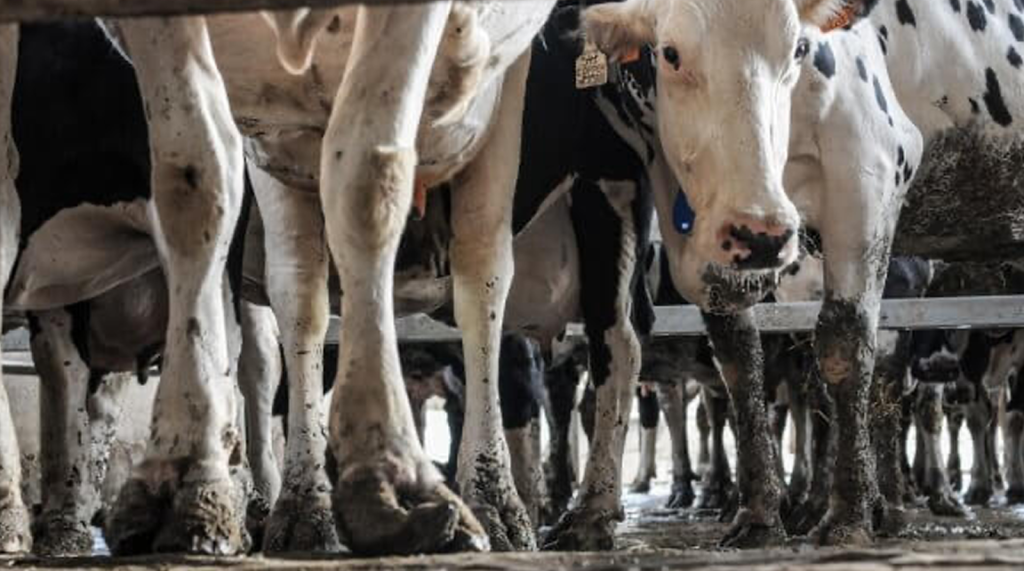
Figure 37. Image from PETA (People for the Ethical Treatment of Animals) captioned: “Mother cows stand in filth with hooves so overgrown that they can barely walk. But they don't need to walk here: There is nowhere for them to go.” - PETA, 2017.
Social change is also driving a resurgence of local food systems, which empower communities to take control of their food sources. Local sourcing and community-supported agriculture strengthen regional economies, reduce dependence on global supply chains and foster resilience in the face of crises such as pandemics or climate disruptions. There is a value being placed on transparency and traceability of locally sourced food (Arnot et al, 2016), ensuring that it is grown and harvested under ethical and sustainable conditions, which benefits the job security for local farmers.
Social change in food systems drives innovationThe process of creating new ideas, products, or methods., pushing industries and researchers to develop new solutions to age-old problems. This movement has guided development to meet global protein demand and new technology that reduces food waste, improves agricultural efficiency and creates a more sustainable supply chain.
Perhaps the most significant aspect of social change in food systems is the cultural shift toward a shared sense of responsibility for the planet and future generations. As individuals make more conscious choices about what they eat, they inspire systemic change by demanding accountability from corporations and policymakers.
Common Mistake
×
Many people, through advertisement and media, believe they are solely responsible for the current unsustainable food system, commonly being told to reduce waste, reuse where possible, and recycle. However, some researchers believe there is a shared responsibility with consumersIndividuals or households that buy and use goods and services to satisfy their needs and wants., corporations, and food processors (Welch & Evans, 2021). Sure consumer behaviour is associated with overbuying, confusion of expiration dates, and discarding based on aesthetical standards, however, it can be seen that this has been implanted from retailers’ marketing strategies to sell more produce for extra profitThe difference between the total revenue a business receives from sales and its total costs of production..
Case Study
×
Impact of COVID-19 on Alternative Proteins
The COVID-19 pandemic had a profound impact on the global food system, accelerating the adoption of alternative proteins by exposing vulnerabilities in traditional meat supply chains and increasing consumer awareness of zoonotic diseases (Bakalis et al., 2020).
Widespread disruptions, including the closure of meat processing plants due to worker infections, highlighted the fragility of conventional protein production. This, in turn, led to supply shortages, price fluctuations, and concerns about food security, prompting both consumers and investors to explore alternative sources of protein, such as plant-based and lab-grown meat.
The heightened focusWhat the writer draws attention to at a given moment (e.g., setting, character, detail). on health and safety during the pandemic played a significant role in shifting public perceptions of food choices. Concerns over hygiene in industrial meat processing facilities, where outbreaks of COVID-19 were prevalent, contributed to growing distrust in traditional meat production.
The marketing of alternative proteins as cleaner, safer, and potentially more sustainable positioned them as an attractive option for health-conscious consumers. This trend was reinforced by increasing awareness of the link between zoonotic diseases such as COVID-19 and industrial animal agriculture, further motivating shifts in dietary preferences.
In addition to consumer-driven changes, the pandemic created a surge in financial interest in alternative protein startups. Investors recognised the potential of plant-based and cultivated meat to address not only food security risks but also broader global challenges such as climate change, resource scarcity, and ethical concerns surrounding animal agriculture.
As a result, companies developing alternative proteins experienced significant growth in funding and innovation, leading to advancements in production techniques, scalability, and product diversity. Startups such as Impossible Foods and Beyond Meat saw increased market traction, while cultivated meat firms attracted unprecedented investment as regulatory frameworks for lab-grown meat began to take shape.
Moreover, the pandemic influenced governmentThe public authority that provides services, collects taxes, sets laws and regulations, and helps manage the economy. policies and corporate strategies in the food sector. Some countries integrated alternative proteins into their post-pandemic recovery plans, recognising their role in building a more resilient and sustainable food system. Meanwhile, major food corporations and restaurant chains responded to shifting consumer preferencesWhat customers want, value, and expect from products and services. by expanding their plant-based product offerings, further solidifying alternative proteins as a mainstream component of the global food landscape.
Overall, the COVID-19 pandemic acted as a catalyst for change, accelerating the transition towards alternative proteins by revealing weaknesses in traditional food supply chains, increasing health and sustainabilityThe principle of meeting present needs without preventing future generations from meeting their own needs. awareness, and driving investment into new food technologies. This period of disruption ultimately reshaped the trajectory of the alternative protein industry, positioning it as a crucial component of future food security and sustainability strategies.
Continue the lesson
This section is available to learners with course access. Continue learning with Knowness to unlock the full explanation, examples, revision tools, and progress tracking.
The remaining lesson content includes further guided explanation, important learning points, and supporting interactive material designed to help you understand and revise this topic.
Learning activity
Unlock this topic to view the full activity, worked examples, common mistakes, and additional revision support.
More content available
Knowness lessons are structured to build understanding step by step. Create an account or upgrade your access to continue from this point.
This preview does not include the hidden lesson text, answers, explanations, or embedded interactions.
Continue learning with Knowness
Sign up to access the full lesson, predicted grades, revision tools, progress tracking, and more.