

2.6 Storm Tracks and Sea Level Pressure Differences
Sea level pressure differences are a key driver of teleconnection patterns, influencing atmospheric circulation and weather systems globally. High-pressure systems are associated with descending air, stable conditions, and clear skies, which manifest as prolonged dry and settled weather in the UK. Areas of low pressure are characterised by rising air, cloud formation, and precipitationWhere a solid forms from a liquid solution, often by the addition of another substance., commonly resulting in wet and stormy weather in the UK.
Storm Tracks and Teleconnections
The difference between high-pressure and low-pressure areas determine wind strength and direction. For example, a steep pressure gradient leads to stronger winds and more dynamic weather conditions. Teleconnections can directly influence the pressure gradient during their positive and negative phases, for example a positive NAO phase accelerates the westerly winds, therefore intensifying the jet stream and driving storm systems towards northern Europe, including the UK.
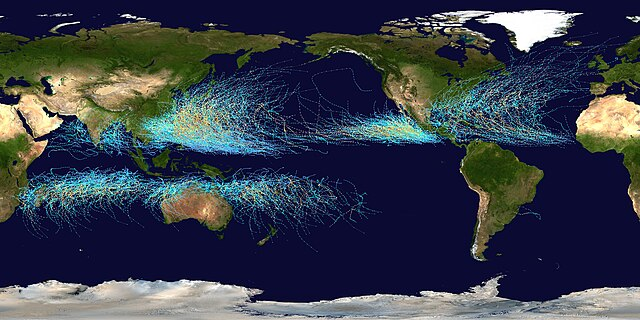
Storm tracks refer to the paths that low-pressure systems follow; these are directly influenced by teleconnections.
During El Niño, the jet stream is often deflecting storms away from the UK, whereas during the La Niña phase, the jet stream is enhanced and directs storms to the UK. The Arctic Oscillation’s negative phases can disrupt the normal storm tracks, allowing Arctic air masses to invade the UK, causing unseasonable cold and snow.
The interaction between teleconnections and storm tracks demonstrates the interconnectedness of global weather systems. For example, the "Beast from the East" (anticyclone Hartmut, which brought harsh conditions in the winter of 2018) was partly driven by a disrupted polar vortex (negative AO) (Greening & Hodgson, 2019), which redirected storm tracks and brought severe winter conditions to the UK. However, it is key to note the complexity and existing competition for influence over an area’s weather, meaning that regions, such as the UK, can have very unique weather patterns compared to adjacent countries.