Human activities are having profound effects on the health and sustainabilityThe principle of meeting present needs without preventing future generations from meeting their own needs. of salt marshes and swamps predominantly through interfering with the natural feedback loops.
Coastal development, in the form of draining and filling in wetlands for agriculture or construction efforts can eliminate vegetation cover and sediment accumulationChange in a physical quantity over time, whether that be an increase, decrease, or no change at all..
Human Impact on the Environment
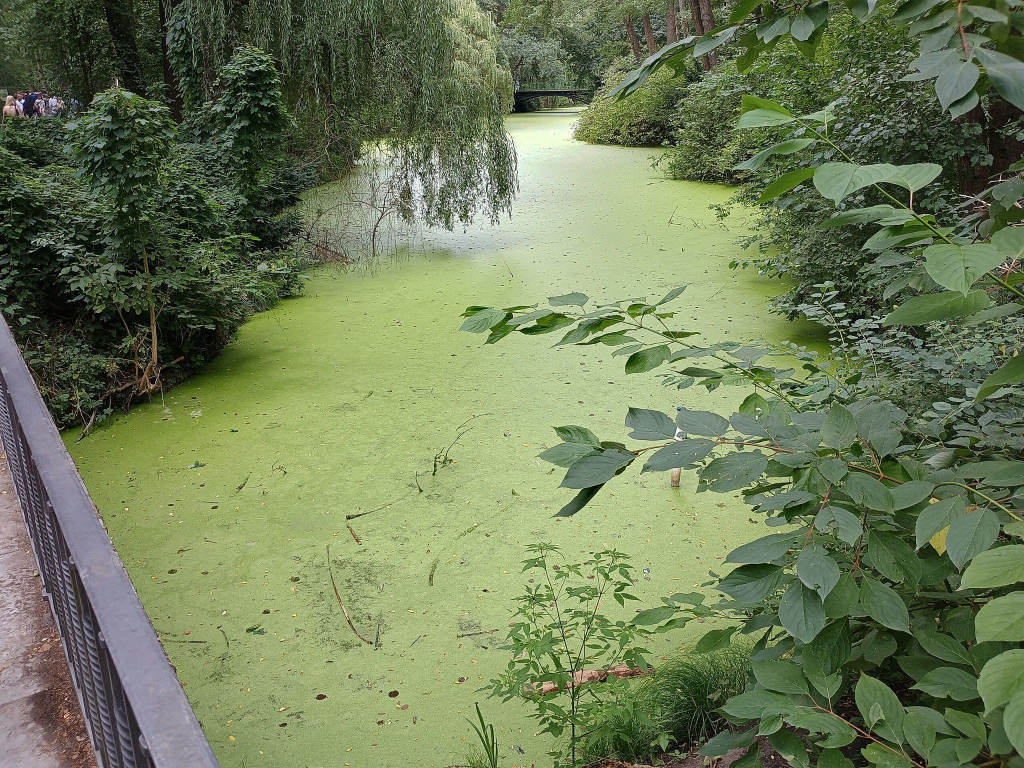
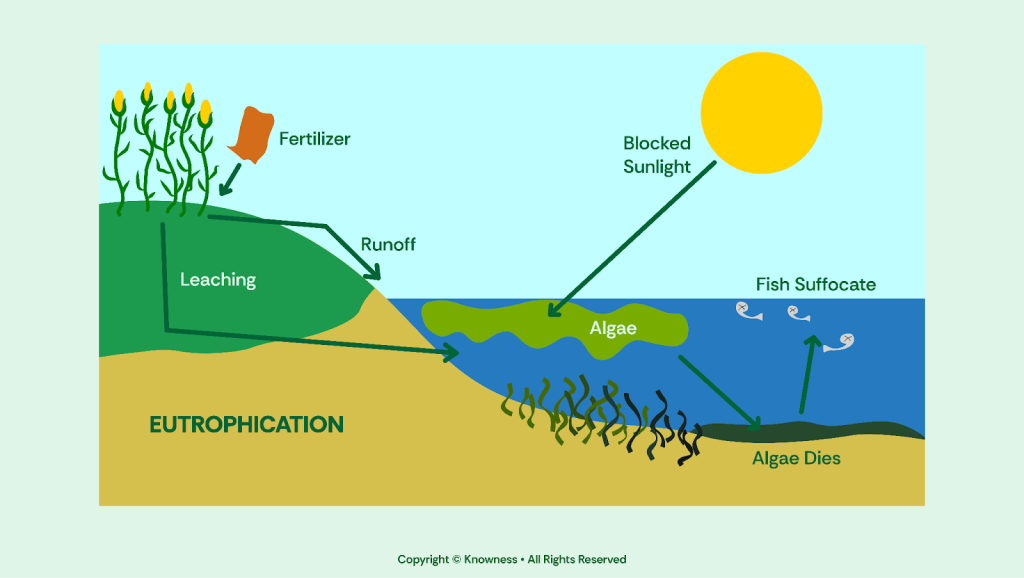
Eutrophication, a process whereby agriculture runoff containing excessive nutrients, typically phosphorus and nitrogen which is found in fertilisers, results in algal blooms that deplete oxygen, killing vegetation and aquatic wildlife. It is also common for toxic substances from industrial practices and microplastics to harm flora and fauna.
Figure 10. A body of water in Berlin experiencing Eutrophication.
Although negative feedback loops can react accordingly with a rise in seal levels, there is a tipping point, whereby a rise in sea levels can overwhelm the sediment accumulation.This is accompanied with an increase in storm intensity which can damage vegetation and erode soils, ultimately contributing to the end of the ecosystem.
Analogy
×
To better understand the concept of a tipping point, balance on one leg and lean to one side, you will remain standing for a bit but eventually there is a point where you can no longer stand, and will start to fall. That exact point is referred to as the tipping point.
Altogether, these processes can cause permanent change to the equilibrium for swamps and salt marshes, this can manifest in a variety of ways, for example a reduction in landAll natural resources used in production, including soil, water, forests, minerals, oil, and other resources from nature. cover, subsequently reducing amounts of habitat and therefore a reduction in biodiversity. Environmental degradation can prevent the absorption of energy from flood events, making storm surges and excessive rainfall more impactful in eroding soil, transporting pollutants from nearby, and damaging vegetation.
Figure 11. The process of eutrophication, commonly seen in swamps.
Swamps and salt marshes are also a storeThe stage where the CPU saves the result of the execution back into memory or registers. of carbon dioxide, a greenhouse gas, and so less land cover would mean a greater degree of carbon existing in the atmosphere, contributing to climate change. One of the less obvious servicesIntangible products that provide a skill, experience, or benefit rather than a physical item. salt marshes and swamps provide are their role as nurseries for many fish species, as it commonly provides a protected area from natural predators.
Case Study
×
Restoration and ConservationThe professional care, preservation, and restoration of archaeological materials and sites, often requiring scientific expertise. Initiatives in Blackwater Estuary, Essex
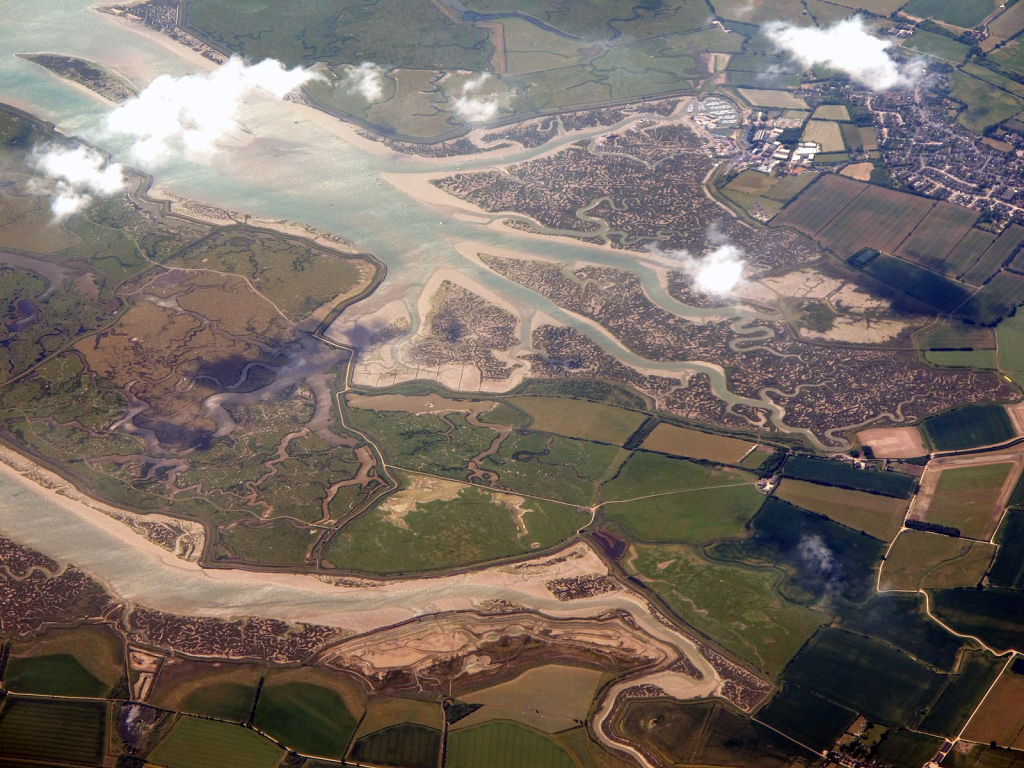
Blackwater Estuary, located on the Essex coastline, is one of the UK’s most ecologically valuable estuarine systems, featuring expansive salt marshes, mudflats, and intertidal habitats. These environments act as crucial carbon sinks, storm buffers, and breeding grounds for migratory birds such as brent geese, redshanks, and avocets. However, human activity and environmental changes have led to severe degradation.
Figure 12. Blackwater Estuary.
Over the last century, coastal erosionThe process by which rocks and soil are worn away, which contributes to the geological incorporation of isotopes like strontium and lead., sea-level rise, and land reclamation for agriculture have caused widespread salt marsh loss. Additionally, the construction of sea walls and embankments has disrupted natural sediment deposition, further accelerating habitat decline. This deterioration has led to increased flood riskThe chance that a decision could lead to loss, failure, or negative consequences., biodiversity loss, and reduced carbon storage capacity.
Restoration and Conservation Efforts
To combat habitat degradation, managed realignment projects have been implemented in the estuary. One of the most successful examples is Abbotts Hall Farm, where in 2002, sea defences were deliberately breached, allowing seawater to reclaim 80 hectares of former agricultural land. This methodHow a writer presents perspective or viewpoint through language/structure. promoted the natural regeneration of salt marshes and mudflats, restoring critical habitats for birds, invertebrates, and fish species such as bass and mullet. Over time, salt-tolerant vegetation like glasswort and sea aster recolonised the area, stabilising sediments and enhancing biodiversity.
Another key technique used in Blackwater is sediment recharge, where dredged material is deposited onto eroded marshes to counteract land loss. This strategy has been employed in Tollesbury and Northey Island, helping to maintain marsh elevation, prevent drowning due to rising sea levels, and improve resilience against storm surges. Pioneer species like cordgrass (spartina) play a vital role in trapping sediments and facilitating ecosystem recovery.
Ongoing Management and Challenges
Long-term conservation of the estuary is supported by organisations such as the Essex Wildlife Trust, the RSPB, and the Environment Agency, which conduct ecological monitoring, water quality assessments, and public engagement initiatives. Sustainable land management practices, such as restricting agricultural runoff and reducing pollution, also contribute to the estuary’s health.
Despite these successes, challenges remain. Continued sea-level rise threatens to outpace marsh growth, while coastal development and agricultural interests sometimes conflict with restoration efforts. Additionally, securing long-term funding for maintenance and adaptation measures remains an ongoing issue.
Continue the lesson
This section is available to learners with course access. Continue learning with Knowness to unlock the full explanation, examples, revision tools, and progress tracking.
The remaining lesson content includes further guided explanation, important learning points, and supporting interactive material designed to help you understand and revise this topic.
Learning activity
Unlock this topic to view the full activity, worked examples, common mistakes, and additional revision support.
More content available
Knowness lessons are structured to build understanding step by step. Create an account or upgrade your access to continue from this point.
This preview does not include the hidden lesson text, answers, explanations, or embedded interactions.
Continue learning with Knowness
Sign up to access the full lesson, predicted grades, revision tools, progress tracking, and more.