3.2 Addressing Climate Migration
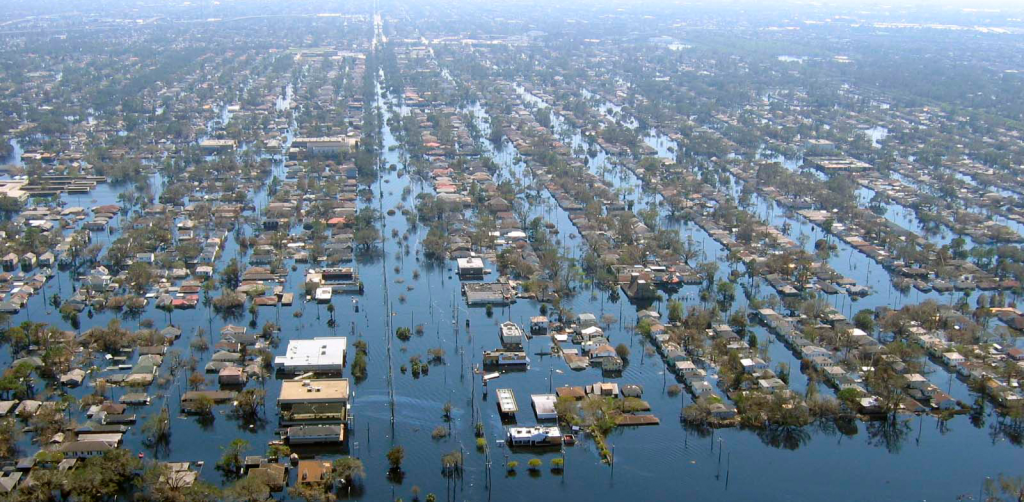
Adaptation strategies, for example, building flood defence and drought-resistant systems, can be implemented to reduce the impact of climate change-related disasters. Similarly, sustainable agriculture practices as well as improved prediction technology can combat desertification and improve food security by allowing insightful information to be at the forefront of decision making for resource distribution.
Solving Climate Migration
On the national level, policies should incorporate laws to protect migrants, notedly the vulnerable nations international agreements, i.e., the Paris Agreement, emphasises climate-related building for developing countries and requests all developed countries to enhance support for developing countries.
Similarly, empowering local populations, where communities are involved in the decision-making and planningThe process of preparing ideas, structure, and possible answers before delivering the spoken presentation. have proved to be an efficient way to ensure the most vulnerable individuals are not left out. This is accompanied with teaching and training the necessary skills to adapt to new environments and livelihoods, with safe and organised relocation programmes, which aims to set communities up with personal plans in the case of forced migration.
Despite adaptation strategies, the legal system in many countries do not recognise climate migrants as refugees. This is because of two reasons, the first is that domestic immigration policies of most countries only allow migrants to temporarily stay in the country, not permanent, from environmental forces. Secondly, climate migrants are unlikely to qualify for protection under international law because they are “unlikely to be considered a refugee under the UN Convention Relating to the Status of Refugees, and they are unlikely to invoke the non-refoulement principle under existing international human rights law.” (Wyman, 2013).
From a broader perspectiveA writer’s viewpoint or stance., adaptation strategies only provide a band aid solution, and in order to eliminate climate migration, we need to focusWhat the writer draws attention to at a given moment (e.g., setting, character, detail). on reducing the effects of climate change by adopting sustainable practices like utilising only renewable energy, stop exploiting Earth’s natural resourcesThe inputs used to produce goods and services, including the factors of production., and reducing livestock.
Climate migrants are either unable to, or because they are not aware to, establish they are being persecuted because of the climate, or because of one of the five; race, religion, nationality, membership of a particular social group or political opinion, as the nature of climate-related disasters are largely indiscriminate. Climate migrants also do not normally claim the governmentThe public authority that provides services, collects taxes, sets laws and regulations, and helps manage the economy. is persecuting them, or their government is allowing them to be persecuted, as their government is likely to be trying to assist them in dealing with climate change.
Lastly, the law does not include the aspect of a sudden climate-related disaster, and excludes climate migrants as refugees because there is a predictable nature to climate hazards. It is because of these technical reasons that climate migrants are not recognised as refugees, and therefore excluded from refugee protection.
Despite this, there is dedicated funding to climate change adaptation efforts in developing countries, predominantly established from the Kyoto Protocol, projects have been approved for funding amounting 166.4 million USD. Also in Cancun, parties agreed to establish a Green Climate Fund to fund migration and adaptation in developing countries. 100 billion a year USD was also established in 2009 Copenhagen to help countries migrate and adapt to climate change.