

University Taster
Chemical Engineering – University Taster
6.3 Sustainable Energy Sources
Sustainable energy production, whether that be renewable or low-carbon sources, is one of the pillars of sustainability, with the goal of reducing emissions and ensuring energy security in the long-term as resources are depleted. This lesson will explore some of the technologies that can be used.
Large Scale Solar Power
Large-scale solar power can be of a similar size to a conventional power station, in the region of 100 MW to 1 GW. Many assume that solar power is only suitable for locations which receive large amounts of sunshine, but the sun’s energy can still be converted into electricity in cloudy conditions, the capacity would simply be reduced.
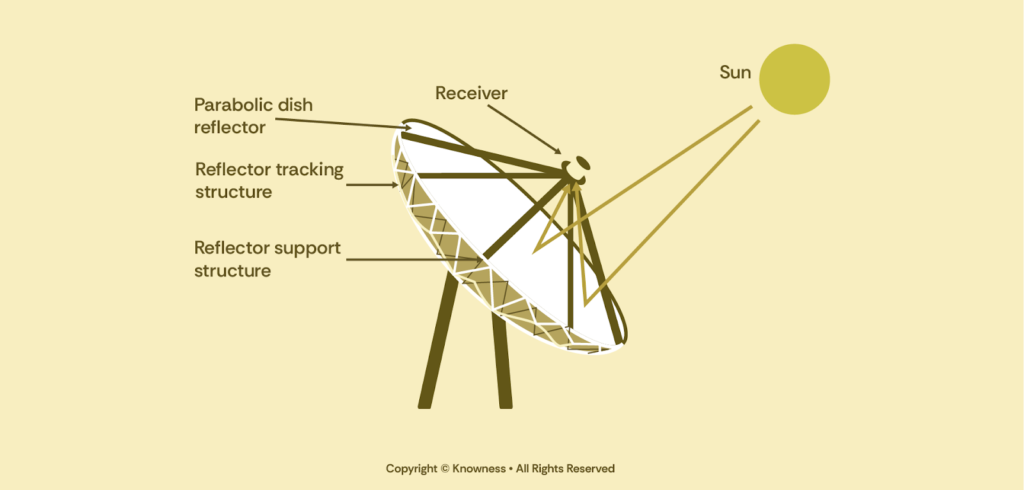
The parabolic dish system, shown in Figure 1, focuses sunlight onto a central receiver, where a stirling engineEngine that operates on the principle of cyclic expansion and contraction of gases, such as air, to drive pistons, converting heat energy to mechanical energy. absorbs the concentrated heat to convert this into electricity.
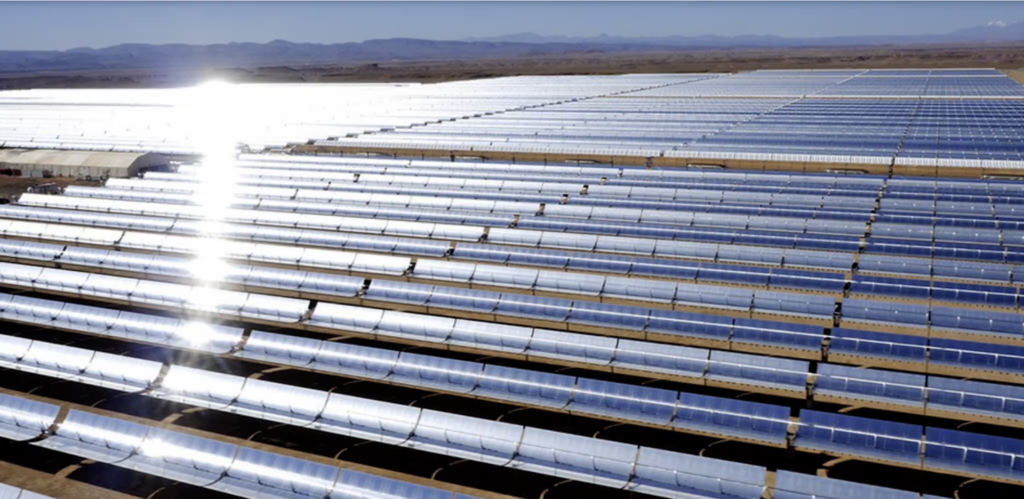
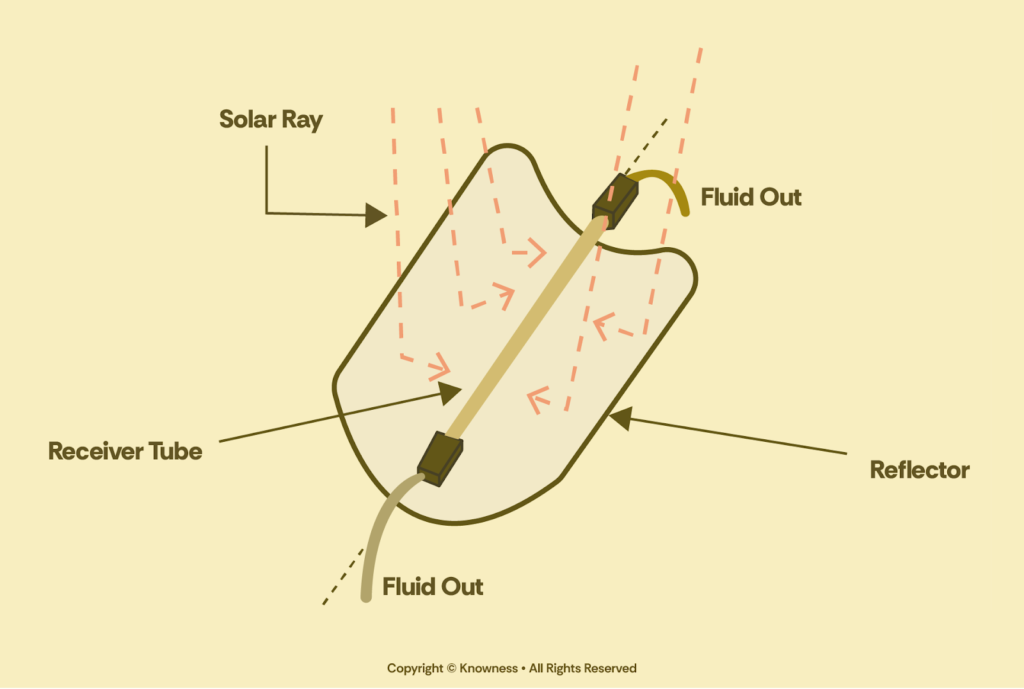
Heating of water can also be achieved in a parabolic trough, shown in Figure 3, where the sun is reflected onto the central pipe, reaching temperatures of up to 400 oC, heating water to steam in the process. This is then followed by a steam cycle much like a regular power plant, where the steam is used to propel a turbine which, in turn, generates electricity. This is often cheaper than a parabolic dish system, and can run at night if sufficient heat is generated during the day.
Example
The largest solar power parabolic trough, as of 2023, is the Mohammed bin Rashid Al Maktoum Solar Park located in Dubai, which is used to generate electricity and has a capacity of 700MW, sufficient to power up to 132,000 homes.
Both systems are used throughout the day, where the dish or trough rotates to track the movement of the sun, maximising the utilisation of solar energy.
Continue the lesson
This section is available to learners with course access. Continue learning with Knowness to unlock the full explanation, examples, revision tools, and progress tracking.
The remaining lesson content includes further guided explanation, important learning points, and supporting interactive material designed to help you understand and revise this topic.
Unlock this topic to view the full activity, worked examples, common mistakes, and additional revision support.
More content available
Knowness lessons are structured to build understanding step by step. Create an account or upgrade your access to continue from this point.
This preview does not include the hidden lesson text, answers, explanations, or embedded interactions.
Continue learning with Knowness
Sign up to access the full lesson, predicted grades, revision tools, progress tracking, and more.
Create a free account