

5.2 Industrial Biochemical Engineering
Where biochemistry considers the intricate details of the chemistry behind biological processes, Biochemical Engineering aims to scale up biological processes to manufacture useful products on an industrial scale. Fermentation is one such biological process that is used in the food, energy, wastewater treatment, and pharmaceutical industries extensively.
Fermentation Systems
Fermentation systems are deliberate applications of microbiological activity with the aim of converting one substance into another, such a yeast into alcohol. The heat of bioprocess is handled by the fermenter, which can be designed and operated to run as a batch, fed-batch, or continuous process. Figure 1 shows an example of how biomass can be converted into a useful product, through biological processes. Enzymatic hydrolysisUsing enzymes to break down larger molecules into smaller ones through the addition of water refers to the breaking down of the feedstock biomass, with the addition of water, to produce sugars which can be fermented to produce biofuels.
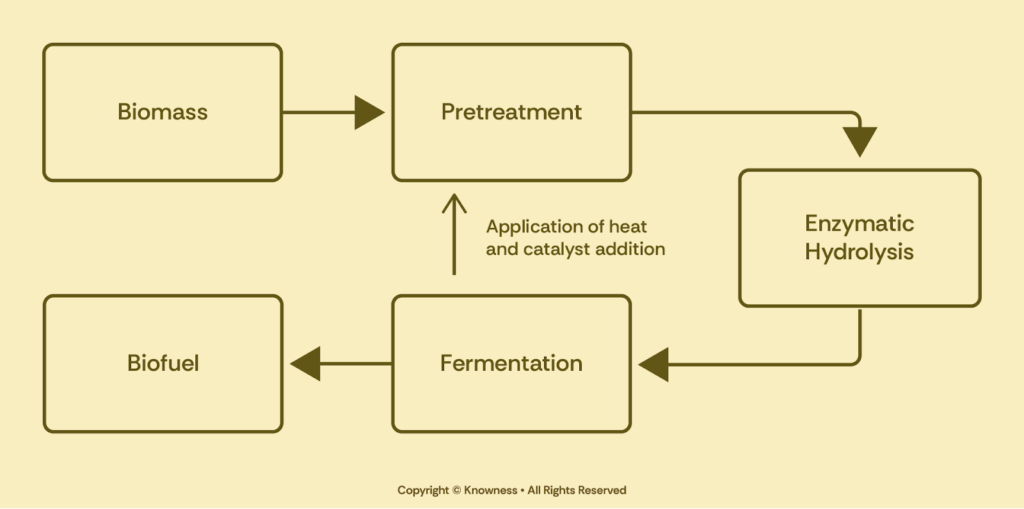
Industrial biochemical processes often make use of a catalyst to give high bioreaction rates and improve the energetic efficiency of the biological processes, leading to reduced energy consumption, which is beneficial in reducing the processing costs.
When operating a fermentation process, the aim is to establish a productive monocultureCultivated culture consisting of only a single cell. and avoid contamination from other microorganismsSingle-celled organisms including bacteria, fungi, and viruses. and/or viruses, which will impact the yield. SterilisationProcess through which any trace of life is removed. Essential in preparing fermentation vessels to avoid contamination. is key to this, where the equipment must be sterile, with hygienic engineering considered along with sterile processing conditions. This will include sterile air feeds, pure inoculumSource material used in the growth of a cell culture that is added to a medium at the beginning of a fermentation process., and hygienic practices by plant operators.