

4.1 What Is Ethics?
You may have come across the word “ethicsIn Philosophy, the theory and study of morality and how we should behave.” before, and it is often used to mean what an individual believes is right and wrong. In PhilosophyThe study of fundamental questions about existence, knowledge, and ethics., “Ethics” as a subjectThe person, place, thing, or idea the clause is about; performs or experiences the verb. means the study of right and wrong. In this module, we will be talking about “Ethics” using the philosophical definition.
Which Philosophers Introduced Ethics?
As with many of the other branches of Philosophy that we have explored, discussions on Ethics in the Western world started with the Ancient Greeks. Since then, many ethical theories have been proposed by various thinkers over the centuries.
Generally, ethical theories are divided into three main schools of thought:
- NormativeDeriving from a standard or norm. Ethics: This focuses on general principles that help us decide how to behave and which actions to take.
- Applied Ethics: This considers how ethical theories are applied in specific situations, such as debates about euthanasia, climate change, or AI.
- Meta-ethics: This explores deeper questions about the nature of ethics in itself.
Some questions considered by each of the ethical schools of thought are:
As you may have guessed, Ethics focuses on questions about good and bad, right and wrong, and how to behave. This means that it considers important questions such as:
- What is the right thing to do in any given situation?
- What makes an action good or bad?
- What does it mean to live a good life?
- Are morals objective or subjective?
- Do morals really exist?
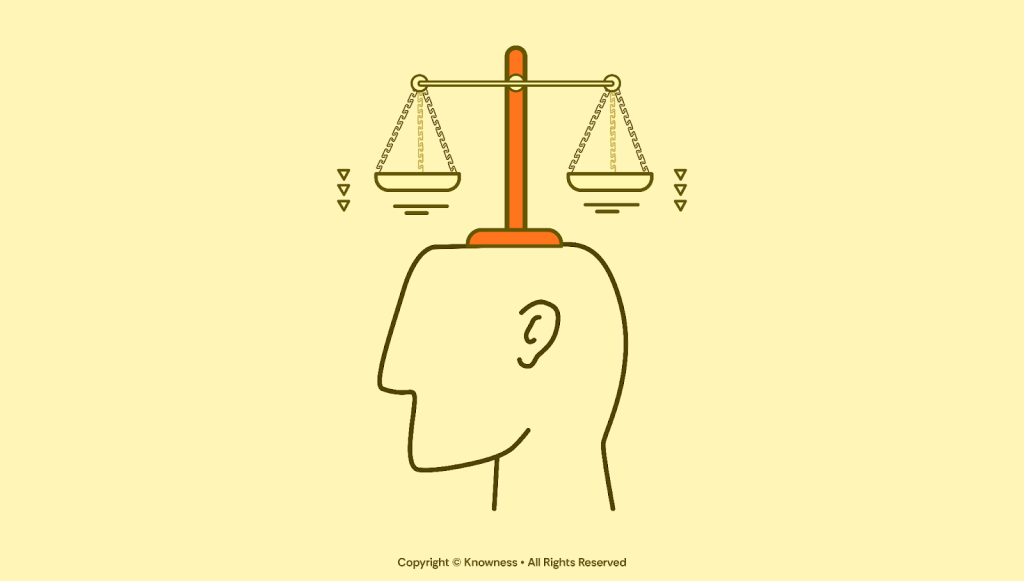
When studying Ethics on a Philosophy degree, you are likely to come across thought experiments called “ethical dilemmas” (also known as “moral dilemmas”). These are theoretical scenarios and specific questions that people can explore individually or in groups. The aim is often to determine what would be the right course of action in various circumstances.
Some common ethical dilemmas considered are:
- Is murder ever justifiable?
- Is one human being’s life worth more than another’s?
- Should we riskThe chance that a decision could lead to loss, failure, or negative consequences. our own safety to save someone else’s life?
- Do animals have the same rights as humans?
- Are there limits to free speech?
Over the centuries, various thinkers have suggested different ethical theories with answers to ethical dilemmas like these. In the next sections, we will explore some of these ethical theories.
The Importance of Ethics
As with the other branches of Philosophy, Ethics is not just an abstract concept. In fact, it is applicable throughout our lives.
Ethics helps us navigate the complexities of life and figure out how to live a good life, both as individuals and as part of a community. It gives us tools to navigate complex ethical questions and make moral decisions. It also offers a way to think about how we treat others and ourselves. All of these things are vital for a society to function.
Now let’s meet some of the key thinkers in the field of Ethics.