

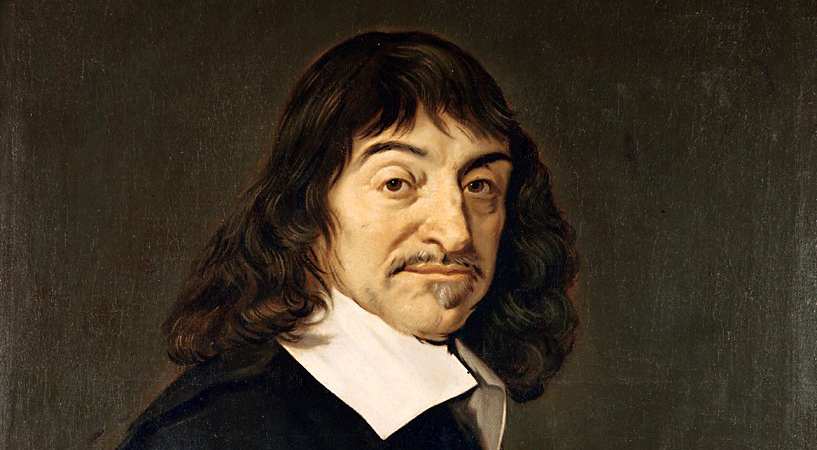
3.2 René Descartes and “I Think, Therefore I Am”
René Descartes (1596–1650) is one of the most famous philosophers in all of human history, so much so that he is known as the “father of modern PhilosophyThe study of fundamental questions about existence, knowledge, and ethics.”. He is also the “father” of one of the most famous statements in Philosophy: “I think, therefore I am”, a phrase you might have heard before.
What Did Descartes Believe?
From the three schools of thought mentioned earlier, Descartes is a rationalist, which means he believed that knowledge is gained through being rational and using logicThe study of correct reasoning.. His philosophical approach was based on a logical concept that he called “the methodHow a writer presents perspective or viewpoint through language/structure. of doubt”.
He had noticed that a lot of beliefs are based on assumptions or unreliable information, and he wanted to test whether there was anything in the world that he could know for certain. To solve this problem, he created the “method of doubt”, where he questioned everything until he found something that was so certain it could not be doubted.
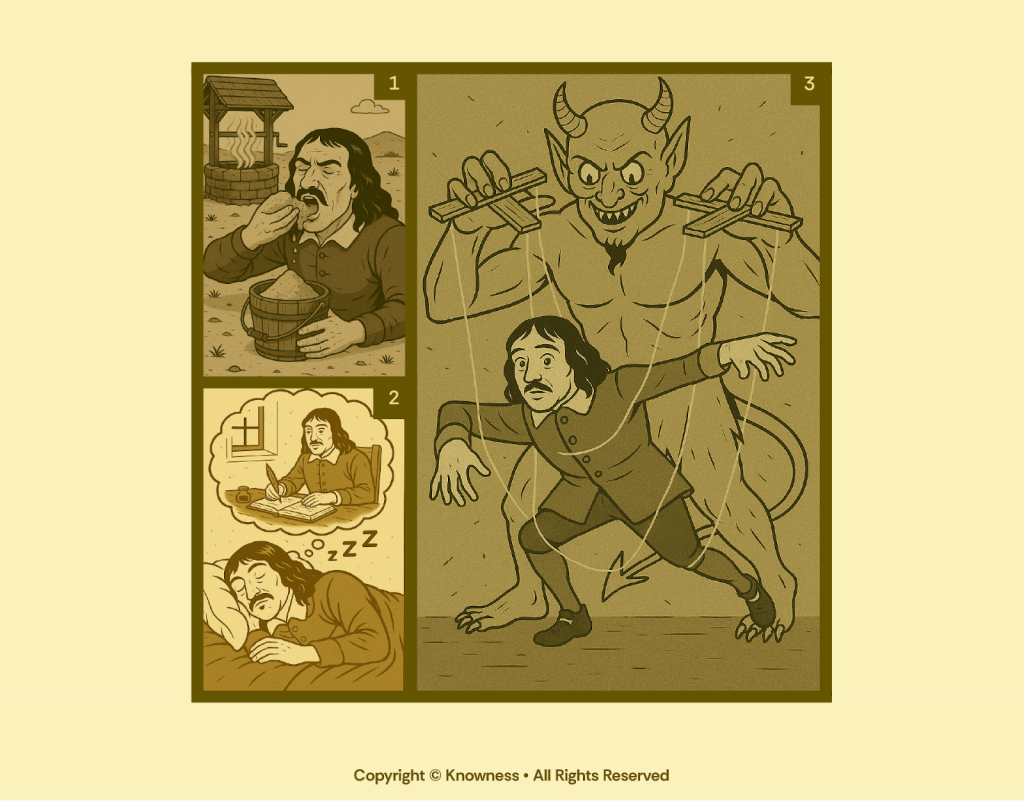
By doubting everything, Descartes hoped to find a solid basis for knowledge, and he found one! He discovered that even if everything else in life was uncertain, there was one thing he could not doubt: he existed. The very fact that he was able to doubt proved that he must exist because it is only possible to think and doubt something if you exist. He concluded:
- If I am thinking, then I must exist.
- Even if an evil demon is tricking me, there must be a “me” to be tricked.
Descartes described this concept as “ubito, ergo sum, vel, quod idem est, cogito, ergo sum”, when translated from Latin means “I doubt, therefore I am — or what is the same — I think, therefore I am.” This led to his very famous statement: Cogito, ergo sum or “I think, therefore I am”.
After establishing the solid basis that he exists, Descartes built a system of knowledge. Like some other rationalists, Descartes believed that human beings are born with some innate, meaning “in-built”, knowledge. He argued that we have innate knowledge of things like geometry and mathematics, and that we can access our innate knowledge through reason.
Descartes’ work was groundbreaking at the time, and it showed the importance of reason and doubt in understanding the world. Today, his work still inspires discussions on consciousnessThe state of being aware and perceiving the world., reality, and perception. His work also reminds us that the first step in understanding the world is to reconsider our own thoughts and doubt what we believe is true.Note