

GCSE
Biology
-
Introduction to GCSE Biology (AQA) Coming soon
-
1.1 Cell Structure
-
1.2 Cell Division Coming soon
-
1.3 Transport in Cells Coming soon
-
2.1 Principles of Organisation Coming soon
-
2.2 Animal Tissues, Organs and Organ Systems Coming soon
-
2.3 Plant Tissues, Organs and Systems Coming soon
-
3.1 Communicable Diseases Coming soon
-
3.2 Monoclonal Antibodies [HT] Coming soon
-
3.3 Plant Disease Coming soon
-
4.1 Photosynthesis Coming soon
-
4.2 Respiration Coming soon
-
5.1 Homeostasis Coming soon
-
5.2 The Human Nervous System Coming soon
-
5.3 Hormonal Coordination in Humans Coming soon
-
5.4 Plant Hormones Coming soon
-
6.1 Reproduction Coming soon
-
6.2 Variation and Evolution Coming soon
-
6.3 The Development of Understanding of Genetics and Evolution Coming soon
-
6.4 Classification of Living Organisms Coming soon
-
7.1 Adaptations, Interdependence and Competition Coming soon
-
7.2 Organisation of an Ecosystem Coming soon
-
7.3 Biodiversity and the Effect of Human Interaction on Ecosystems Coming soon
-
7.4 Trophic Levels in an Ecosystem Coming soon
-
7.5 Food Production Coming soon
1. Cell Biology
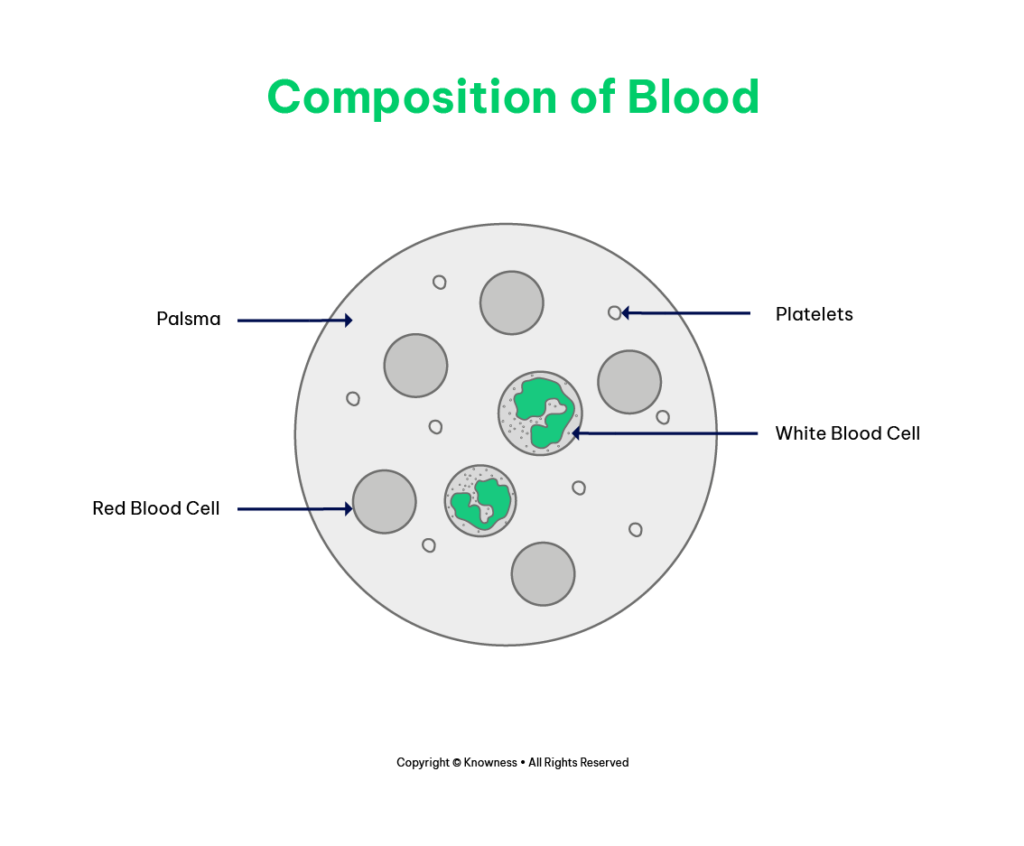
In this lesson, we will explore the composition of blood and the functions of its various components. Blood is a vital tissueA group of similar specialised cells working together to perform a function. that circulates throughout the body, carrying essential substances and playing crucial roles in maintaining overall health.
Composition of Blood
- Plasma: Plasma is the liquid component of blood, accounting for approximately 55% of its total volume. It is a yellowish fluid composed mainly of water, along with various proteins, electrolytes, hormones, and waste products.
- Red Blood Cells (Erythrocytes): Red blood cells are the most abundant cellular component of blood. They contain the protein haemoglobin, which enables them to transport oxygen from the lungs to body tissues. Red blood cells lack a nucleusA membrane-bound organelle in eukaryotic cells that contains DNA. and other organelles, allowing for more space to carry haemoglobin.
- White Blood Cells (Leukocytes): White blood cells are a crucial part of the body's immune system. They play a role in defending the body against pathogens, such as bacteriaA single-celled prokaryotic microorganism., viruses, and foreign substances. White blood cells are divided into several types, each with specific functions in immune response and defence.
- Platelets (Thrombocytes): Platelets are small cell fragments involved in blood clotting. They play a vital role in stopping bleeding by forming clots and promoting the repair of damaged blood vessels.
Functions of Blood Components
- Plasma: Plasma serves as a transport medium, carrying various substances throughout the body. It transports nutrients, hormones, waste products, and heat.
- Red Blood Cells: Red blood cells are responsible for transporting oxygen from the lungs to body tissues. They also help remove carbon dioxide, a waste product, from tissues and transport it to the lungs for exhalation.
- White Blood Cells: White blood cells are key players in the immune system's defense against infections and diseases. They identify and destroy pathogens, produce antibodies, and coordinate immune responses.
- Platelets: Platelets are involved in the clotting process, which prevents excessive bleeding. They aggregate at the site of an injury, forming a clot that seals the damaged blood vessel and initiates tissue repair.
Importance of Blood Components
- Oxygen Delivery: Red blood cells play a critical role in oxygen delivery to body tissues, ensuring their proper functioning.
- Immune Response: White blood cells are essential for protecting the body against infections, maintaining overall health, and facilitating the healing process.
- Clotting and Wound Healing: Platelets are vital in preventing excessive bleeding and promoting the repair of damaged blood vessels.
Risks Related to the Use of Blood Products
- Bloodborne Pathogens: Blood transfusions and the use of blood products carry the riskThe chance that a decision could lead to loss, failure, or negative consequences. of transmitting bloodborne pathogens, such as viruses and bacteria. Stringent screening and testing procedures are in place to minimise the risk of infections, including HIV, hepatitis B and C, and other pathogens.
- Allergic Reactions: Some individuals may experience allergic reactions to blood components, such as plasma proteins or antigens on red blood cells. These reactions can range from mild symptoms, such as hives or itching, to severe allergic reactions known as anaphylaxis.
- Transfusion Reactions: Transfusion reactions occur when the recipient's immune system reacts against the donor blood, resulting in symptoms such as fever, chills, shortness of breath, or even life-threatening complications. Proper blood typing and cross-matching procedures are followed to minimise the risk of transfusion reactions.
- Iron Overload: Frequent blood transfusions or excessive iron supplementation can lead to iron overload in the body. Iron overload can cause damage to organs, such as the liver, heart, and pancreas.
Conclusion
Blood plays a crucial role in transporting oxygen, nutrients, hormones, and waste products. Red blood cells ensure oxygenation of tissues, white blood cells defend against pathogens, and platelets initiate clotting and wound healing.
Continue the lesson
This section is available to learners with course access. Continue learning with Knowness to unlock the full explanation, examples, revision tools, and progress tracking.
The remaining lesson content includes further guided explanation, important learning points, and supporting interactive material designed to help you understand and revise this topic.
Unlock this topic to view the full activity, worked examples, common mistakes, and additional revision support.
More content available
Knowness lessons are structured to build understanding step by step. Create an account or upgrade your access to continue from this point.
This preview does not include the hidden lesson text, answers, explanations, or embedded interactions.
Continue learning with Knowness
Sign up to access the full lesson, predicted grades, revision tools, progress tracking, and more.
Create a free account