

GCSE
Biology
-
Introduction to GCSE Biology (AQA) Coming soon
-
1.1 Cell Structure
-
1.2 Cell Division Coming soon
-
1.3 Transport in Cells Coming soon
-
2.1 Principles of Organisation Coming soon
-
2.2 Animal Tissues, Organs and Organ Systems Coming soon
-
2.3 Plant Tissues, Organs and Systems Coming soon
-
3.1 Communicable Diseases Coming soon
-
3.2 Monoclonal Antibodies [HT] Coming soon
-
3.3 Plant Disease Coming soon
-
4.1 Photosynthesis Coming soon
-
4.2 Respiration Coming soon
-
5.1 Homeostasis Coming soon
-
5.2 The Human Nervous System Coming soon
-
5.3 Hormonal Coordination in Humans Coming soon
-
5.4 Plant Hormones Coming soon
-
6.1 Reproduction Coming soon
-
6.2 Variation and Evolution Coming soon
-
6.3 The Development of Understanding of Genetics and Evolution Coming soon
-
6.4 Classification of Living Organisms Coming soon
-
7.1 Adaptations, Interdependence and Competition Coming soon
-
7.2 Organisation of an Ecosystem Coming soon
-
7.3 Biodiversity and the Effect of Human Interaction on Ecosystems Coming soon
-
7.4 Trophic Levels in an Ecosystem Coming soon
-
7.5 Food Production Coming soon
1. Cell Biology
2.2.2 The Heart and Blood Vessels
In this lesson, we will explore the structureThe organisation and order of information in a text. and functioning of the human heart and lungs, focusing on how the lungs are adapted for gaseous exchange. We will also examine the various blood vessels associated with the heart and their functions.
The Human Heart
The heart is a muscular organA structure made of different tissues working together to perform a specific function. located in the chest, composed of four chambers: two atria and two ventricles. It is responsible for pumping oxygenated blood to the body and deoxygenated blood to the lungs.
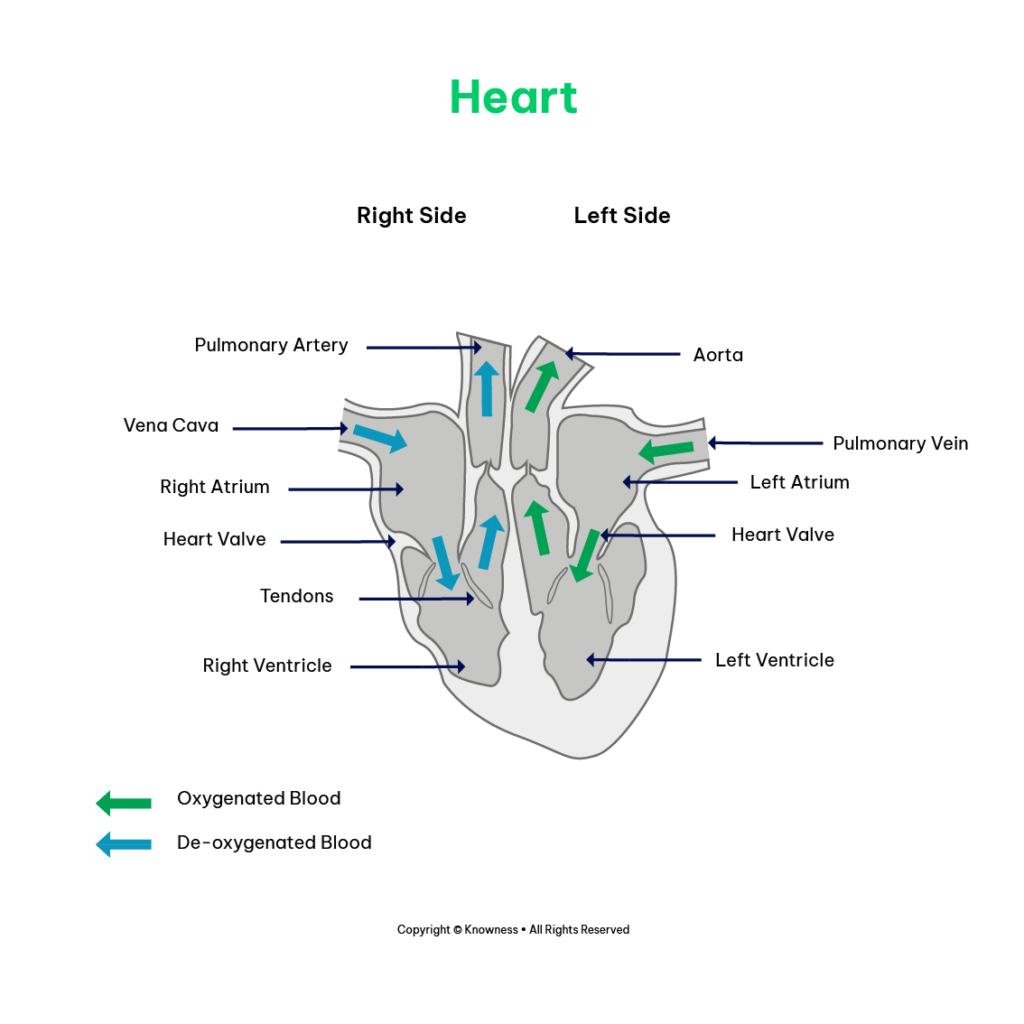
The right ventricle pumps deoxygenated blood to the lungs, where gas exchange occurs, and oxygen is replenished. The left ventricle pumps oxygenated blood to the rest of the body, delivering oxygen and nutrients to cells.
Blood Vessels Associated with the Heart:
- Aorta: The aorta is the largest artery in the body, originating from the left ventricle. It carries oxygenated blood to various parts of the body.
- Vena Cava: The superior and inferior vena cava are large veins that carry deoxygenated blood back to the heart from the body.
- Pulmonary Artery and Pulmonary Vein: The pulmonary artery carries deoxygenated blood from the right ventricle to the lungs for oxygenation. The pulmonary vein carries oxygenated blood from the lungs to the left atrium.
- Coronary Arteries: Coronary arteries supply oxygenated blood to the heart muscle itself, ensuring its proper functioning.
The Lungs
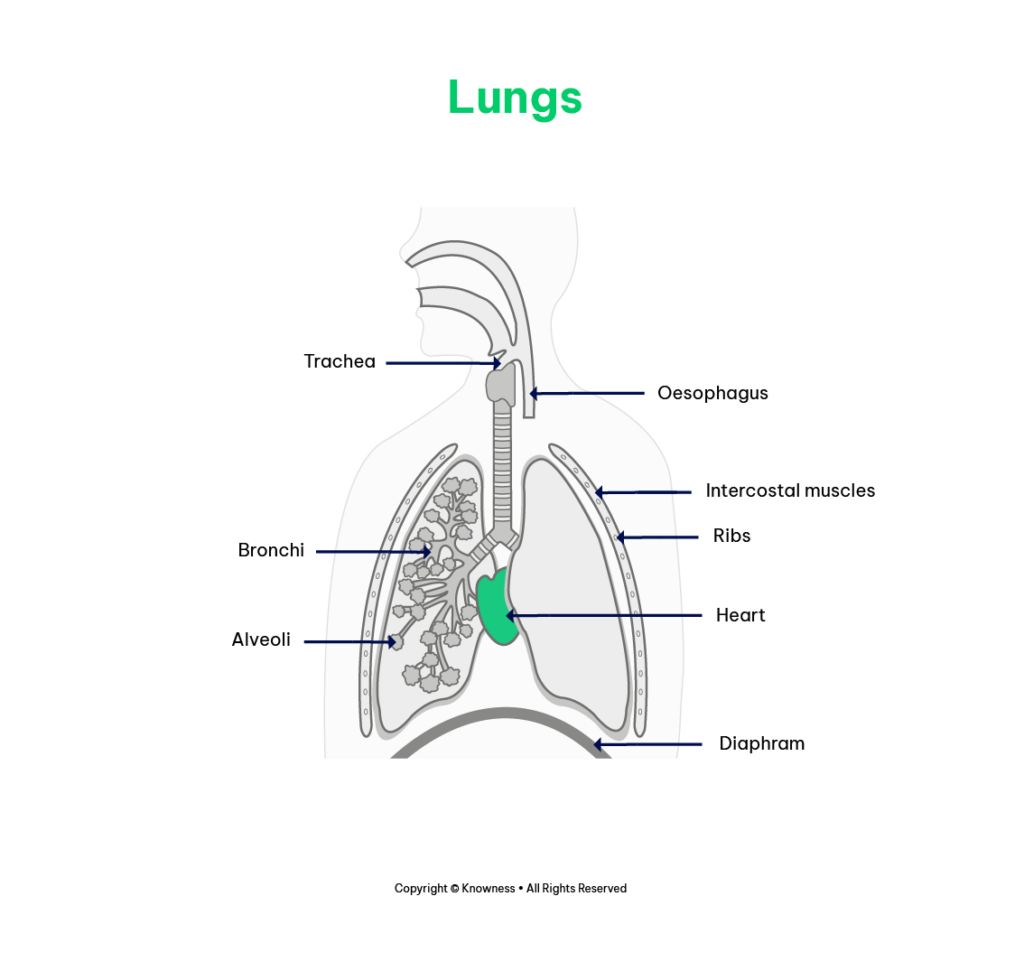
- Trachea and Bronchi: The trachea, also known as the windpipe, carries air from the throat to the bronchi. The bronchi branch into smaller tubes called bronchioles, which lead to the alveoli.
- Alveoli and Capillary Network: Alveoli are tiny, air-filled sacs within the lungs where gaseous exchange occurs. The capillary network surrounds the alveoli, facilitating the exchange of oxygen and carbon dioxide between the air and the bloodstream.
Heart Rate Regulation and Pacemakers
- Natural Resting Heart Rate: A group of cells in the right atrium, known as the sinoatrial (SA) node, acts as a natural pacemaker, regulating the heart's rhythm.
- Artificial Pacemakers: Artificial pacemakers are electrical devices used to correct irregularities in the heart rate. They provide electrical impulses to regulate the heart's contractions and maintain a regular rhythm.
Arteries, Veins, and Capillaries
- Arteries: Arteries carry oxygenated blood away from the heart to various parts of the body. They have thick, muscular walls to withstand the pressure of blood pumped by the heart.
- Veins: Veins carry deoxygenated blood back to the heart from various parts of the body. They have thinner walls compared to arteries and contain valves to prevent the backflow of blood.
- Capillaries: Capillaries are thin-walled, microscopic vessels that connect arteries and veins. They facilitate the exchange of oxygen, nutrients, and waste products between the bloodstream and surrounding tissues.
Blood Flow in the Heart and Blood Vessels
The circulatory system comprises the heart and blood vessels, which work together to ensure the continuous flow of blood throughout the body. Blood carries oxygen, nutrients, hormones, and waste products to and from various organs and tissues.
Oxygenated blood flows from the heart to the body's tissues through arteries, which branch into smaller arterioles. In the capillaries, oxygen and nutrients are exchanged with the surrounding tissues. Deoxygenated blood returns to the heart through venules, which merge to form veins, eventually returning to the heart's chambers.
Blood Flow Rate
Blood flow rate refers to the volume of blood passing through a specific area or vessel per unit time. Blood flow rate can be calculated using the formula:
Rate = Volume / Time
For example, if 500 millilitres of blood flows through a vessel in 1 minute, the flow rate would be 500 mL/min.
Factors Affecting Blood Flow
- Diameter of Blood Vessels: The diameter of blood vessels, especially arteries and arterioles, plays a significant role in blood flow. A narrower vessel diameter leads to increased resistance and reduced blood flow.
- Blood Pressure: Blood pressure, generated by the contraction of the heart and the elasticity of blood vessels, also influences blood flow. Higher blood pressure promotes greater blood flow.
- Vessel Length and Viscosity: The length of blood vessels and the thickness (viscosity) of the blood affect resistance and, consequently, blood flow. Longer vessels and thicker blood result in increased resistance, impeding blood flow.
Importance of Blood Flow in Organ Function
- Oxygen and Nutrient Delivery: Adequate blood flow ensures the delivery of oxygen and nutrients to organs and tissues, supporting their proper function.
- Waste Removal: Efficient blood flow allows for the removal of waste products, such as carbon dioxide, from organs and tissues.
- Temperature Regulation: Blood flow plays a role in maintaining body temperature, as it helps distribute heat throughout the body.
Conclusion
The human heart and lungs work in tandem, ensuring the circulation of oxygenated blood throughout the body and the removal of waste gases. Understanding blood flow within the heart and blood vessels is crucial for comprehending the circulatory system's function. By using simple compound measures and performing rate calculations, we can evaluate the efficiency and dynamics of blood circulation.
Continue the lesson
This section is available to learners with course access. Continue learning with Knowness to unlock the full explanation, examples, revision tools, and progress tracking.
The remaining lesson content includes further guided explanation, important learning points, and supporting interactive material designed to help you understand and revise this topic.
Unlock this topic to view the full activity, worked examples, common mistakes, and additional revision support.
More content available
Knowness lessons are structured to build understanding step by step. Create an account or upgrade your access to continue from this point.
This preview does not include the hidden lesson text, answers, explanations, or embedded interactions.
Continue learning with Knowness
Sign up to access the full lesson, predicted grades, revision tools, progress tracking, and more.
Create a free account