

GCSE
Biology
-
Introduction to GCSE Biology (AQA) Coming soon
-
1.1 Cell Structure
-
1.2 Cell Division Coming soon
-
1.3 Transport in Cells Coming soon
-
2.1 Principles of Organisation Coming soon
-
2.2 Animal Tissues, Organs and Organ Systems Coming soon
-
2.3 Plant Tissues, Organs and Systems Coming soon
-
3.1 Communicable Diseases Coming soon
-
3.2 Monoclonal Antibodies [HT] Coming soon
-
3.3 Plant Disease Coming soon
-
4.1 Photosynthesis Coming soon
-
4.2 Respiration Coming soon
-
5.1 Homeostasis Coming soon
-
5.2 The Human Nervous System Coming soon
-
5.3 Hormonal Coordination in Humans Coming soon
-
5.4 Plant Hormones Coming soon
-
6.1 Reproduction Coming soon
-
6.2 Variation and Evolution Coming soon
-
6.3 The Development of Understanding of Genetics and Evolution Coming soon
-
6.4 Classification of Living Organisms Coming soon
-
7.1 Adaptations, Interdependence and Competition Coming soon
-
7.2 Organisation of an Ecosystem Coming soon
-
7.3 Biodiversity and the Effect of Human Interaction on Ecosystems Coming soon
-
7.4 Trophic Levels in an Ecosystem Coming soon
-
7.5 Food Production Coming soon
1. Cell Biology
Stem cells are remarkable cells that possess the unique ability to self-renew and differentiate into various specialised cell types. They play a crucial role in the development, growth, and repair of organisms.
Stem Cells
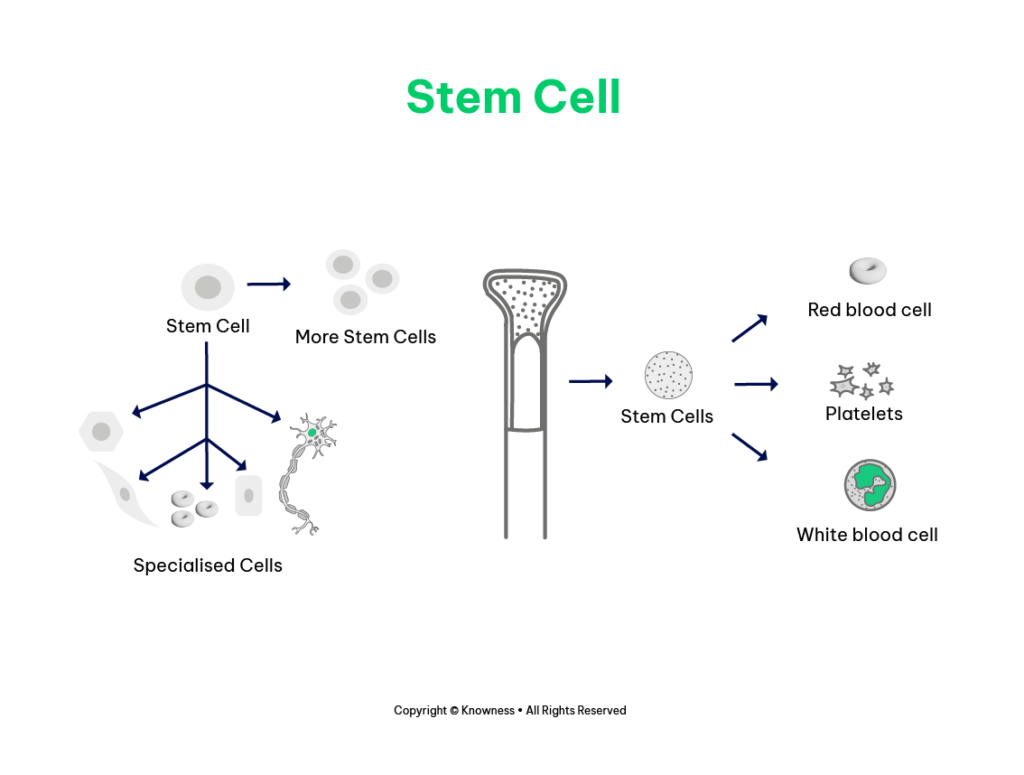
Stem cells are undifferentiated cells capable of self-renewal (the ability to divide and produce more stem cells) and giving rise to different cell types through the process of differentiation.
Stem Cells in Embryos
Embryonic stem cells are derived from the inner cell mass of an early-stage embryo. They are pluripotent, meaning they have the potential to differentiate into any cell type in the body.
In embryos, stem cells are responsible for the development and formation of various tissues and organs. They undergo differentiation to give rise to specific cell types during embryonic development.
Stem Cells in Adult Animals
Adult stem cells are found in various tissues and organs of mature animals. They are multipotent or sometimes unipotent, meaning they can differentiate into a limited range of cell types.
Adult stem cells play a crucial role in tissueA group of similar specialised cells working together to perform a function. maintenance, repair, and regeneration throughout an organism's life. They can replenish and replace damaged or ageing cells in specific tissues, such as blood, skin, and bone.
Stem Cells in Plant Meristems
Meristems are regions of plant tissue that contain stem cells. These stem cells are responsible for plant growth, development, and the formation of new tissues.
MeristemA region in plants containing unspecialised cells that can divide and differentiate throughout the plant’s life. stem cells can differentiate into various specialised plant cell types, such as root cells, leaf cells, and stem cells. They continuously generate new cells, allowing plants to grow and adapt throughout their lifespan.
Potential Applications of Stem Cells
- Embryonic Stem Cells: Embryonic stem cells can be cloned and induced to differentiate into different types of human cells in the laboratory. This versatility makes them potentially useful in regenerative medicine, disease modelling, and drug testing.
- Adult Stem Cells: Adult stem cells, such as those found in bone marrow, have the ability to form multiple types of cells, including blood cells. This characteristic enables them to contribute to treatments for conditions like blood disorders and immune system deficiencies.
- Medical Treatments: Stem cell therapies hold promise for conditions such as diabetes, where insulin-producing cells could be generated from stem cells. Additionally, stem cell research may offer potential treatments for paralysis by regenerating damaged nerve tissue.
Stem cells possess tremendous potential in medical treatments and scientific research due to their unique properties.
Therapeutic Cloning and Medical Treatments
Therapeutic cloning involves the creation of an embryo with the same genes as the patient through somatic cell nuclear transfer. Stem cells derived from the cloned embryo, known as embryonic stem cells, hold the potential to develop into specialised cells for medical treatments.
- Benefits of Therapeutic Cloning: Embryonic stem cells obtained through therapeutic cloning have the advantage of being genetically matched to the patient. This minimises the riskThe chance that a decision could lead to loss, failure, or negative consequences. of rejection, making them potentially useful in medical treatments and regenerative medicine.
- Medical Applications: Stem cells derived from therapeutic cloning can be directed to differentiate into specific cell types for treating various conditions, such as neurological disorders, diabetes, and heart disease.
Risks and Ethical Considerations
- Transfer of Viral Infection: One potential risk associated with the use of stem cells is the transfer of viral infections. Ensuring proper screening and testing of stem cell sources is crucial to mitigate this risk.
- Ethical and Religious Considerations: The use of embryonic stem cells, particularly those obtained through therapeutic cloning, raises ethical concerns for some individuals and religious groups. Ethical debates primarily revolve around the moral status of the embryo and concerns about the destruction of human embryos during stem cell extraction.
Stem Cells from Plant Meristems
Stem cells from plant meristems allow for efficient and cost-effective production of plant clones. Cloning plants involves the propagation of genetically identical plants using stem cells from meristems.
- Benefits of Plant Cloning: ConservationThe professional care, preservation, and restoration of archaeological materials and sites, often requiring scientific expertise. of Rare Species: Plant cloning can help preserve and protect rare plant species from extinction by producing multiple identical copies.
- Advancements in Agriculture: Crop plants with desirable traits, such as disease resistance or increased productivity, can be cloned to generate large numbers of identical plants for farmers. This ensures the preservation and dissemination of valuable plant traits.
Conclusion
Stem cells are powerful and versatile cells that play crucial roles in the development, growth, and repair of organisms. They hold significant promise in medical treatments, particularly in regenerative medicine. Therapeutic cloning offers the advantage of genetically matching the patient, minimising the risk of rejection. However, the use of stem cells, especially embryonic stem cells, raises ethical concerns for some individuals. Additionally, stem cells derived from plant meristems have practical applications in plant cloning for conservation and agricultural purposes.
Continue the lesson
This section is available to learners with course access. Continue learning with Knowness to unlock the full explanation, examples, revision tools, and progress tracking.
The remaining lesson content includes further guided explanation, important learning points, and supporting interactive material designed to help you understand and revise this topic.
Unlock this topic to view the full activity, worked examples, common mistakes, and additional revision support.
More content available
Knowness lessons are structured to build understanding step by step. Create an account or upgrade your access to continue from this point.
This preview does not include the hidden lesson text, answers, explanations, or embedded interactions.
Continue learning with Knowness
Sign up to access the full lesson, predicted grades, revision tools, progress tracking, and more.
Create a free account