

General
Chemistry
-
1. Introduction to Physical Sciences
-
Introduction to Chemistry
-
History of Chemistry
-
Fundamentals of Chemistry
-
Atomic Structure
-
Stoichiometry
-
Thermochemistry
-
Gas Laws
-
Quantum Mechanics and the Electronic Structure of Atoms
-
Periodic Trends
-
Bonding
-
Solutions
-
Acids and Bases
-
Redox Reactions
-
Organic Chemistry
-
Biochemistry
-
Future of Chemistry
-
Careers in Chemistry
Legacy Course
States of Matter
Matter, the physical substance that makes up everything in the universe, can exist in three different states: solid, liquid, and gas. The state of matter is determined by the arrangement and movement of the particles that make up the substance.
Solids have a definite shape and volume. The particles in a solid are closely packed together and do not have a lot of room to move around. The particles are held in place by strong attractive forces called bonds. Examples of solids include rocks, metal, and ice.
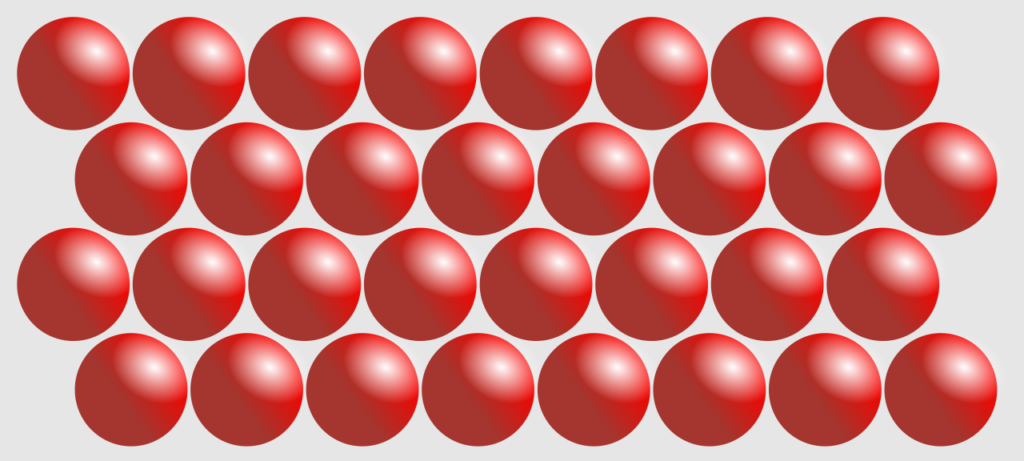
This file is licensed under the Creative Commons Attribution-Share Alike 3.0 Unported license.
Liquids have a definite volume, but not a definite shape. The particles in a liquid are packed closer together than in a gas, but not as close as in a solid. The particles can move around and slide past each other, but they are still close enough together to not take the shape of their container. Examples of liquids include water, oil, and alcohol.
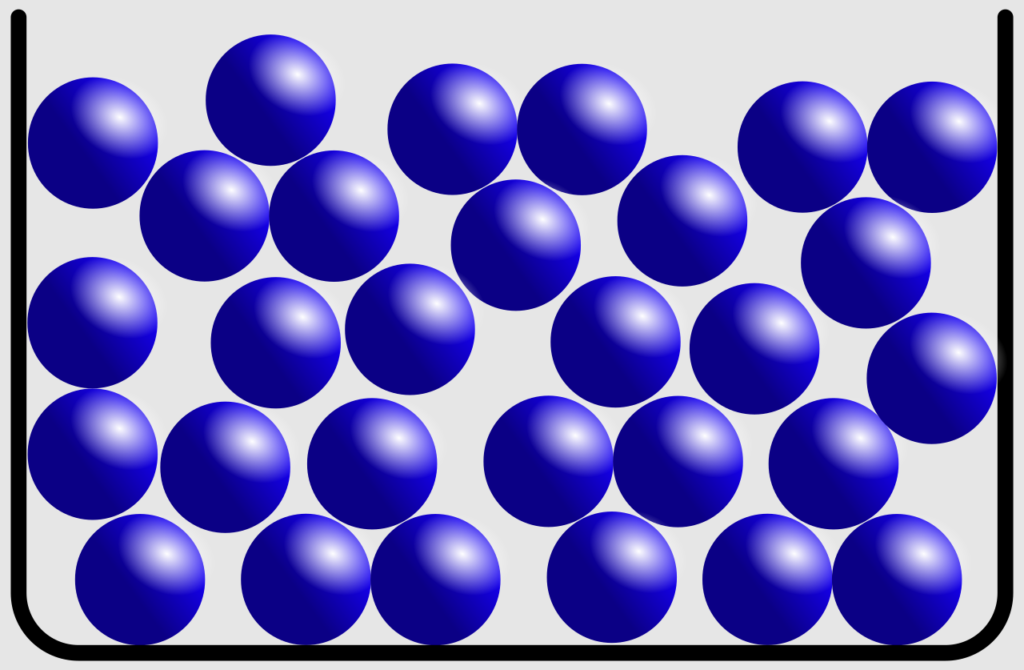
This file is licensed under the Creative Commons Attribution-Share Alike 3.0 Unported license.
Gases do not have a definite shape or volume. The particles in a gas are far apart and move around freely. Gases will take the shape of their container and will fill any space that is available to them. Examples of gases include air, hydrogen, and helium.
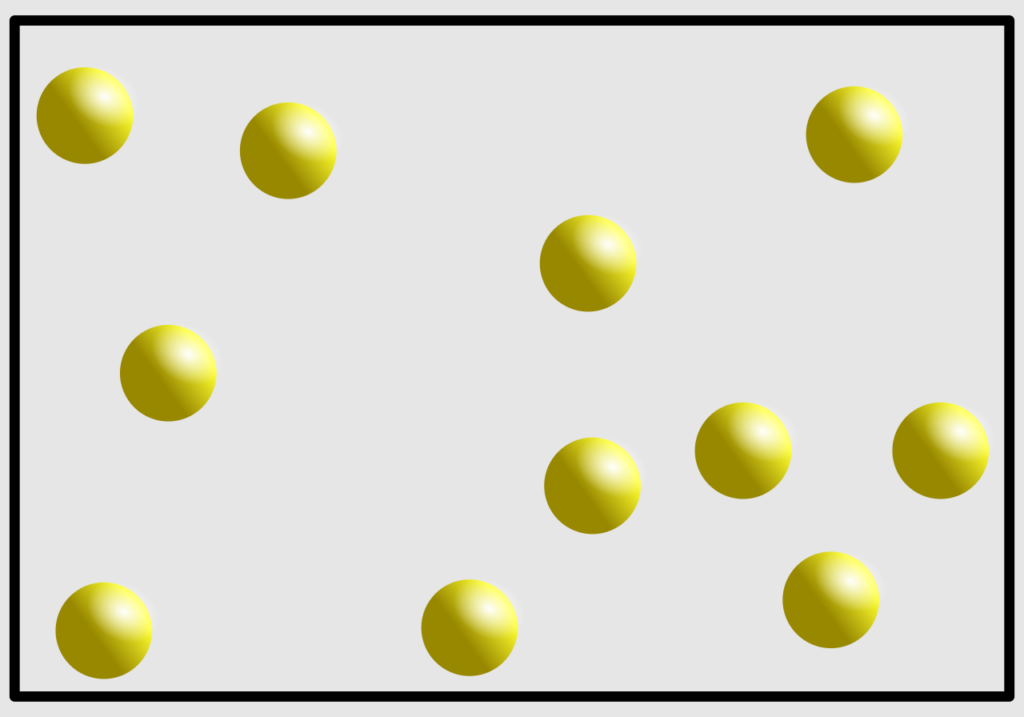
This file is licensed under the Creative Commons Attribution-Share Alike 3.0 Unported license.
When a substance changes from one state of matter to another, it is called a phase change. For example, when water is heated, it changes from a solid (ice) to a liquid (water) to a gas (water vapor). This process is called melting, boiling, and vaporization, respectively. The opposite process, in which a substance changes from a gas to a liquid to a solid, is called condensation, freezing, and solidification.
Continue the lesson
This section is available to learners with course access. Continue learning with Knowness to unlock the full explanation, examples, revision tools, and progress tracking.
The remaining lesson content includes further guided explanation, important learning points, and supporting interactive material designed to help you understand and revise this topic.
Unlock this topic to view the full activity, worked examples, common mistakes, and additional revision support.
More content available
Knowness lessons are structured to build understanding step by step. Create an account or upgrade your access to continue from this point.
This preview does not include the hidden lesson text, answers, explanations, or embedded interactions.
Continue learning with Knowness
Sign up to access the full lesson, predicted grades, revision tools, progress tracking, and more.
Create a free account