

General
Chemistry
-
1. Introduction to Physical Sciences
-
Introduction to Chemistry
-
History of Chemistry
-
Fundamentals of Chemistry
-
Atomic Structure
-
Stoichiometry
-
Thermochemistry
-
Gas Laws
-
Quantum Mechanics and the Electronic Structure of Atoms
-
Periodic Trends
-
Bonding
-
Solutions
-
Acids and Bases
-
Redox Reactions
-
Organic Chemistry
-
Biochemistry
-
Future of Chemistry
-
Careers in Chemistry
Legacy Course
Enzymes and Metabolic Pathways
Enzymes are proteins that catalyze chemical reactions in living organisms, and they are an important aspect of biochemistry. Enzymes work by reducing the activation energyMinimum amount of energy available for reactants to enable a chemical reaction to occur. of a reaction, which makes it more likely to occur. Each enzymeA biological catalyst that speeds up chemical reactions in cells. has a specific function and is specific to a particular chemical reaction, and they are usually named based on the reaction that they catalyze.

This file is licensed under the Creative Commons Attribution 3.0 Unported license.
Metabolic pathways are a series of chemical reactions that are involved in the synthesisCombining information from more than one text to show comparison. or degradation of molecules in living organisms. These pathways are often regulated by enzymes, and they play a crucial role in maintaining homeostasis in the body.
There are two main types of metabolic pathways: anabolic pathways, which involve the synthesis of molecules, and catabolic pathways, which involve the degradation of molecules. Anabolic pathways require energy, and they often involve the synthesis of complex molecules from simpler precursors. Catabolic pathways release energy, and they often involve the degradation of complex molecules into simpler products.
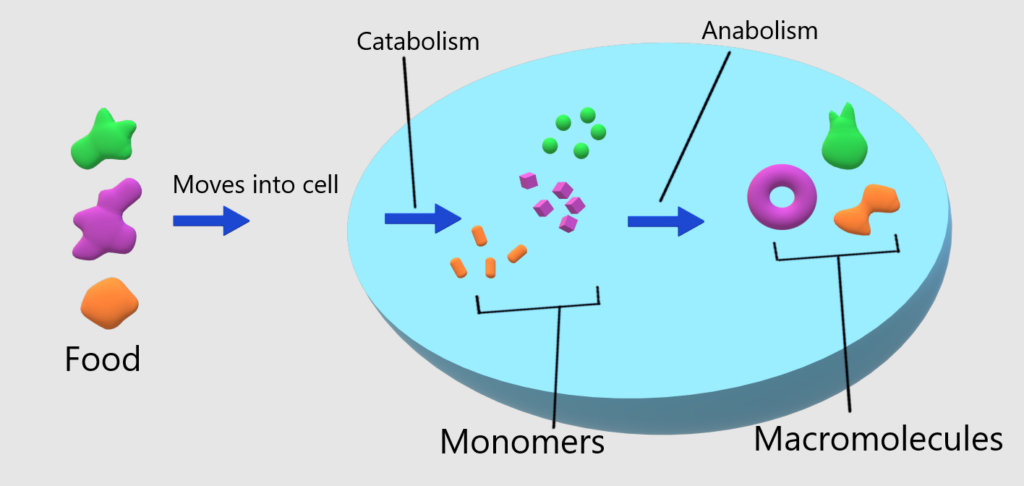
This file is licensed under the Creative Commons Attribution-Share Alike 4.0 International license.
Continue the lesson
This section is available to learners with course access. Continue learning with Knowness to unlock the full explanation, examples, revision tools, and progress tracking.
The remaining lesson content includes further guided explanation, important learning points, and supporting interactive material designed to help you understand and revise this topic.
Unlock this topic to view the full activity, worked examples, common mistakes, and additional revision support.
More content available
Knowness lessons are structured to build understanding step by step. Create an account or upgrade your access to continue from this point.
This preview does not include the hidden lesson text, answers, explanations, or embedded interactions.
Continue learning with Knowness
Sign up to access the full lesson, predicted grades, revision tools, progress tracking, and more.
Create a free account