

GCSE
Biology
-
Introduction to GCSE Biology (AQA) Coming soon
-
1.1 Cell Structure
-
1.2 Cell Division Coming soon
-
1.3 Transport in Cells Coming soon
-
2.1 Principles of Organisation Coming soon
-
2.2 Animal Tissues, Organs and Organ Systems Coming soon
-
2.3 Plant Tissues, Organs and Systems Coming soon
-
3.1 Communicable Diseases Coming soon
-
3.2 Monoclonal Antibodies [HT] Coming soon
-
3.3 Plant Disease Coming soon
-
4.1 Photosynthesis Coming soon
-
4.2 Respiration Coming soon
-
5.1 Homeostasis Coming soon
-
5.2 The Human Nervous System Coming soon
-
5.3 Hormonal Coordination in Humans Coming soon
-
5.4 Plant Hormones Coming soon
-
6.1 Reproduction Coming soon
-
6.2 Variation and Evolution Coming soon
-
6.3 The Development of Understanding of Genetics and Evolution Coming soon
-
6.4 Classification of Living Organisms Coming soon
-
7.1 Adaptations, Interdependence and Competition Coming soon
-
7.2 Organisation of an Ecosystem Coming soon
-
7.3 Biodiversity and the Effect of Human Interaction on Ecosystems Coming soon
-
7.4 Trophic Levels in an Ecosystem Coming soon
-
7.5 Food Production Coming soon
1. Cell Biology
7.4.2 Pyramids of Biomass
In this lesson, we will explore pyramids of biomass and their role in helping us understand the energy transfer and the distribution of biomass within different levels of a food chain.
Constructing a Pyramid of Biomass
Pyramids of biomass provide a visual representation of the relative amount of biomass (organic matter) present at each trophic levelThe position an organism occupies in a food chain, influencing nitrogen isotope ratios. within a food chain or ecosystem.
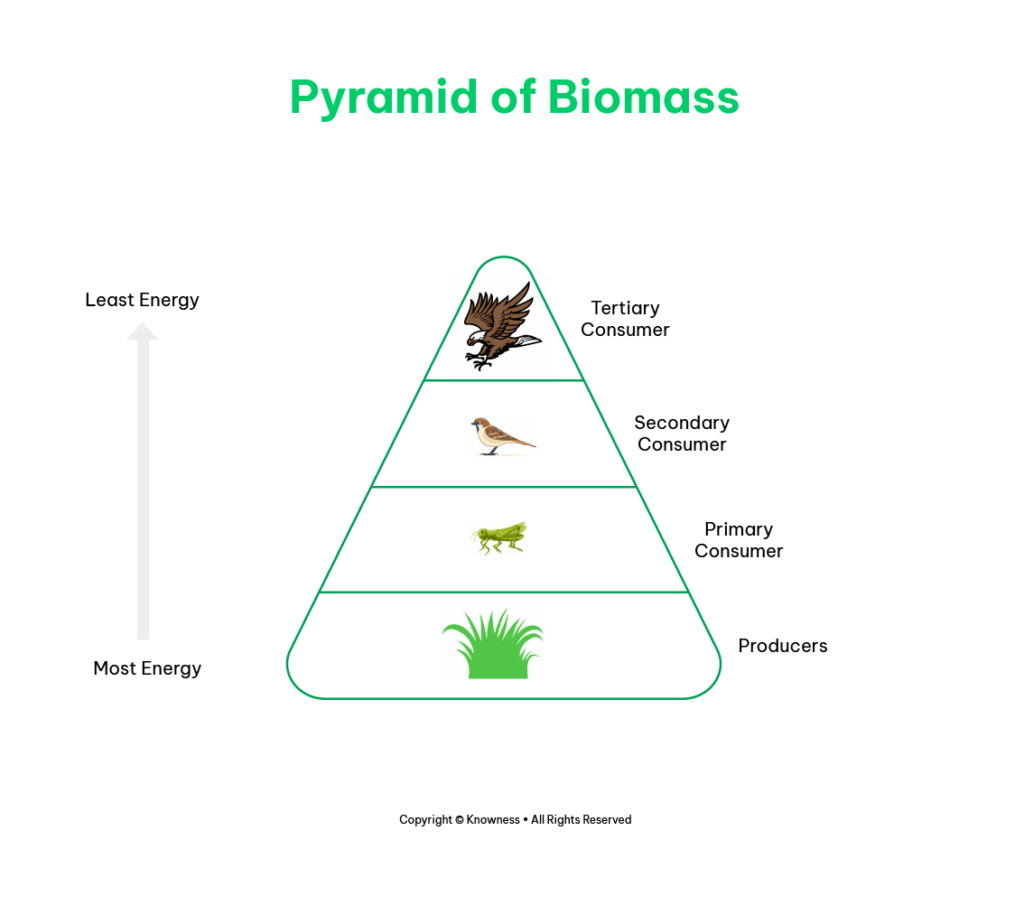
Trophic Level 1 (ProducersBusinesses or organisations that combine resources to produce goods and services for consumers.):
- At the base of the pyramid, trophic level 1 represents the producers, such as plants or algae.
- Producers have the highest biomass since they convert energy from sunlight into organic matter through photosynthesisThe process by which plants use light energy to produce glucose..
Trophic Level 2 (Primary ConsumersIndividuals or households that buy and use goods and services to satisfy their needs and wants.):
- Above the producers, trophic level 2 represents the primary consumers, which are herbivores feeding on the producers.
- The biomass of primary consumers is usually lower than that of producers because energy is lost as heat and through metabolic processes.
Trophic Level 3 (Secondary Consumers):
- The next level, trophic level 3, represents the secondary consumers, which are carnivores feeding on primary consumers.
- The biomass of secondary consumers is usually lower than that of primary consumers due to further energy losses in the food chain.
Trophic Level 4 (Tertiary Consumers):
- At the top of the pyramid, trophic level 4 represents the tertiary consumers, which are carnivores feeding on other carnivores.
- Tertiary consumers have the lowest biomass since energy is progressively lost as it moves up the food chain.
Interpreting the Pyramid
The width or height of each level in the pyramid corresponds to the relative biomass at that trophic level. Typically, the pyramid narrows as you move up, indicating the decreasing biomass at higher trophic levels.
Factors Influencing Pyramid Shape
The shape of the pyramid can vary depending on the specific ecosystem and food chain being examined. In some cases, the pyramid may be inverted, such as in a parasitic food chain where biomass decreases at higher trophic levels.
Conclusion
Pyramids of biomass provide a visual representation of the relative amount of biomass at each trophic level within a food chain. Producers (trophic level 1) have the highest biomass, followed by primary consumers (trophic level 2), secondary consumers (trophic level 3), and tertiary consumers (trophic level 4). The pyramid shape reflects the decreasing biomass as energy is transferred between trophic levels.
Continue the lesson
This section is available to learners with course access. Continue learning with Knowness to unlock the full explanation, examples, revision tools, and progress tracking.
The remaining lesson content includes further guided explanation, important learning points, and supporting interactive material designed to help you understand and revise this topic.
Unlock this topic to view the full activity, worked examples, common mistakes, and additional revision support.
More content available
Knowness lessons are structured to build understanding step by step. Create an account or upgrade your access to continue from this point.
This preview does not include the hidden lesson text, answers, explanations, or embedded interactions.
Continue learning with Knowness
Sign up to access the full lesson, predicted grades, revision tools, progress tracking, and more.
Create a free account