

GCSE
Biology
-
Introduction to GCSE Biology (AQA) Coming soon
-
1.1 Cell Structure
-
1.2 Cell Division Coming soon
-
1.3 Transport in Cells Coming soon
-
2.1 Principles of Organisation Coming soon
-
2.2 Animal Tissues, Organs and Organ Systems Coming soon
-
2.3 Plant Tissues, Organs and Systems Coming soon
-
3.1 Communicable Diseases Coming soon
-
3.2 Monoclonal Antibodies [HT] Coming soon
-
3.3 Plant Disease Coming soon
-
4.1 Photosynthesis Coming soon
-
4.2 Respiration Coming soon
-
5.1 Homeostasis Coming soon
-
5.2 The Human Nervous System Coming soon
-
5.3 Hormonal Coordination in Humans Coming soon
-
5.4 Plant Hormones Coming soon
-
6.1 Reproduction Coming soon
-
6.2 Variation and Evolution Coming soon
-
6.3 The Development of Understanding of Genetics and Evolution Coming soon
-
6.4 Classification of Living Organisms Coming soon
-
7.1 Adaptations, Interdependence and Competition Coming soon
-
7.2 Organisation of an Ecosystem Coming soon
-
7.3 Biodiversity and the Effect of Human Interaction on Ecosystems Coming soon
-
7.4 Trophic Levels in an Ecosystem Coming soon
-
7.5 Food Production Coming soon
1. Cell Biology
7.2.2 How Materials are Cycled
In this lesson, we will explore the importance of material cycles, particularly the carbon and water cycles, in sustaining life on Earth.
Recycling of Materials
In the living world, materials are continuously recycled, allowing the reuse of essential elements. Recycling ensures that materials are available for future organisms, providing the building blocks for growth and development.
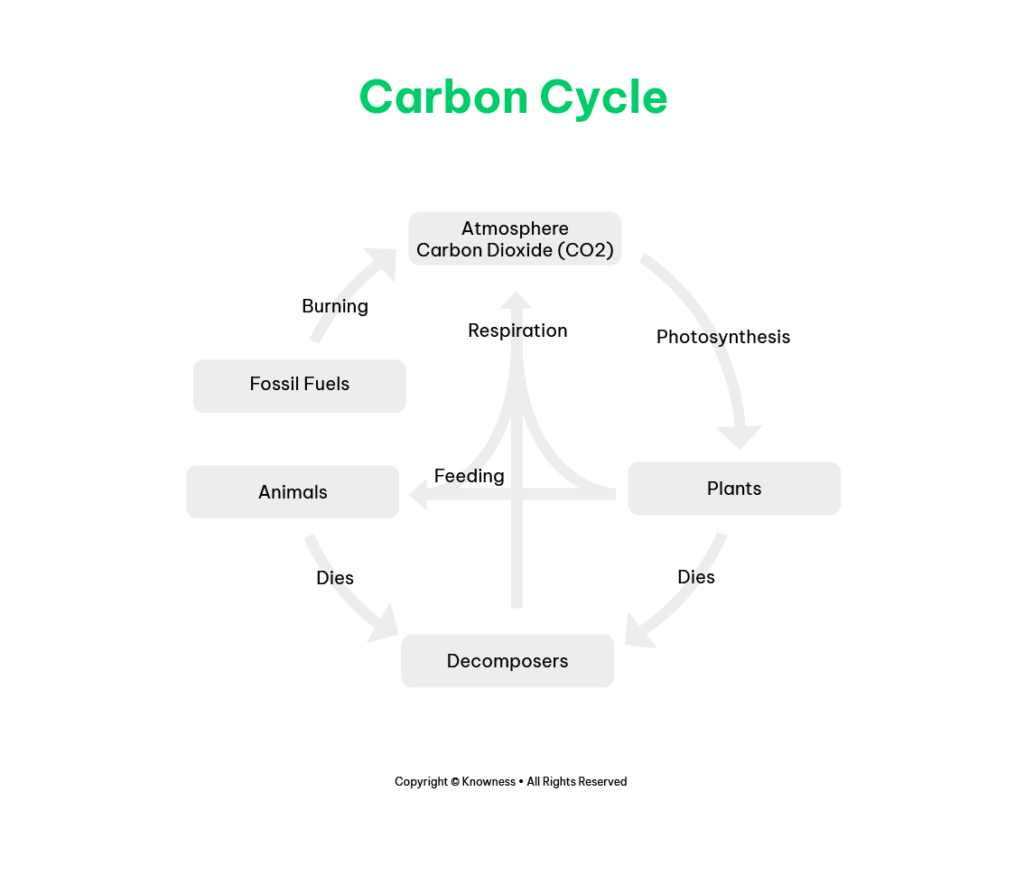
The Carbon Cycle
The carbon cycle is a vital process that regulates the flow of carbon in the environment. It plays a crucial role in maintaining atmospheric balance and is essential for the growth and survival of plants and other organisms.
- Carbon, in the form of carbon dioxide (CO2), is present in the atmosphere.
- Through photosynthesisThe process by which plants use light energy to produce glucose., plants and other photosynthetic organisms absorb carbon dioxide from the atmosphere, converting it into organic compounds.
- These organic compounds are utilised by plants for growth, while also serving as a source of energy for other organisms in the food chain.
- When organisms respire or undergo decomposition, carbon dioxide is released back into the atmosphere, completing the cycle.
The Water Cycle
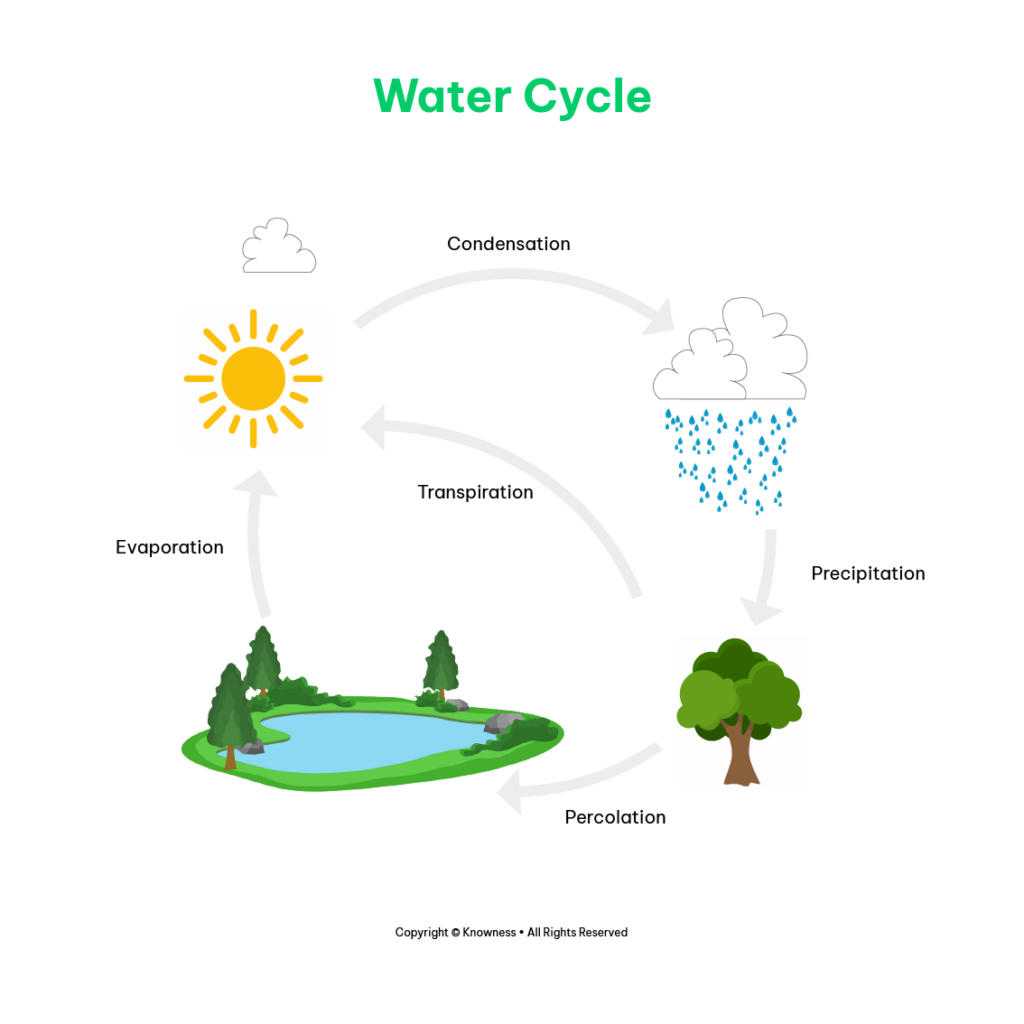
The water cycle is another essential process in which water is continually cycled through the environment. It ensures the availability of freshwater for plants, animals, and other organisms, sustaining life on landAll natural resources used in production, including soil, water, forests, minerals, oil, and other resources from nature..
- Water is present in various forms, including liquid, solid (ice), and gas (water vapour).
- Through evaporation, water from oceans, lakes, and rivers is converted into water vapour, which rises into the atmosphere.
- As the water vapour cools, it condenses, forming clouds.
- PrecipitationWhere a solid forms from a liquid solution, often by the addition of another substance., such as rain or snow, then returns water to the Earth's surface.
- The water is absorbed by plants and animals, used in biological processes, and eventually returns to the oceans, lakes, and rivers through runoff or infiltration.
Role of MicroorganismsSingle-celled organisms including bacteria, fungi, and viruses. in Material Cycling
Microorganisms, including bacteriaA single-celled prokaryotic microorganism. and fungi, play a crucial role in the cycling of materials through ecosystems.
- In the carbon cycle, microorganisms break down organic matter through decomposition, releasing carbon dioxide back into the atmosphere.
- They also aid in the breakdown of complex organic compounds, returning mineral ions to the soil, which can be taken up by plants.
- Microorganisms are essential in nutrient cycling, ensuring the availability of nutrients for the growth and development of organisms.
Conclusion
The cycling of materials, such as carbon and water, is a fundamental process in ecosystems. These cycles enable the reuse and availability of essential elements for living organisms. The carbon cycle regulates the flow of carbon, supporting the growth and survival of plants and other organisms. The water cycle ensures the continuous supply of freshwater, vital for the existence of life on land. Additionally, microorganisms play a vital role in material cycling by decomposing organic matter and returning nutrients to the environment.
Continue the lesson
This section is available to learners with course access. Continue learning with Knowness to unlock the full explanation, examples, revision tools, and progress tracking.
The remaining lesson content includes further guided explanation, important learning points, and supporting interactive material designed to help you understand and revise this topic.
Unlock this topic to view the full activity, worked examples, common mistakes, and additional revision support.
More content available
Knowness lessons are structured to build understanding step by step. Create an account or upgrade your access to continue from this point.
This preview does not include the hidden lesson text, answers, explanations, or embedded interactions.
Continue learning with Knowness
Sign up to access the full lesson, predicted grades, revision tools, progress tracking, and more.
Create a free account