

GCSE
Biology
-
Introduction to GCSE Biology (AQA) Coming soon
-
1.1 Cell Structure
-
1.2 Cell Division Coming soon
-
1.3 Transport in Cells Coming soon
-
2.1 Principles of Organisation Coming soon
-
2.2 Animal Tissues, Organs and Organ Systems Coming soon
-
2.3 Plant Tissues, Organs and Systems Coming soon
-
3.1 Communicable Diseases Coming soon
-
3.2 Monoclonal Antibodies [HT] Coming soon
-
3.3 Plant Disease Coming soon
-
4.1 Photosynthesis Coming soon
-
4.2 Respiration Coming soon
-
5.1 Homeostasis Coming soon
-
5.2 The Human Nervous System Coming soon
-
5.3 Hormonal Coordination in Humans Coming soon
-
5.4 Plant Hormones Coming soon
-
6.1 Reproduction Coming soon
-
6.2 Variation and Evolution Coming soon
-
6.3 The Development of Understanding of Genetics and Evolution Coming soon
-
6.4 Classification of Living Organisms Coming soon
-
7.1 Adaptations, Interdependence and Competition Coming soon
-
7.2 Organisation of an Ecosystem Coming soon
-
7.3 Biodiversity and the Effect of Human Interaction on Ecosystems Coming soon
-
7.4 Trophic Levels in an Ecosystem Coming soon
-
7.5 Food Production Coming soon
1. Cell Biology
In this lesson, we will explore the concepts and terms related to genetic inheritance and understand how different alleles and genes influence the phenotype of an organism.
Terms
- Gamete: A gamete is a reproductive cell (sperm or egg) that carries half the genetic information of an organism.
- ChromosomeA structure made of DNA that carries genetic information.: Chromosomes are structures made up of DNA and proteins. They contain genes and are found in the nucleusA membrane-bound organelle in eukaryotic cells that contains DNA. of cells.
- Gene: A gene is a segment of DNA that contains instructions for the production of a specific protein or RNA molecule, which contributes to a particular trait.
- Allele: Alleles are different forms or variants of a gene. They occupy the same position (locus) on homologous chromosomes.
- Dominant: A dominant allele is always expressed in the phenotype, even if only one copy is present.
- Recessive: A recessive allele is only expressed in the phenotype if two copies are present, with no dominant allele present.
- Homozygous: Homozygous refers to having two identical alleles for a particular gene.
- Heterozygous: Heterozygous refers to having two different alleles for a particular gene.
- Genotype: Genotype refers to the genetic makeup of an organism, representing the alleles present for a specific gene.
- Phenotype: Phenotype refers to the observable physical or biochemical characteristics of an organism, influenced by its genotype.
Single Gene Characteristics
- Fur Colour in Mice: The fur colour in mice is an example of a characteristic controlled by a single gene. Different alleles of the gene determine the colour variation observed.
- Red-Green Colour Blindness in Humans: Red-green colour blindness is another example of a characteristic controlled by a single gene. Individuals with different alleles may exhibit varying degrees of colour vision impairment.
Dominant and Recessive Alleles
- Dominant Allele: A dominant allele is always expressed in the phenotype, even if only one copy is present.
- Recessive Allele: A recessive allele is expressed in the phenotype only if two copies are present, with no dominant allele present.
Homozygous and Heterozygous
- Homozygous: If an organism has two identical alleles for a specific gene, it is said to be homozygous for that trait.
- Heterozygous: If an organism has two different alleles for a specific gene, it is said to be heterozygous.
Multiple Gene Characteristics
Most characteristics are influenced by the interaction of multiple genes, rather than a single gene. This interaction can lead to a wide range of phenotypic variations.
Probability in Single Gene Crosses
- Mendelian Genetics: The principles of genetic inheritance were first described by Gregor Mendel through his experiments with pea plants. Mendel's work showed that the inheritance of certain traits can be explained by the segregation and independent assortment of single genes.
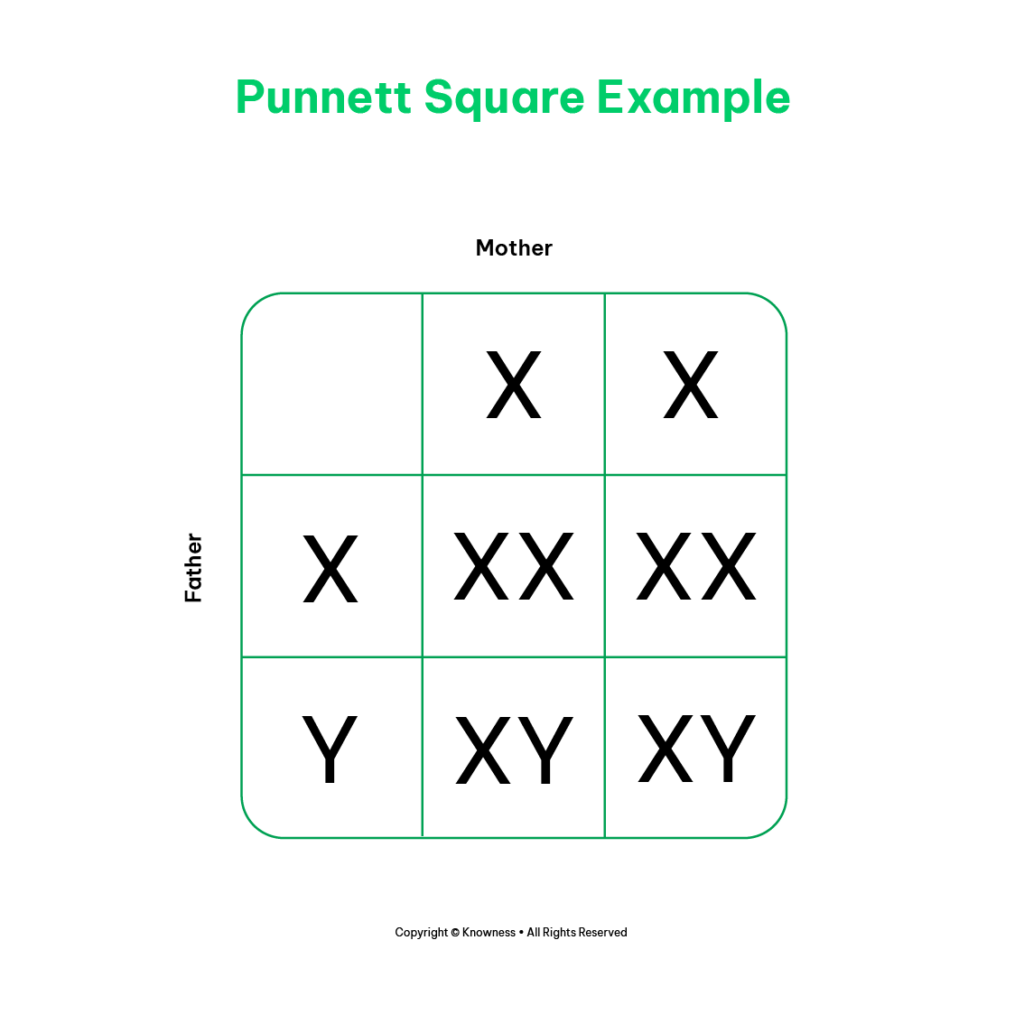
- Punnett Square: A Punnett square is a simple tool used to predict the possible combinations of alleles and their probabilities in offspring from a single gene cross.
- Genotype and Phenotype Ratios: By using the Punnett square, we can determine the expected genotype and phenotype ratios in the offspring of a cross. These ratios represent the probability of specific genetic outcomes.
Conclusion
In genetic inheritance, some characteristics are controlled by a single gene, where different alleles produce variations. Dominant alleles are always expressed in the phenotype, while recessive alleles are expressed only in the absence of a dominant allele. Organisms can be homozygous (two identical alleles) or heterozygous (two different alleles) for a specific trait. Probability is also a fundamental concept in predicting the outcomes of single gene crosses. However, it is important to recognise that most phenotype features are the result of the interaction of multiple genes rather than single gene inheritance.
Continue the lesson
This section is available to learners with course access. Continue learning with Knowness to unlock the full explanation, examples, revision tools, and progress tracking.
The remaining lesson content includes further guided explanation, important learning points, and supporting interactive material designed to help you understand and revise this topic.
Unlock this topic to view the full activity, worked examples, common mistakes, and additional revision support.
More content available
Knowness lessons are structured to build understanding step by step. Create an account or upgrade your access to continue from this point.
This preview does not include the hidden lesson text, answers, explanations, or embedded interactions.
Continue learning with Knowness
Sign up to access the full lesson, predicted grades, revision tools, progress tracking, and more.
Create a free account