

GCSE
Biology
-
Introduction to GCSE Biology (AQA) Coming soon
-
1.1 Cell Structure
-
1.2 Cell Division Coming soon
-
1.3 Transport in Cells Coming soon
-
2.1 Principles of Organisation Coming soon
-
2.2 Animal Tissues, Organs and Organ Systems Coming soon
-
2.3 Plant Tissues, Organs and Systems Coming soon
-
3.1 Communicable Diseases Coming soon
-
3.2 Monoclonal Antibodies [HT] Coming soon
-
3.3 Plant Disease Coming soon
-
4.1 Photosynthesis Coming soon
-
4.2 Respiration Coming soon
-
5.1 Homeostasis Coming soon
-
5.2 The Human Nervous System Coming soon
-
5.3 Hormonal Coordination in Humans Coming soon
-
5.4 Plant Hormones Coming soon
-
6.1 Reproduction Coming soon
-
6.2 Variation and Evolution Coming soon
-
6.3 The Development of Understanding of Genetics and Evolution Coming soon
-
6.4 Classification of Living Organisms Coming soon
-
7.1 Adaptations, Interdependence and Competition Coming soon
-
7.2 Organisation of an Ecosystem Coming soon
-
7.3 Biodiversity and the Effect of Human Interaction on Ecosystems Coming soon
-
7.4 Trophic Levels in an Ecosystem Coming soon
-
7.5 Food Production Coming soon
1. Cell Biology
In this lesson, we will explore the structure of DNA, define the term "genome," and understand the significance of studying the human genome for medical advancements. We will also explore the search for disease-related genes, the understanding and treatment of inherited disorders, and the use of genomics in tracing human migration patterns from the past.
StructureThe organisation and order of information in a text. of DNA
The nucleusA membrane-bound organelle in eukaryotic cells that contains DNA. of a cell contains the genetic materialDNA that carries the instructions for cell structure and function., which is composed of a chemical called DNA (deoxyribonucleic acid)The molecule carrying genetic instructions used in the growth, development, functioning, and reproduction of all living organisms.. DNA carries the hereditary information necessary for the development, functioning, and reproduction of living organisms.
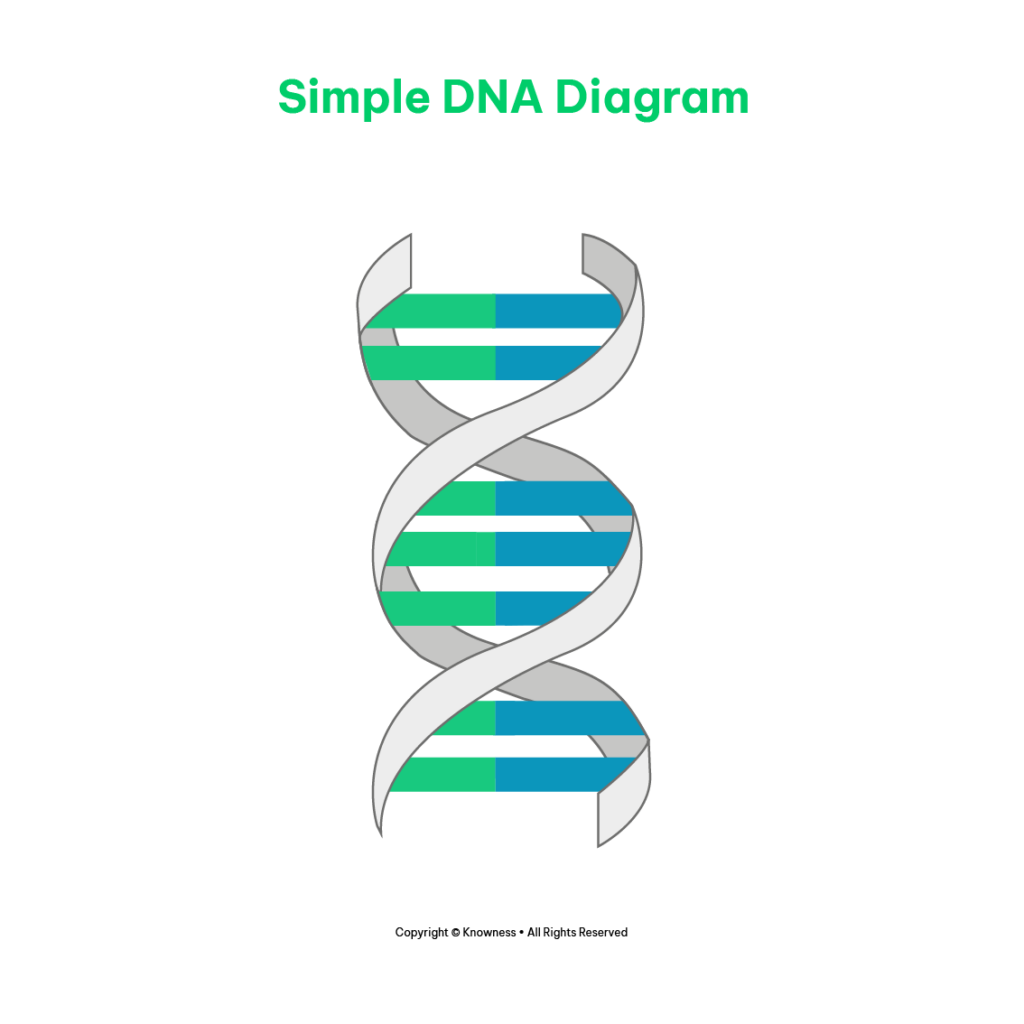
DNA is a polymer and has a unique structure known as a double helix. It consists of two strands that are twisted around each other in a spiral shape, resembling a twisted ladder or staircase. The strands are held together by hydrogen bonds between specific nucleotideThe basic building block of DNA and RNA, consisting of a sugar, phosphate, and base (A, T, G, or C). bases.
DNA is organised into structures called chromosomes. Chromosomes are thread-like structures made up of DNA tightly coiled and packaged with proteins. Each chromosomeA structure made of DNA that carries genetic information. contains many genes, which are functional units of DNA that carry the instructions for making proteins.
Genome
The genome refers to the complete set of genetic material or DNA present in an organism. It includes all the genes, non-coding DNA, and regulatory sequences that make up an individual's genetic blueprint.
The Human Genome Project was an international scientific endeavour that aimed to map and sequence the entire human genome. Completed in 2003, this monumental project provided a comprehensive understanding of the genetic makeup of humans.
The study of the human genome has immense importance for medicine and scientific research. It has led to advancements in the understanding of genetic diseases, personalised medicine, and the development of new therapeutic approaches. By identifying specific genes and their functions, scientists can better understand the genetic basis of diseases and potentially develop targeted treatments.
Understanding the Human Genome
Understanding the human genome has had significant implications for various areas of research and has transformed our understanding of human biology and health.
Search for Disease-Related Genes:
- The human genome provides valuable insights into the genetic basis of various diseases.
- By studying the genome, scientists can identify specific genes or gene variations associated with different types of diseases, such as cancer, cardiovascular disorders, and neurodegenerative conditions.
- This knowledge enables the development of targeted therapies and diagnostic tests for early detection and prevention of diseases.
Understanding and Treatment of Inherited Disorders:
- Inherited disorders are often caused by genetic mutations passed down through generations.
- By studying the human genome, researchers can identify the genetic mutations responsible for inherited disorders, such as cystic fibrosis, sickle cell anaemia, and muscular dystrophy.
- Understanding the underlying genetic mechanisms allows for improved diagnostic methods, genetic counselling, and the development of potential treatments or interventions.
Tracing Human Migration Patterns:
- The human genome provides valuable insights into human history and migration patterns.
- By studying genetic variations across different populations, scientists can trace the migration routes of ancient human populations, understand human evolution, and reconstruct historical population movements.
- This field of research, known as population genetics or genomics, sheds light on our shared ancestry and provides a deeper understanding of human diversity and cultural origins.
Conclusion
Understanding the structure of DNA and the concept of the genome is crucial in comprehending the fundamental principles of genetics and their applications. Understanding the human genome has revolutionised various fields of research, including medicine, genetics, and anthropologyThe study of humans, their societies, and cultures, often closely linked with archaeology in university degree programs.. By uncovering disease-related genes, advancing treatments for inherited disorders, and tracing human migration patterns, we can improve healthcare, develop targeted therapies, and gain insights into our shared human history.
Continue the lesson
This section is available to learners with course access. Continue learning with Knowness to unlock the full explanation, examples, revision tools, and progress tracking.
The remaining lesson content includes further guided explanation, important learning points, and supporting interactive material designed to help you understand and revise this topic.
Unlock this topic to view the full activity, worked examples, common mistakes, and additional revision support.
More content available
Knowness lessons are structured to build understanding step by step. Create an account or upgrade your access to continue from this point.
This preview does not include the hidden lesson text, answers, explanations, or embedded interactions.
Continue learning with Knowness
Sign up to access the full lesson, predicted grades, revision tools, progress tracking, and more.
Create a free account