

GCSE
Biology
-
Introduction to GCSE Biology (AQA) Coming soon
-
1.1 Cell Structure
-
1.2 Cell Division Coming soon
-
1.3 Transport in Cells Coming soon
-
2.1 Principles of Organisation Coming soon
-
2.2 Animal Tissues, Organs and Organ Systems Coming soon
-
2.3 Plant Tissues, Organs and Systems Coming soon
-
3.1 Communicable Diseases Coming soon
-
3.2 Monoclonal Antibodies [HT] Coming soon
-
3.3 Plant Disease Coming soon
-
4.1 Photosynthesis Coming soon
-
4.2 Respiration Coming soon
-
5.1 Homeostasis Coming soon
-
5.2 The Human Nervous System Coming soon
-
5.3 Hormonal Coordination in Humans Coming soon
-
5.4 Plant Hormones Coming soon
-
6.1 Reproduction Coming soon
-
6.2 Variation and Evolution Coming soon
-
6.3 The Development of Understanding of Genetics and Evolution Coming soon
-
6.4 Classification of Living Organisms Coming soon
-
7.1 Adaptations, Interdependence and Competition Coming soon
-
7.2 Organisation of an Ecosystem Coming soon
-
7.3 Biodiversity and the Effect of Human Interaction on Ecosystems Coming soon
-
7.4 Trophic Levels in an Ecosystem Coming soon
-
7.5 Food Production Coming soon
1. Cell Biology
5.3.4 Hormones in Human Reproduction
In this lesson, we will explore the roles of hormones in human reproduction, with a particular focusWhat the writer draws attention to at a given moment (e.g., setting, character, detail). on the menstrual cycle. We will discuss the main reproductive hormones in both males and females and their functions in the reproductive process.
Hormones and Secondary Sex Characteristics
During puberty, the reproductive hormones play a vital role in the development of secondary sex characteristics.
Hormones in Female Reproduction:
In females, the main hormone responsible for the development of secondary sex characteristics is oestrogen, produced in the ovaries.
- Oestrogen: Oestrogen is the main female reproductive hormone. It is responsible for the development of the female reproductive organs and secondary sexual characteristics.
- Ovulation: At puberty, eggs in the ovary begin to mature. Approximately every 28 days, one mature egg is released from the ovary, a process known as ovulation.
Hormones in Male Reproduction:
In males, testosterone, produced in the testes, is the primary hormone involved in the development of secondary sex characteristics.
- Testosterone: Testosterone is the primary male reproductive hormone, produced in the testes. It is responsible for the development of male reproductive organs, sperm production, and the development of secondary sexual characteristics in males.
Hormones in the Menstrual Cycle
The menstrual cycle is a monthly series of hormonal changes that occur in females, preparing the body for possible pregnancy. It consists of several phases regulated by different hormones.
- Follicle Stimulating Hormone (FSH): FSH is released by the pituitary gland and stimulates the maturation of an egg (follicle) in the ovary. As follicles mature, they produce oestrogen.
- Luteinising Hormone (LH): LH is also released by the pituitary gland and, around the middle of the menstrual cycle, triggers ovulation which stimulates the release of the mature egg (ovulation) from the ovary.
- Oestrogen and Progesterone: Oestrogen and progesterone, produced by the ovaries, play a crucial role in maintaining the uterus lining. Oestrogen helps thicken the uterine lining during the follicular phase, while progesterone helps prepare the uterus for potential implantation by maintaining the thickened lining during the luteal phase.
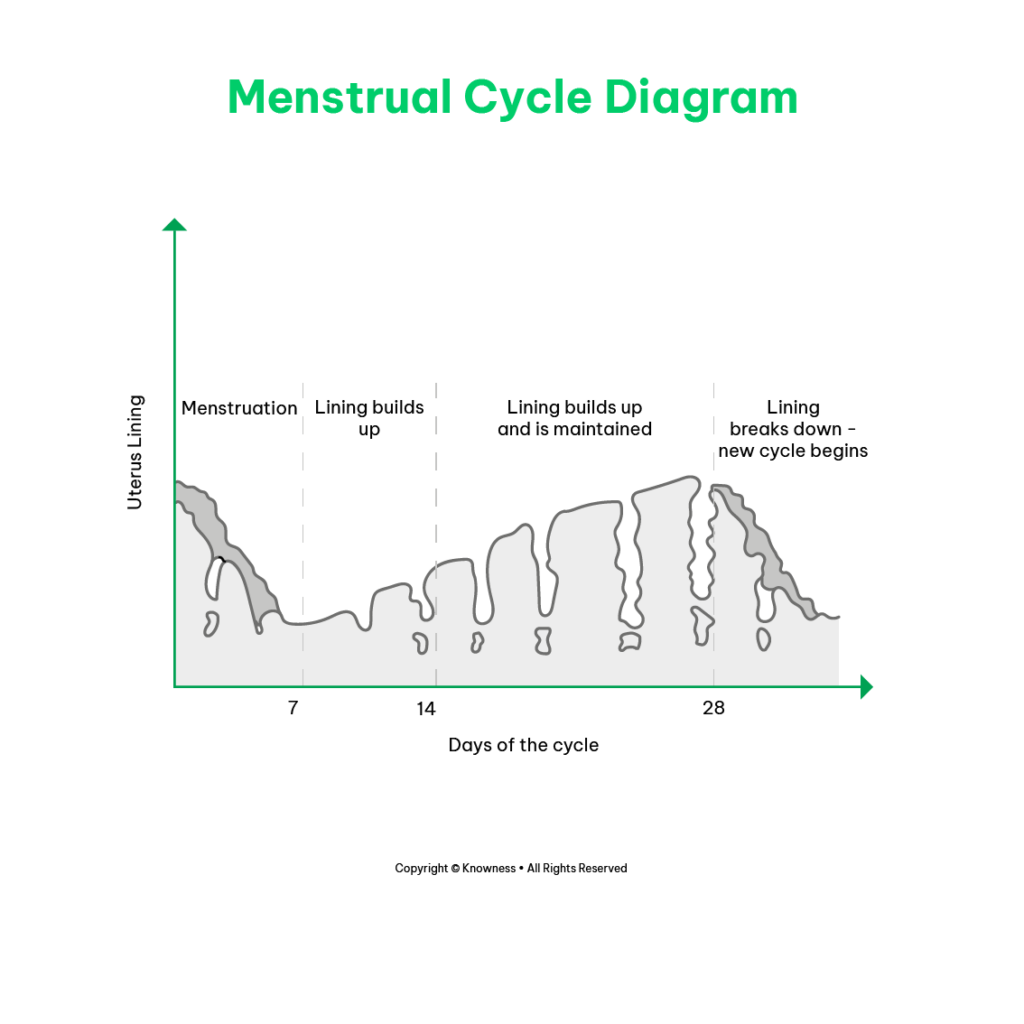
- Follicular Phase:
- FSH stimulates the development of follicles, which produce oestrogen.
- Rising oestrogen levels suppress FSH production and stimulate LH release.
- Oestrogen promotes the thickening of the uterus lining.
- Ovulation:
- The LH surge triggers ovulation, the release of the mature egg from the ovary.
- Luteal Phase:
- After ovulation, the ruptured follicle becomes the corpus luteum, which produces progesterone.
- Progesterone prepares the uterus for potential implantation.
- Menstruation:
- If fertilisation does not occur, oestrogen and progesterone levels decline.
- The drop in hormone levels leads to the shedding of the uterine lining, resulting in menstruation.
Conclusion
Hormones play essential roles in human reproduction. Oestrogen and testosterone are responsible for the development of secondary sexual characteristics in females and males, respectively. In females, hormones such as FSH, LH, oestrogen, and progesterone regulate the menstrual cycle, including the maturation and release of eggs and the maintenance of the uterus lining.
Continue the lesson
This section is available to learners with course access. Continue learning with Knowness to unlock the full explanation, examples, revision tools, and progress tracking.
The remaining lesson content includes further guided explanation, important learning points, and supporting interactive material designed to help you understand and revise this topic.
Unlock this topic to view the full activity, worked examples, common mistakes, and additional revision support.
More content available
Knowness lessons are structured to build understanding step by step. Create an account or upgrade your access to continue from this point.
This preview does not include the hidden lesson text, answers, explanations, or embedded interactions.
Continue learning with Knowness
Sign up to access the full lesson, predicted grades, revision tools, progress tracking, and more.
Create a free account