

GCSE
Biology
-
Introduction to GCSE Biology (AQA) Coming soon
-
1.1 Cell Structure
-
1.2 Cell Division Coming soon
-
1.3 Transport in Cells Coming soon
-
2.1 Principles of Organisation Coming soon
-
2.2 Animal Tissues, Organs and Organ Systems Coming soon
-
2.3 Plant Tissues, Organs and Systems Coming soon
-
3.1 Communicable Diseases Coming soon
-
3.2 Monoclonal Antibodies [HT] Coming soon
-
3.3 Plant Disease Coming soon
-
4.1 Photosynthesis Coming soon
-
4.2 Respiration Coming soon
-
5.1 Homeostasis Coming soon
-
5.2 The Human Nervous System Coming soon
-
5.3 Hormonal Coordination in Humans Coming soon
-
5.4 Plant Hormones Coming soon
-
6.1 Reproduction Coming soon
-
6.2 Variation and Evolution Coming soon
-
6.3 The Development of Understanding of Genetics and Evolution Coming soon
-
6.4 Classification of Living Organisms Coming soon
-
7.1 Adaptations, Interdependence and Competition Coming soon
-
7.2 Organisation of an Ecosystem Coming soon
-
7.3 Biodiversity and the Effect of Human Interaction on Ecosystems Coming soon
-
7.4 Trophic Levels in an Ecosystem Coming soon
-
7.5 Food Production Coming soon
1. Cell Biology
2.2.4 Coronary Heart Disease: A Non-Communicable Disease
In this lesson, we will explore coronary heart disease (CHD) as a non-communicable disease and examine various treatment options available. We will learn to evaluate the advantages and disadvantages of treating cardiovascular diseases through drugs, mechanical devices, or transplantation. We will also discuss the consequences of faulty heart valves and the treatment possibilities for heart failure.
Coronary Heart Disease
In coronary heart disease, layers of fatty material accumulate inside the coronary arteries, leading to their narrowing. This condition, called atherosclerosis, reduces blood flow through the coronary arteries, causing insufficient oxygen supply to the heart muscle.
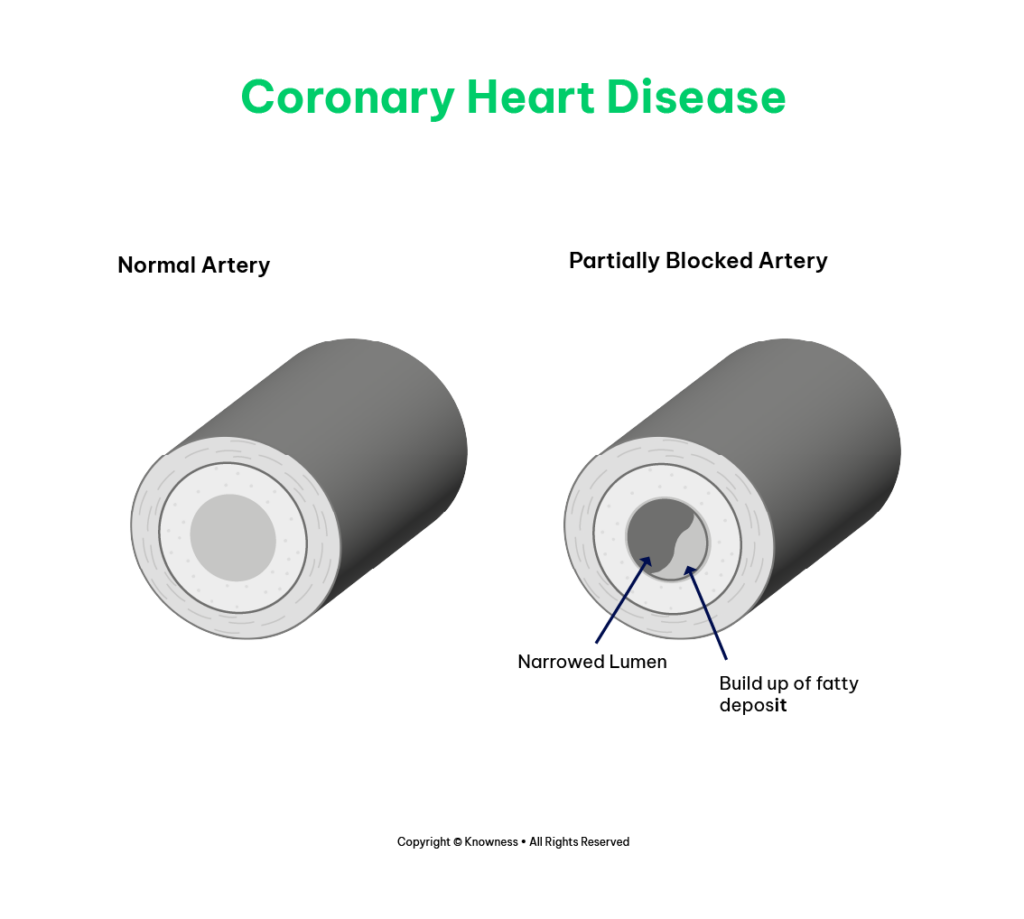
The lack of oxygen-rich blood to the heart muscle can result in chest pain, known as angina. Severe narrowing or blockage of coronary arteries can lead to a heart attack, causing damage to the heart muscle.
Treatment Options for Coronary Heart Disease
- Stents: Stents are small, mesh-like tubes that are used to keep the coronary arteries open and improve blood flow. The placement of stents helps alleviate symptoms of angina and reduce the riskThe chance that a decision could lead to loss, failure, or negative consequences. of heart attacks.
- Statins: Statins are medications prescribed to lower blood cholesterol levels. By reducing cholesterol levels, statins slow down the accumulationChange in a physical quantity over time, whether that be an increase, decrease, or no change at all. of fatty material in the arteries, reducing the risk of further narrowing or blockage.
Faulty Heart Valves and Treatment
In some individuals, heart valves may become faulty, preventing the valve from opening fully or developing a leak. These conditions can disrupt the normal flow of blood through the heart, leading to symptoms such as fatigue, shortness of breath, and chest pain.
Treatment Options for Faulty Heart Valves:
- Biological Valves: Faulty heart valves can be replaced with biological valves, which may be derived from human or animal tissueA group of similar specialised cells working together to perform a function.. These valves provide a more natural function and do not require lifelong anticoagulant therapy.
- Mechanical Valves: Mechanical valves are made from artificial materials and provide long-term durability. However, they require lifelong anticoagulant therapy to prevent blood clot formation.
Heart Failure and Treatment Options
- Heart Transplant: In cases of severe heart failure, a heart transplant may be necessary. A donor heart is transplanted to replace the failing heart, restoring normal heart function.
- Artificial Hearts: Artificial hearts, or ventricular assist devices (VADs), can be used as a temporary measure to support heart function while awaiting a transplant or as a bridge to recovery. VADs pump blood through the body and assist the failing heart.
Evaluating Treatment Options
Treating cardiovascular diseases through drugs, mechanical devices, or transplants presents a range of advantages and disadvantages. Drug therapy, which includes medications like statins and anticoagulants, is widely accessible and effective in reducing symptoms and complications. It is often non-invasive and can be a long-term solution. However, drug therapy may entail side effects and require lifelong adherence.
Mechanical devices, such as stents and artificial hearts (VADs), offer immediate relief and can serve as bridges to transplantation or recovery. They enhance quality of life and may improve survival rates. Nevertheless, mechanical devices come with the risk of infections, mechanical complications, and lifestyle restrictions.
Heart transplants, on the other hand, provide a definitive cure for severe heart failure and restore normal heart function. They offer unparalleled benefits in terms of quality of life and survival. However, heart transplants face limitations due to donor scarcityThe situation where limited resources are not sufficient to satisfy unlimited human wants. and the need for lifelong immunosuppression.
Conclusion
Coronary heart disease is a significant non-communicable disease with various treatment options available. Evaluating the advantages and disadvantages of treating faulty heart valves with biological or mechanical valves allows for informed decision-making regarding patient care.
Continue the lesson
This section is available to learners with course access. Continue learning with Knowness to unlock the full explanation, examples, revision tools, and progress tracking.
The remaining lesson content includes further guided explanation, important learning points, and supporting interactive material designed to help you understand and revise this topic.
Unlock this topic to view the full activity, worked examples, common mistakes, and additional revision support.
More content available
Knowness lessons are structured to build understanding step by step. Create an account or upgrade your access to continue from this point.
This preview does not include the hidden lesson text, answers, explanations, or embedded interactions.
Continue learning with Knowness
Sign up to access the full lesson, predicted grades, revision tools, progress tracking, and more.
Create a free account