

GCSE
Biology
-
Introduction to GCSE Biology (AQA) Coming soon
-
1.1 Cell Structure
-
1.2 Cell Division Coming soon
-
1.3 Transport in Cells Coming soon
-
2.1 Principles of Organisation Coming soon
-
2.2 Animal Tissues, Organs and Organ Systems Coming soon
-
2.3 Plant Tissues, Organs and Systems Coming soon
-
3.1 Communicable Diseases Coming soon
-
3.2 Monoclonal Antibodies [HT] Coming soon
-
3.3 Plant Disease Coming soon
-
4.1 Photosynthesis Coming soon
-
4.2 Respiration Coming soon
-
5.1 Homeostasis Coming soon
-
5.2 The Human Nervous System Coming soon
-
5.3 Hormonal Coordination in Humans Coming soon
-
5.4 Plant Hormones Coming soon
-
6.1 Reproduction Coming soon
-
6.2 Variation and Evolution Coming soon
-
6.3 The Development of Understanding of Genetics and Evolution Coming soon
-
6.4 Classification of Living Organisms Coming soon
-
7.1 Adaptations, Interdependence and Competition Coming soon
-
7.2 Organisation of an Ecosystem Coming soon
-
7.3 Biodiversity and the Effect of Human Interaction on Ecosystems Coming soon
-
7.4 Trophic Levels in an Ecosystem Coming soon
-
7.5 Food Production Coming soon
1. Cell Biology
1.2.2 Mitosis and the Cell Cycle
Cell division is a vital process in the life cycle of cells, enabling growth, repair, and reproduction. The cell cycle consists of a series of stages through which cells progress, including the important phase known as mitosis.
The Cell Cycle
The cell cycle refers to the series of stages that cells go through during their life cycle. It includes growth, DNA replication, and cell division.
Stages of the Cell Cycle
- Interphase: The longest phase of the cell cycle, consisting of three sub-phases: G1, S, and G2. During interphase, the cell grows, carries out its normal functions, and prepares for cell division. Before a cell can divide, it needs to undergo a period of growth and increase the number of sub-cellular structures, such as ribosomes and mitochondriaAn organelle where aerobic respiration occurs and energy is released.. DNA replication occurs during the S (synthesisCombining information from more than one text to show comparison.) phase, resulting in the formation of two copies of each chromosomeA structure made of DNA that carries genetic information..
- Mitosis: The phase of the cell cycle where the nucleusA membrane-bound organelle in eukaryotic cells that contains DNA. divides, ensuring the equal distribution of genetic materialDNA that carries the instructions for cell structure and function.. Mitosis consists of several distinct stages, including prophase, metaphase, anaphase, and telophase.
- Cytokinesis: The final stage of the cell cycle where the cytoplasmA jelly-like substance in cells where most chemical reactions occur. and cell membranes divide, resulting in the formation of two identical daughter cellsThe two new cells formed after cell division..
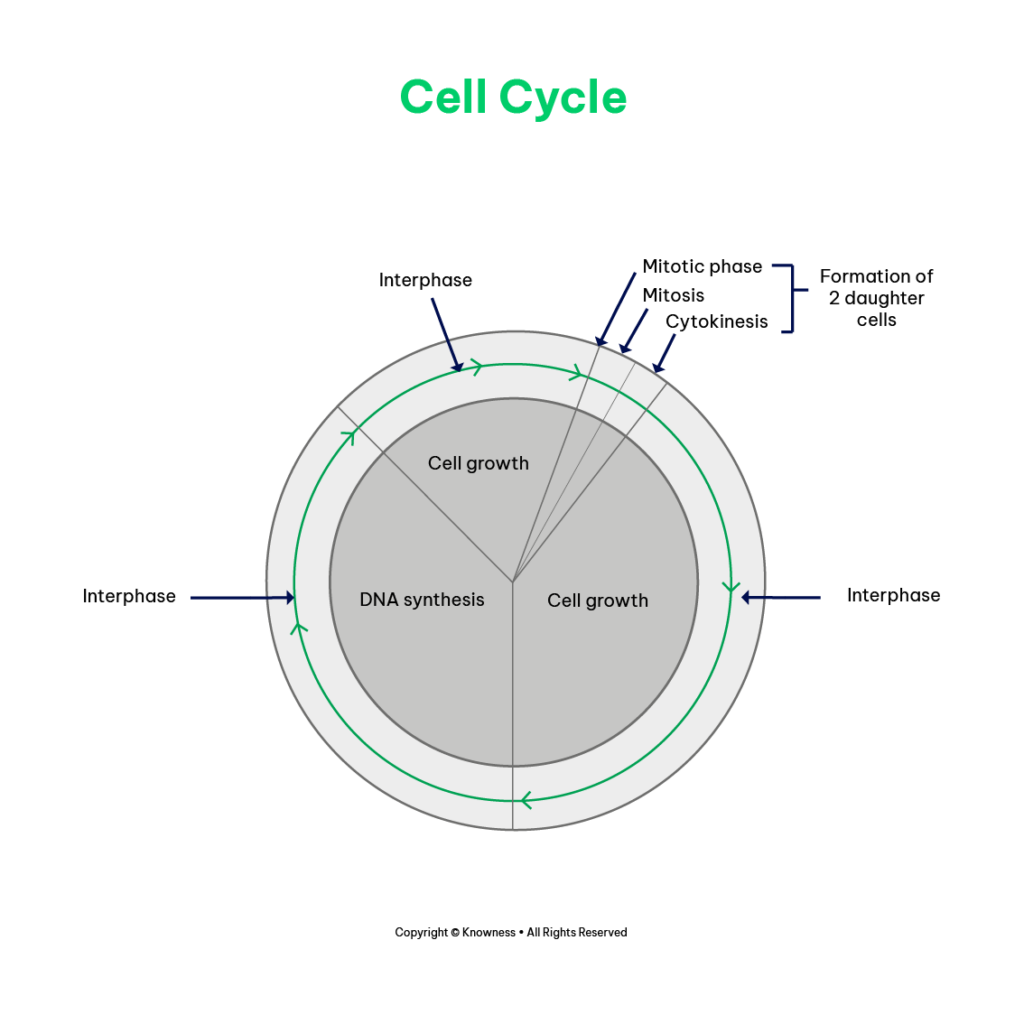
Mitosis
Before cell division occurs, the DNA replicates during the S phase of interphase. This replication process results in the formation of two identical copies of each chromosome, known as sister chromatids.
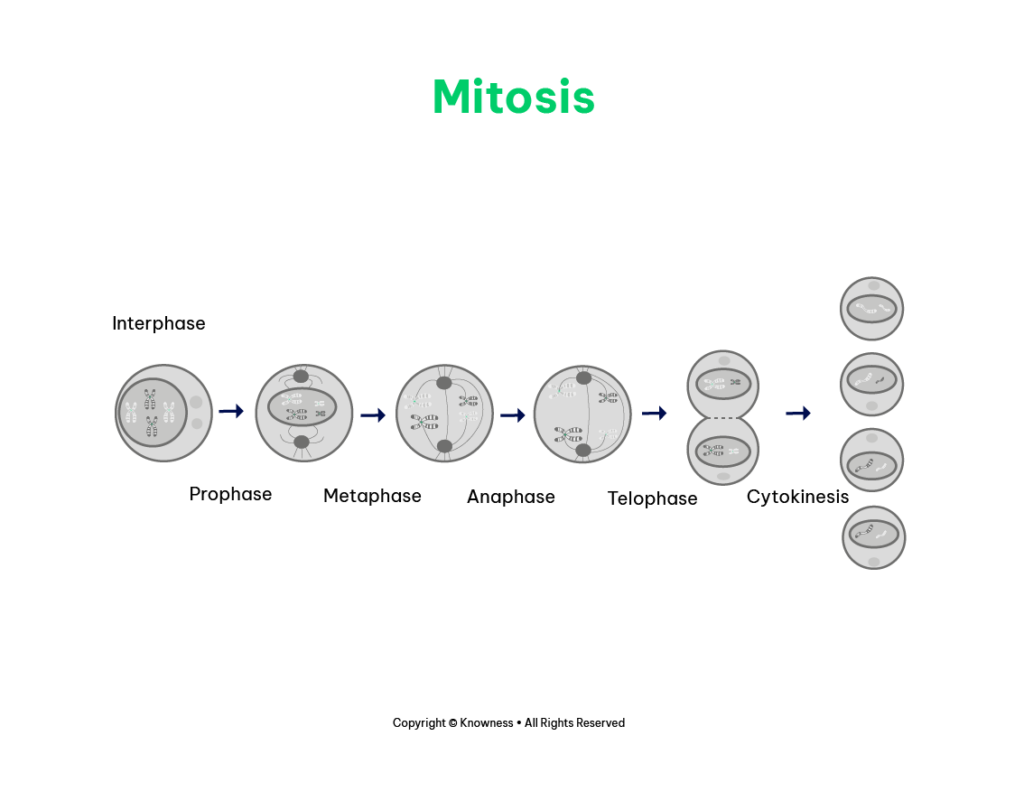
Stages of Mitosis
- Prophase: Chromosomes condense, becoming visible under a microscope. The nuclear membrane disintegrates, and the spindle fibres form.
- Metaphase: Chromosomes align along the cell's equator, known as the metaphase plate, due to the attachment of spindle fibres.
- Anaphase: Sister chromatids separate at the centromere and move towards opposite ends of the cell.
- Telophase: Chromosomes decondense, nuclear membranes form around each set of chromosomes, and the spindle fibres disintegrate.
Mitosis plays a crucial role in the growth and development of multicellular organisms. It ensures the formation of identical cells with the same genetic material, allowing for tissueA group of similar specialised cells working together to perform a function. growth and repair.
Recognising Mitosis in Given Contexts
- Cellular Regeneration: Mitosis occurs during the regeneration and repair of tissues in the human body. For example, when a cut heals, new cells are generated through mitosis.
- Growth and Development: Mitosis is essential for the growth and development of organisms from a single fertilised egg to a fully formed individual. It allows for the generation of new cells that contribute to tissue and organA structure made of different tissues working together to perform a specific function. development.
- Asexual Reproduction: In some organisms, mitosis is responsible for asexual reproduction. For instance, in plants, mitosis allows for the growth of roots and shoots, leading to the formation of new individuals.
Conclusion
Understanding the stages of the cell cycle, with a specific focusWhat the writer draws attention to at a given moment (e.g., setting, character, detail). on mitosis, is crucial for comprehending cell division and its significance in the growth and development of multicellular organisms. The cell cycle consists of interphase, mitosis, and cytokinesis, each with distinct functions and processes. Before cell division, cells undergo a phase of growth and DNA replication, resulting in the formation of two identical copies of each chromosome. Mitosis ensures the equal distribution of genetic material and the generation of identical cells, playing a critical role in tissue regeneration, growth, and asexual reproduction.
Continue the lesson
This section is available to learners with course access. Continue learning with Knowness to unlock the full explanation, examples, revision tools, and progress tracking.
The remaining lesson content includes further guided explanation, important learning points, and supporting interactive material designed to help you understand and revise this topic.
Unlock this topic to view the full activity, worked examples, common mistakes, and additional revision support.
More content available
Knowness lessons are structured to build understanding step by step. Create an account or upgrade your access to continue from this point.
This preview does not include the hidden lesson text, answers, explanations, or embedded interactions.
Continue learning with Knowness
Sign up to access the full lesson, predicted grades, revision tools, progress tracking, and more.
Create a free account