

GCSE
Biology
-
Introduction to GCSE Biology (AQA) Coming soon
-
1.1 Cell Structure
-
1.2 Cell Division Coming soon
-
1.3 Transport in Cells Coming soon
-
2.1 Principles of Organisation Coming soon
-
2.2 Animal Tissues, Organs and Organ Systems Coming soon
-
2.3 Plant Tissues, Organs and Systems Coming soon
-
3.1 Communicable Diseases Coming soon
-
3.2 Monoclonal Antibodies [HT] Coming soon
-
3.3 Plant Disease Coming soon
-
4.1 Photosynthesis Coming soon
-
4.2 Respiration Coming soon
-
5.1 Homeostasis Coming soon
-
5.2 The Human Nervous System Coming soon
-
5.3 Hormonal Coordination in Humans Coming soon
-
5.4 Plant Hormones Coming soon
-
6.1 Reproduction Coming soon
-
6.2 Variation and Evolution Coming soon
-
6.3 The Development of Understanding of Genetics and Evolution Coming soon
-
6.4 Classification of Living Organisms Coming soon
-
7.1 Adaptations, Interdependence and Competition Coming soon
-
7.2 Organisation of an Ecosystem Coming soon
-
7.3 Biodiversity and the Effect of Human Interaction on Ecosystems Coming soon
-
7.4 Trophic Levels in an Ecosystem Coming soon
-
7.5 Food Production Coming soon
1. Cell Biology
Chromosomes play a fundamental role in carrying genetic information within cells. Found within the nucleusA membrane-bound organelle in eukaryotic cells that contains DNA., chromosomes consist of DNA molecules tightly coiled and organised.
Chromosomes and DNA
Chromosomes are thread-like structures composed of DNA molecules tightly wrapped around proteins called histones. The DNA molecules are organised into a highly compact and condensed form to fit within the nucleus.
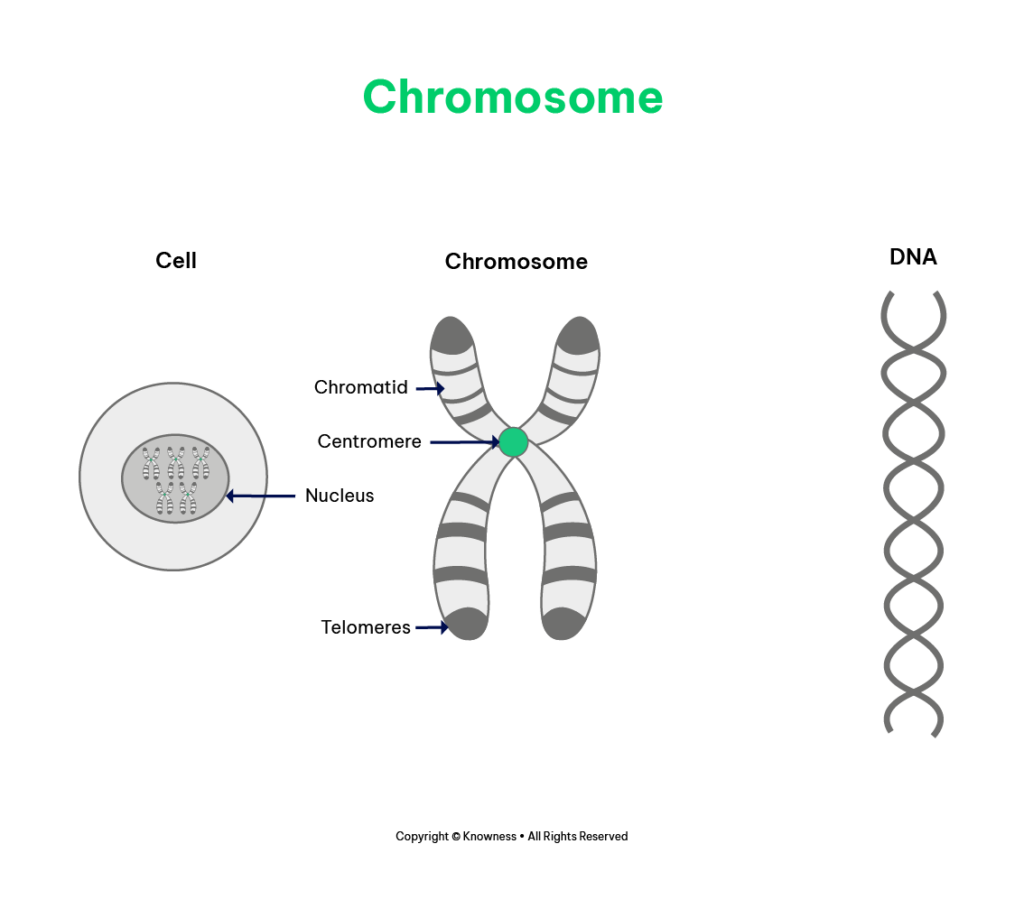
DNA, the hereditary material, carries the genetic information that determines an organism's traits and characteristics. Genes, segments of DNA, are responsible for encoding specific instructions for the synthesisCombining information from more than one text to show comparison. of proteins.
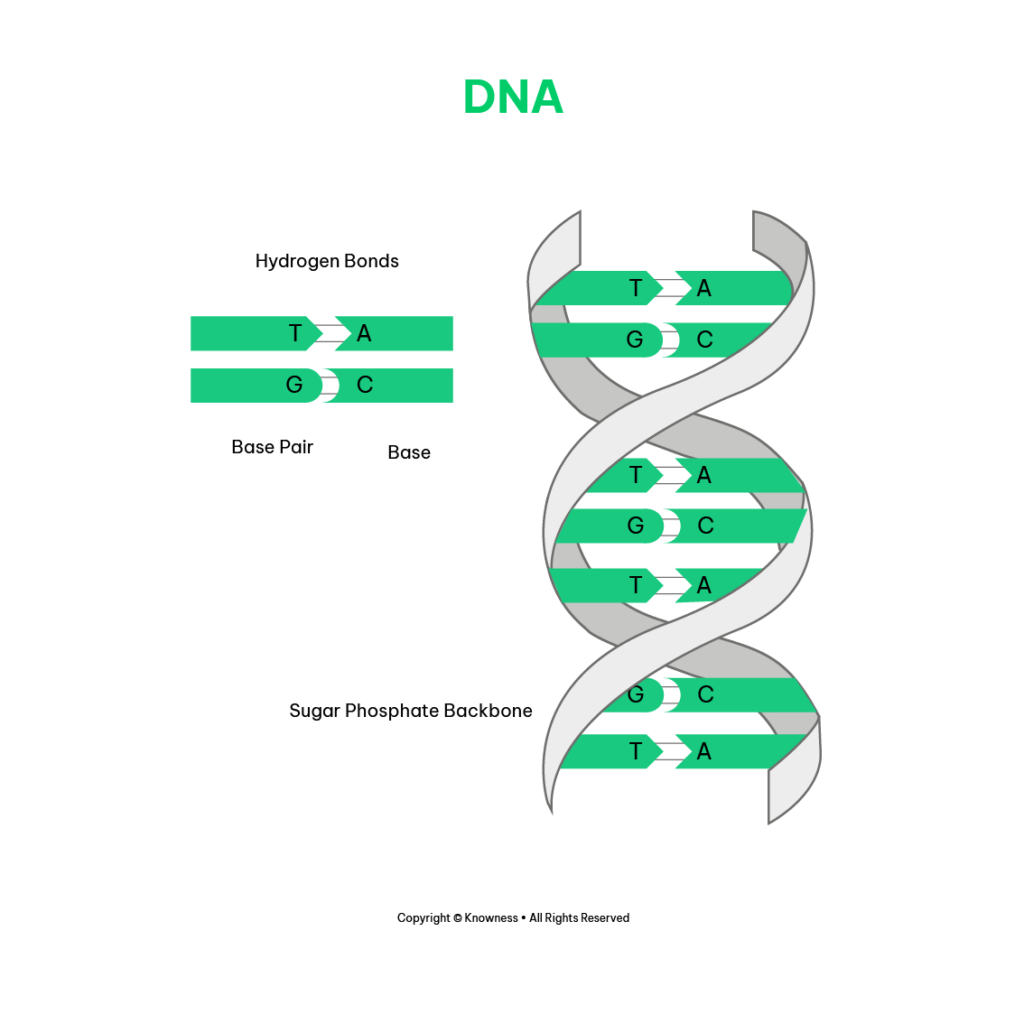
Chromosomes and Genes
Each chromosomeA structure made of DNA that carries genetic information. carries a large number of genes, which are arranged along its length. Genes provide the instructions for the production of proteins, which are essential for cellular functions and determine an organism's traits.
Gene expression refers to the process by which the information encoded in genes is utilised to synthesise proteins. The expression of specific genes determines the characteristics and functions of different cells and tissues.
Chromosomes in Body Cells
In most body cells, chromosomes are found in pairs, known as homologous chromosomes. Each pair consists of one chromosome inherited from the organism's mother and one from the father.
The total number of chromosomes in a body cell is known as the diploid number. The diploid number varies among species, with humans having 46 chromosomes, organised into 23 pairs.
Homologous chromosomes contain similar genes arranged at corresponding positions. Although they have the same genes, the specific versions or alleles of those genes may differ between the homologous chromosomes.
Significance of Chromosomes
- Inheritance: Chromosomes are key players in the transmission of genetic information from one generation to the next. They ensure the faithful transfer of genetic materialDNA that carries the instructions for cell structure and function., allowing for the inheritance of traits from parents to offspring.
- Genetic Variation: The presence of pairs of homologous chromosomes and the shuffling of genetic material during meiosis contribute to genetic variation within a population. This variation is essential for evolutionary processes and adaptation to changing environments.
Conclusion
Chromosomes are vital structures within the nucleus of cells, carrying DNA molecules and housing a large number of genes. Their organisation in pairs in body cells allows for the transmission of genetic information and the inheritance of traits. Understanding the role of chromosomes in gene expression, cell division, and inheritance provides insights into the mechanisms of genetic variation and the complexity of life's genetic blueprint.
Continue the lesson
This section is available to learners with course access. Continue learning with Knowness to unlock the full explanation, examples, revision tools, and progress tracking.
The remaining lesson content includes further guided explanation, important learning points, and supporting interactive material designed to help you understand and revise this topic.
Unlock this topic to view the full activity, worked examples, common mistakes, and additional revision support.
More content available
Knowness lessons are structured to build understanding step by step. Create an account or upgrade your access to continue from this point.
This preview does not include the hidden lesson text, answers, explanations, or embedded interactions.
Continue learning with Knowness
Sign up to access the full lesson, predicted grades, revision tools, progress tracking, and more.
Create a free account