

2.5.1 Organisational Structures
In this lesson, we will focusWhat the writer draws attention to at a given moment (e.g., setting, character, detail). on making human resource decisions, specifically related to organisational structures and effective communication. The way an organisation is structured and how communication flows within it play a critical role in ensuring efficient operations and motivated employees.
Organisational Structures
Organisational structureThe organisation and order of information in a text. refers to how the various roles, responsibilities, and reporting relationships are arranged within a business.
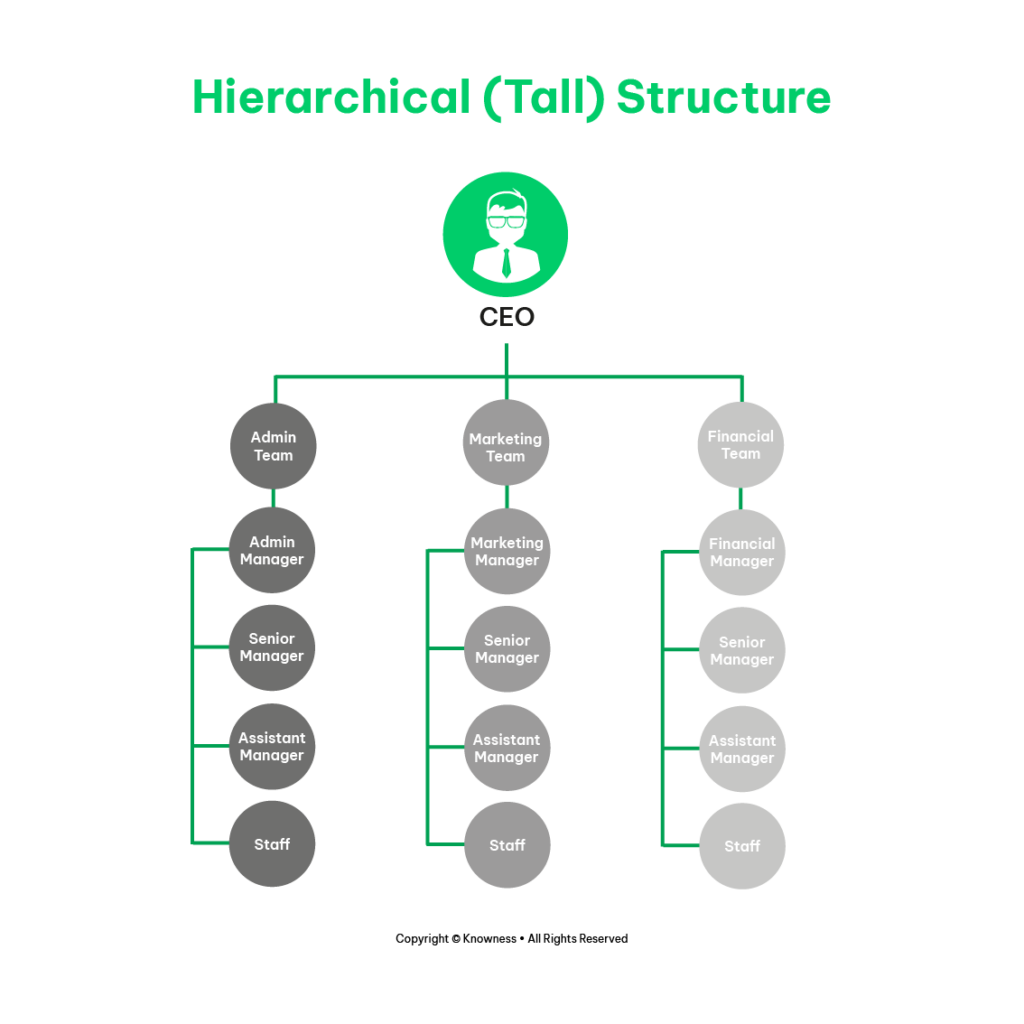
Hierarchical Structure:
A hierarchical structure features multiple levels of management and a clear chain of command. Decision-making authority flows from top to bottom, with each level overseeing and supervising the level below. This structure works well in large organisations where centralised decision-making and clear reporting lines are necessary.
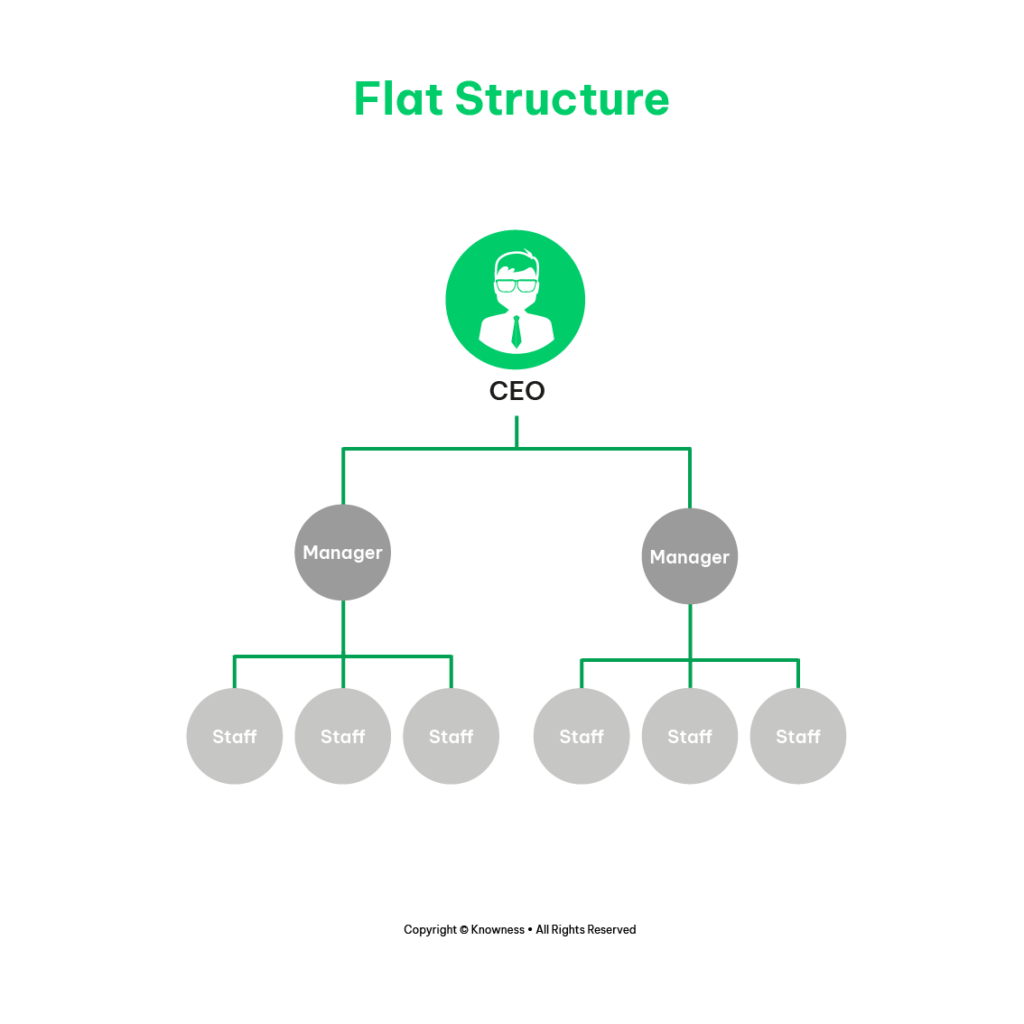
Flat Structure:
A flat structure has minimal levels of management and fewer formal reporting lines. It emphasises collaboration, employee empowerment, and a more flexible decision-making process. This structure works well in smaller organisations or those with a focus on fostering innovationThe process of creating new ideas, products, or methods. and quick decision-making.
Centralised and Decentralised Structures
Centralisation and decentralisation refer to the distribution of decision-making authority within an organisation.
- Centralised Structure: In a centralised structure, decision-making authority rests primarily with higher-level management or a central authority figure. This structure enables consistency, uniformity, and centralised control over key decisions. It is often suitable for organisations with strict compliance requirements or those operating in highly regulated industries.
- Decentralised Structure: A decentralised structure delegates decision-making authority to lower-level managers or teams. It empowers employees, promotes innovation, and allows for faster decision-making. This structure works well in dynamic and fast-paced environments that require quick responses and adaptability.
Importance of Effective Communication
Effective communication is crucial for smooth business operations and maintaining a motivated workforce. Here's why it's important:
- Efficiency: Effective communication ensures that information flows freely and accurately across different levels and departments within the organisation. Clear communication reduces misunderstandings, streamlines processes, and minimises errors or delays. It promotes collaboration, coordination, and efficient decision-making.
- Motivation: Open and transparent communication fosters a positive work environment, enhances employee engagement, and boosts morale. When employees feel informed, listened to, and valued, they are more likely to be motivated, productive, and committed to achieving organisational goals.
- Barriers to Effective Communication: Effective communication can be hindered by various barriers, such as language barriers, cultural differences, lack of clarity or contextA discrete unit of archaeological evidence, such as a layer of soil, a structure, or a feature, that can be recorded and interpreted., noise, and poor listening skills. Identifying and addressing these barriers is essential for creating a communication-friendly environment.
Different Ways of Working
The modern workforce encompasses diverse working arrangements. Here are some examples:
- Part-Time, Full-Time, and Flexible Hours: Part-time employment involves working fewer hours than a full-time employee. Full-time employment typically refers to a standard workweek. Flexible hours allow employees to customise their work schedules to accommodate personal needs, such as flextime or compressed workweeks. Offering different working arrangements can attract a wider pool of talent and improve work-life balance.
- Permanent, Temporary, and Freelance Contracts: Permanent contracts provide long-term employment with benefits, while temporary contracts have a fixed duration. Freelance contracts involve working on a project basis as an independent contractor. Each contract type offers different advantages and flexibility for both employers and employees.
- Impact of Technology on Ways of Working: Technological advancements have transformed the way people work. Tools such as remote access, video conferencing, and collaboration platforms enable remote working, virtual teams, and flexible work arrangements. Technology has increased efficiency, productivity, and work flexibility, allowing businesses to adapt to changing work preferences and market demands.
Conclusion
Making effective human resource decisions involves understanding organisational structures, fostering effective communication, and adapting to different ways of working. Selecting an appropriate organisational structure, whether hierarchical or flat, and deciding on the degree of centralisation or decentralisation, depends on the business's size, industry, and objectives. Embracing different ways of working, such as part-time, full-time, flexible hours, and diverse employment contracts, allows businesses to attract and retain talent while meeting the evolving needs of employees.