

University Taster
Civil Engineering – University Taster
3.2 Foundations
Foundations transfer loads from the superstructure to the underlying soil or rock, ensuring stability and preventing settlementThe act of establishing a community in a new area.. Understanding soil properties, foundation types, bearing capacity calculations, and settlement methods is crucial for civil engineers to design safe, stable, and cost-effective foundations.
Foundations
Eurocode 7 (EN 1997-1: Geotechnical Design – Part 1: General Rules) provides comprehensive guidelines for designing shallow and deep foundations, emphasising safety, reliability, and environmental compatibility.
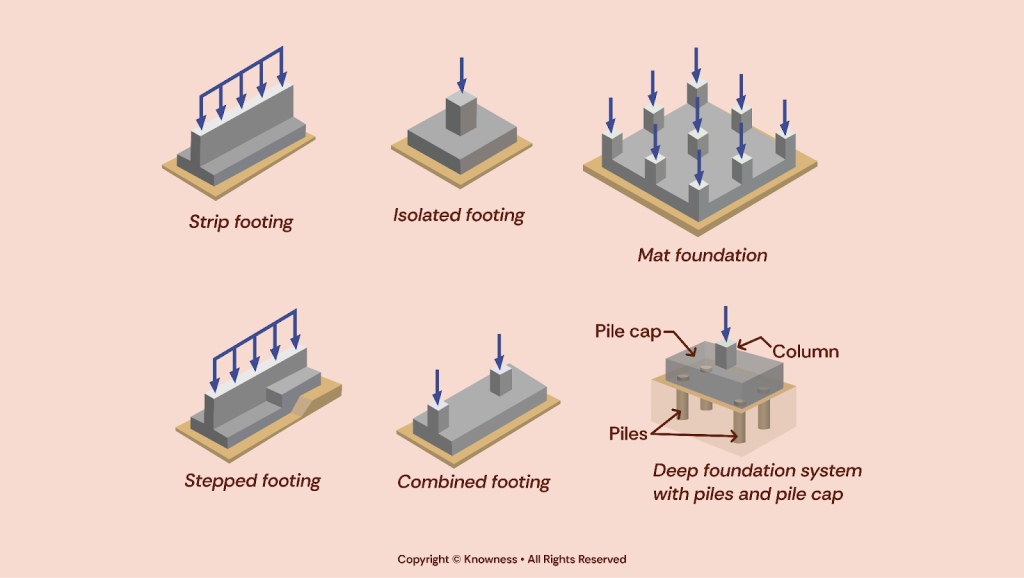
The types of foundations are broadly categorised into:
- Shallow Foundations: Spread footings and raft (or mat) foundations
- Deep Foundations: Pile foundations and drilled shafts (caissons)
The selection depends on factors such as load magnitude, soil conditions, and site constraints.
Continue the lesson
This section is available to learners with course access. Continue learning with Knowness to unlock the full explanation, examples, revision tools, and progress tracking.
The remaining lesson content includes further guided explanation, important learning points, and supporting interactive material designed to help you understand and revise this topic.
Unlock this topic to view the full activity, worked examples, common mistakes, and additional revision support.
More content available
Knowness lessons are structured to build understanding step by step. Create an account or upgrade your access to continue from this point.
This preview does not include the hidden lesson text, answers, explanations, or embedded interactions.
Continue learning with Knowness
Sign up to access the full lesson, predicted grades, revision tools, progress tracking, and more.
Create a free account