

2.3.2 Working with Suppliers
In this lesson, we will focusWhat the writer draws attention to at a given moment (e.g., setting, character, detail). on making operational decisions, specifically regarding working with suppliers. We will explore stock management techniques such as bar gate stock graphs and just-in-time (JIT) stock control. Additionally, we will discuss the role of procurement, including supplier relationships, logistics, and supply decisions' impact on costsThe sacrifices made when choosing a particular option, which may include money spent, time used, or resources consumed., reputation, and customer satisfaction.
Managing Stock
Efficient stock management is crucial for businesses to ensure a steady supply of materials or products while minimising costs and storage requirements.
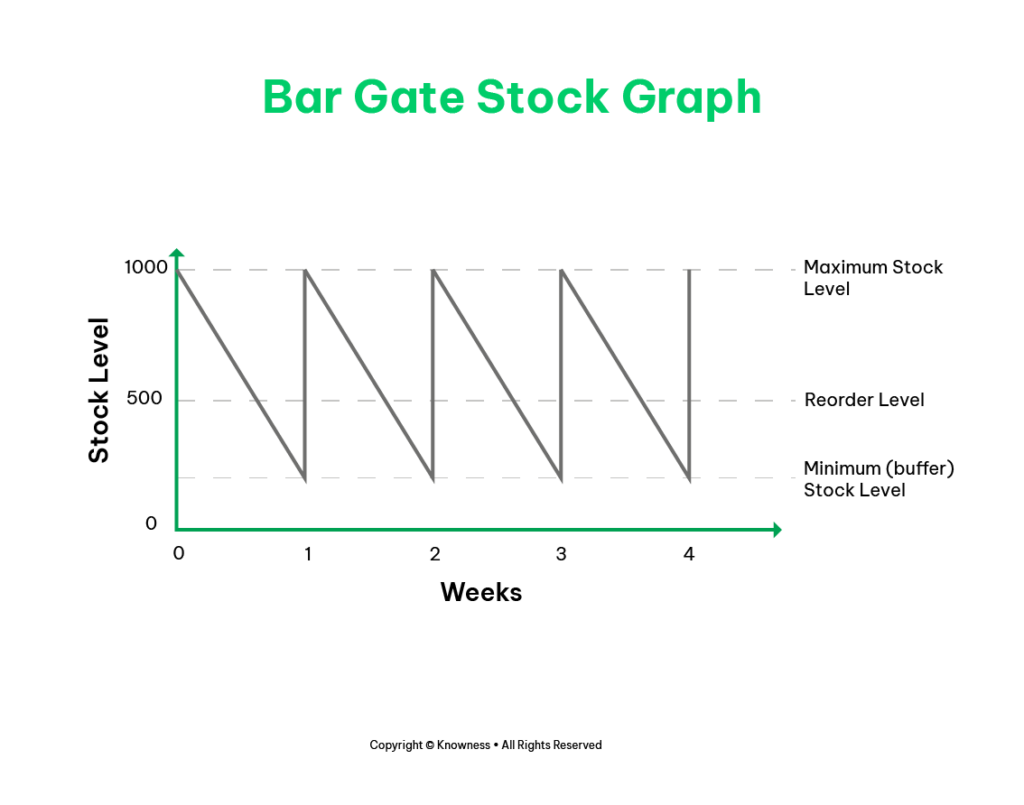
Bar gate stock graphs visually represent the movement of stock levels over time. They provide insights into stock levels, fluctuations, and patterns. Understanding and interpreting bar gate stock graphs help businesses identify stock trends, predict demand, and make informed decisions regarding stock ordering and replenishment.
Just-in-Time (JIT) stock control is an inventory management approach where materials or products are ordered and received just before they are needed in the production or sales process. JIT aims to reduce excess inventory, minimise storage costs, and optimise cash flow. By receiving supplies as close as possible to the required time, businesses can enhance efficiency, minimise waste, and improve responsiveness to customer demand.
The Role of Procurement
Procurement encompasses the processes involved in sourcing, selecting, and managing suppliers to ensure the availability of required resourcesThe inputs used to produce goods and services, including the factors of production. and materials. Effective procurement practices contribute to cost savings, quality assurance, and overall operational efficiency.
Developing strong relationships with suppliers is vital for successful procurement. Key considerations when building supplier relationships include:
- Quality: Ensuring suppliers meet quality standards to maintain consistent product or service quality.
- Delivery: Evaluating suppliers based on their ability to deliver products or servicesIntangible products that provide a skill, experience, or benefit rather than a physical item. on time, at the right cost, and with reliability.
- Availability: Ensuring suppliers can meet demand fluctuations and maintain consistent availability of required resources or materials.
- Cost: Negotiating favourable pricing terms with suppliers to maximise cost savings and maintain competitiveness.
- Trust: Building trust and open communication channels to foster collaborative relationships that benefitThe gain or advantage received from making a particular economic decision. both parties.
Logistics and supply decisions play a significant role in procurement. Effective management of logistics, including transportation, warehousing, and distribution, is crucial for timely and cost-effective delivery of materials or products. Supply decisions, such as supplier selection, lead times, and order quantities, impact various aspects of the business, including:
- Costs: Optimal supply decisions help control costs associated with procurement, inventory holding, and logistics.
- Reputation: Timely delivery of quality materials or products contributes to a positive reputation among customers and stakeholders.
- Customer Satisfaction: Efficient procurement and supply management ensure consistent availability of products or services, leading to increased customer satisfaction.
Conclusion
Making effective operational decisions when working with suppliers is vital for building a successful business. Managing stock through techniques such as interpreting bar gate stock graphs and implementing just-in-time (JIT) stock control helps optimise inventory levels and improve operational efficiency. Developing strong supplier relationships based on quality, delivery, availability, cost, and trust contributes to successful procurement. Furthermore, considering logistics and supply decisions enhances cost control, reputation, and customer satisfaction.