

General
Physics
Atomic and Nuclear Physics
Atomic physics and nuclear physics are two branches of physics that focusWhat the writer draws attention to at a given moment (e.g., setting, character, detail). on the study of the subatomic world. While they are closely related, they have different areas of focus.
Atomic physics is the study of the structureThe organisation and order of information in a text. and behavior of atoms. Atoms are the building blocks of matter, and they consist of a nucleusA membrane-bound organelle in eukaryotic cells that contains DNA., which is made up of protons and neutrons, and electrons, which orbit the nucleus. Atomic physics uses the principles of quantum mechanicsThe theory used to describe the behaviour of very small particles (atomic and subatomic level). Unlike classical physics which is deterministic, quantum mechanics is a probabilistic theory. and special relativity to describe the behavior of the electrons in an atom and the interactions between atoms.
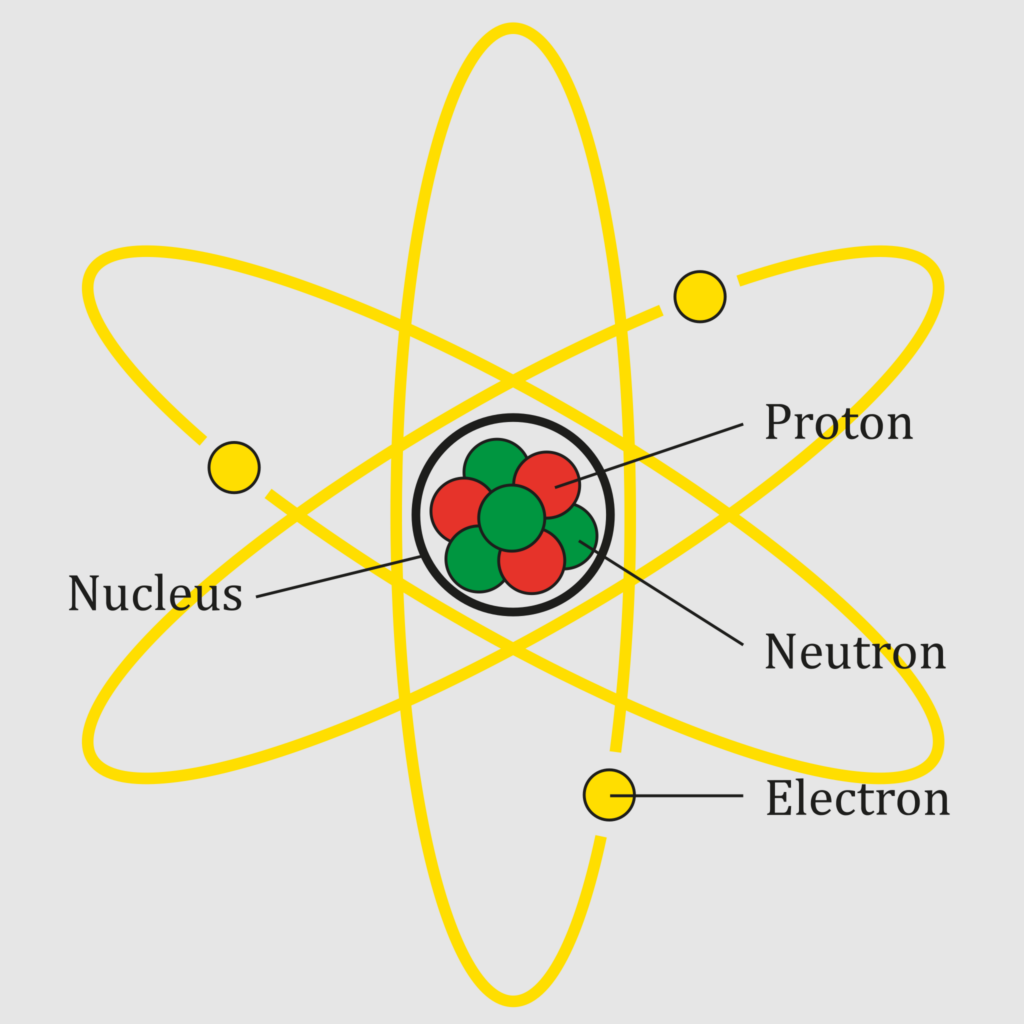
This file is licensed under the Creative Commons Attribution-Share Alike 4.0 International license.
Nuclear physics, on the other hand, is the study of the structure and behavior of atomic nuclei. The nucleus is the center of the atom, and it is made up of protons and neutrons. Nuclear physics uses the principles of quantum mechanics and special relativity to describe the behavior of the protons and neutrons in a nucleus and the interactions between nuclei.
Both atomic and nuclear physics have important applications in fields such as medicine, energy production, and technology. For example, nuclear medicine uses radioactive isotopes to diagnose and treat disease, and nuclear power plants use the energy produced by nuclear reactions to generate electricity.
Continue the lesson
This section is available to learners with course access. Continue learning with Knowness to unlock the full explanation, examples, revision tools, and progress tracking.
The remaining lesson content includes further guided explanation, important learning points, and supporting interactive material designed to help you understand and revise this topic.
Unlock this topic to view the full activity, worked examples, common mistakes, and additional revision support.
More content available
Knowness lessons are structured to build understanding step by step. Create an account or upgrade your access to continue from this point.
This preview does not include the hidden lesson text, answers, explanations, or embedded interactions.
Continue learning with Knowness
Sign up to access the full lesson, predicted grades, revision tools, progress tracking, and more.
Create a free account