

General
Physics
The Electromagnetic Spectrum
The electromagnetic spectrum is the range of all types of electromagnetic radiation. It includes radio waves, microwaves, infrared radiation, visible light, ultraviolet radiation, X-rays, and gamma rays. It is a fundamental concept in physics and is essential for understanding the properties and behavior of light and other types of electromagnetic waves.
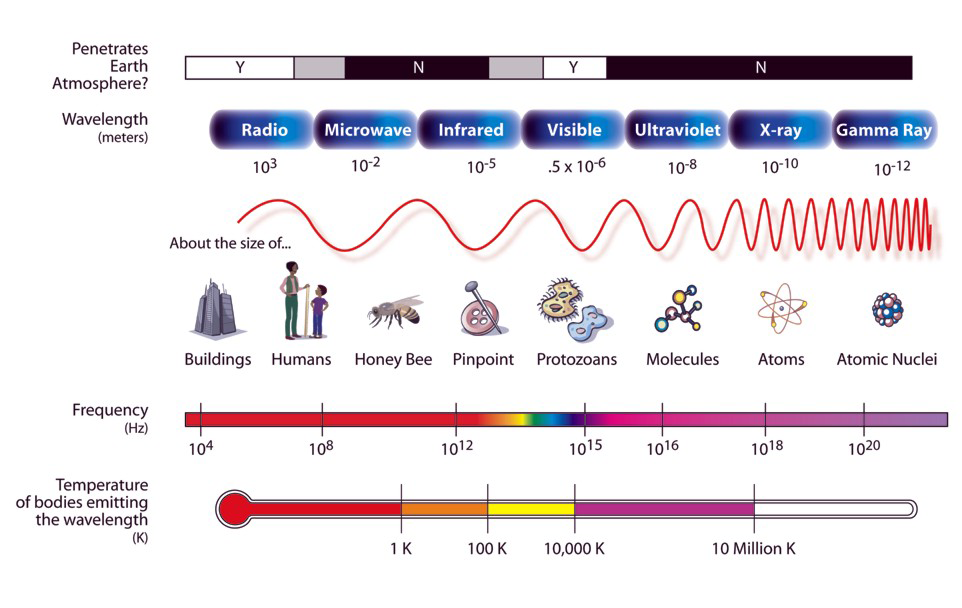
The different types of electromagnetic radiation that make up the spectrum are characterized by their frequency and wavelength. Radio waves have the longest wavelength and the lowest frequency, while gamma rays have the shortest wavelength and the highest frequency. This means that radio waves have the least energy and gamma rays have the most energy.
Each type of electromagnetic radiation has its own unique properties and characteristics, and they all play an important role in our daily lives. Radio waves are used for communication, microwaves are used for cooking food, infrared radiation is used in heat lamps and thermal imaging, visible light allows us to see, ultraviolet radiation causes sunburns, X-rays are used in medicine, and gamma rays are used in cancer treatment.
It's important to note that the electromagnetic spectrum is continuous, meaning that there is no clear boundary between the different types of radiation. Instead, they blend smoothly into one another.
In addition, the electromagnetic spectrum is also affected by the nature of the medium it is traveling through. For example, radio waves can pass through walls, while visible light is absorbed by walls.
Continue the lesson
This section is available to learners with course access. Continue learning with Knowness to unlock the full explanation, examples, revision tools, and progress tracking.
The remaining lesson content includes further guided explanation, important learning points, and supporting interactive material designed to help you understand and revise this topic.
Unlock this topic to view the full activity, worked examples, common mistakes, and additional revision support.
More content available
Knowness lessons are structured to build understanding step by step. Create an account or upgrade your access to continue from this point.
This preview does not include the hidden lesson text, answers, explanations, or embedded interactions.
Continue learning with Knowness
Sign up to access the full lesson, predicted grades, revision tools, progress tracking, and more.
Create a free account