Human activities are having profound effects on the health and sustainabilityThe principle of meeting present needs without preventing future generations from meeting their own needs. of salt marshes and swamps predominantly through interfering with the natural feedback loops.
Coastal development, in the form of draining and filling in wetlands for agriculture or construction efforts can eliminate vegetation cover and sediment accumulationChange in a physical quantity over time, whether that be an increase, decrease, or no change at all..
The Threats to Swamps and Salt Marshes
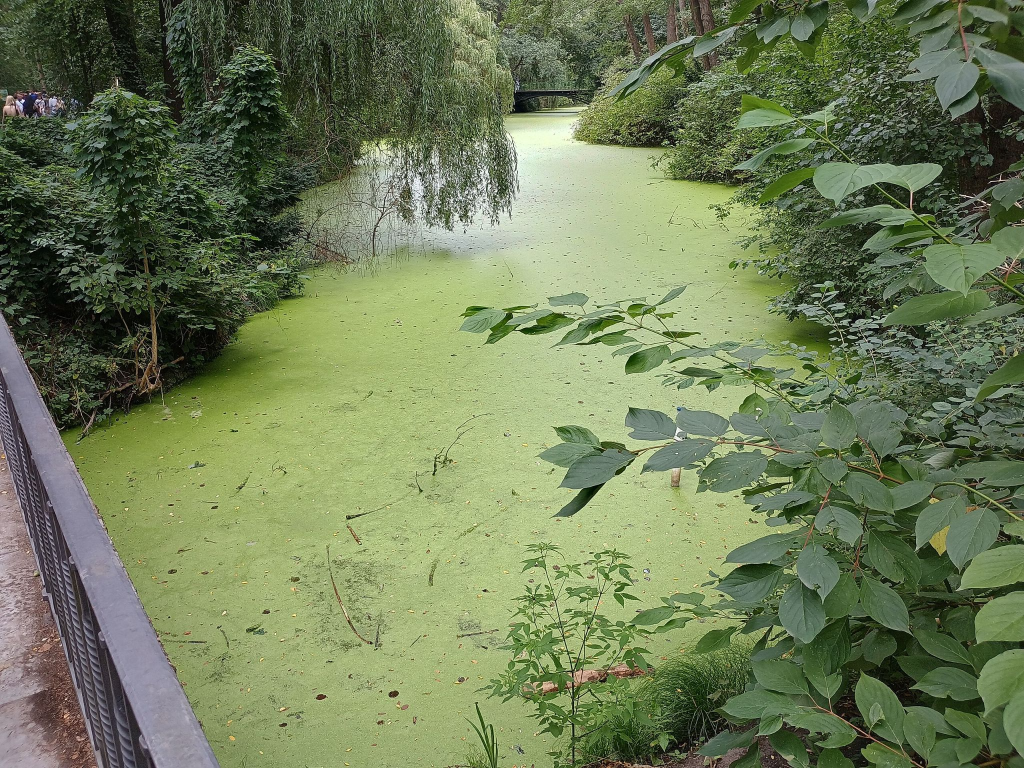
Swamps and salt marshes are some of the most important ecosystems on Earth, but they’re under threat from human activity. For example eutrophication, which occurs when fertilisers used in farming wash into rivers, lakes and seas, carrying excessive amounts of nitrogen and phosphorus. These extra nutrients cause the formation of huge algal blooms (shown in figure 7) that use up oxygen in the water, conversely taking oxygen away from plants and animals, therefore leading to their death.
Figure 7. A body of water in Berlin experiencing Eutrophication.
Ecosystems can see further harm from pollution and microplastics originating from factories. If this continues, the environment degradation can get to a situation where natural processes can no longer recover from the damages caused by pollution. This is known as the tipping point.
Analogy
×
To better understand the concept of a tipping point, balance on one leg and lean to one side, you will remain standing for a bit but eventually there is a point where you can no longer stand, and will start to fall. That exact point is referred to as the tipping point.
When people change the landAll natural resources used in production, including soil, water, forests, minerals, oil, and other resources from nature. from salt marsh or swamp to farmland or property, a chain reaction starts. There’s less vegetation cover, wildlife habitats, and biodiversity, which can intensify the impacts of floods, storm surges, and heavy rainfall events, by removing a natural barrier that can absorb the energy from water. This can result in more soil erosionThe process by which rocks and soil are worn away, which contributes to the geological incorporation of isotopes like strontium and lead. and transportation of pollutants.
Case Study
×
Saving Blackwater Estuary, Essex
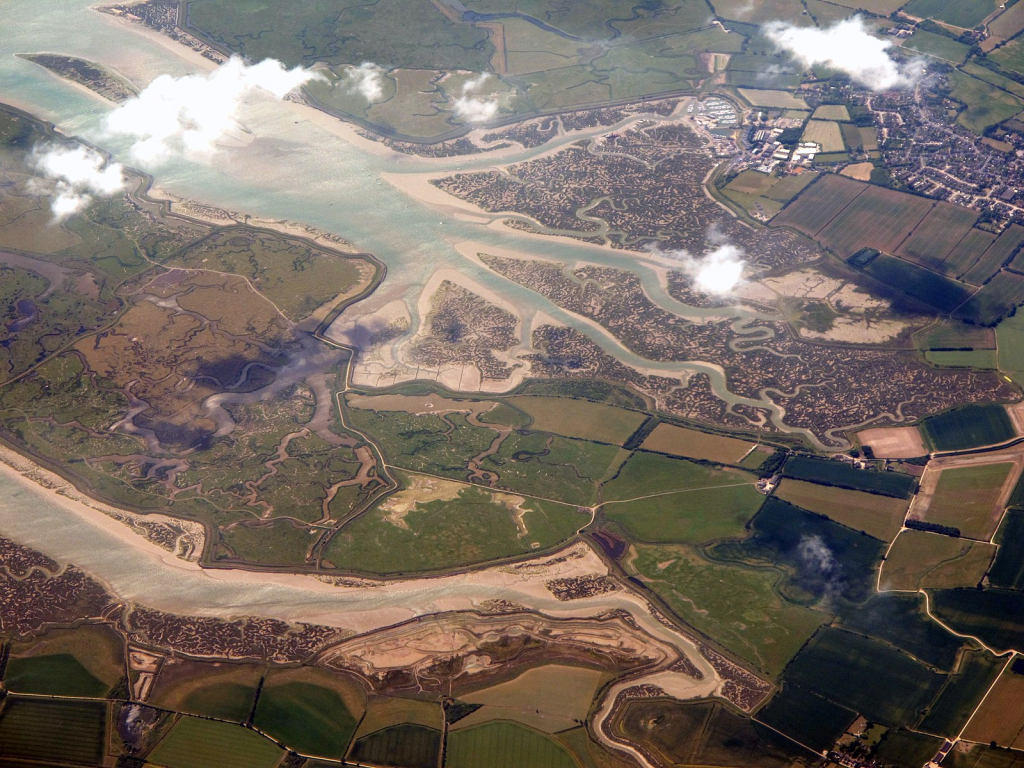
One place where people are fighting back is the Blackwater Estuary on the Essex coast. This area has amazing salt marshes, mudflats, and wetlands that act as carbon sinks, storm shields, and homes for birds like brent geese, redshanks, and avocets. But human activities, like building sea walls, farming, and land reclamation, have caused huge damage over the past 100 years.
Figure 8. Blackwater Estuary.
To fix this, conservationists launched a project called managed realignment. In 2002, at Abbotts Hall Farm, they broke sea defences on purposeThe reason for writing (to inform, persuade, describe, etc.)., letting the tide flood 80 hectares of farmland. Nature quickly bounced back, salt-tolerant plants like glasswort and sea aster returned, mudflats reformed, and birds and fish made the area their home again.
Another methodHow a writer presents perspective or viewpoint through language/structure., called sediment recharge, involves spreading dredged-up material onto sinking marshes. This has helped areas like Tollesbury and Northey Island resist sea-level rise and stay strong against storms. Plants like cordgrass (spartina) help trap sediment and build new land naturally.
What’s Next?
Groups like the Essex Wildlife Trust, the RSPB, and the Environment Agency are working hard to monitor the estuary’s health, manage pollution, and teach the public why these places matter. But challenges remain: sea levels are still rising fast, and sometimes farming and conservationThe professional care, preservation, and restoration of archaeological materials and sites, often requiring scientific expertise. goals clash. Plus, finding enough money for long-term protection isn't always easy.
Still, Blackwater shows us that with the right action, we can give these vital ecosystems a second chance.
Continue the lesson
This section is available to learners with course access. Continue learning with Knowness to unlock the full explanation, examples, revision tools, and progress tracking.
The remaining lesson content includes further guided explanation, important learning points, and supporting interactive material designed to help you understand and revise this topic.
Learning activity
Unlock this topic to view the full activity, worked examples, common mistakes, and additional revision support.
More content available
Knowness lessons are structured to build understanding step by step. Create an account or upgrade your access to continue from this point.
This preview does not include the hidden lesson text, answers, explanations, or embedded interactions.
Continue learning with Knowness
Sign up to access the full lesson, predicted grades, revision tools, progress tracking, and more.