

General
Physics
Reflection and Refraction
Reflection and refraction are two important phenomena that describe how light behaves when it interacts with different surfaces and materials.
Reflection is the process by which light is bounced back when it hits a surface. The angle at which the light hits the surface, known as the angle of incidence, determines the angle at which it is reflected, known as the angle of reflection. This principle is demonstrated by the law of reflection, which states that the angle of incidence is equal to the angle of reflection. Reflecting surfaces are called mirrors, and they can be used to create images and direct light in various applications.
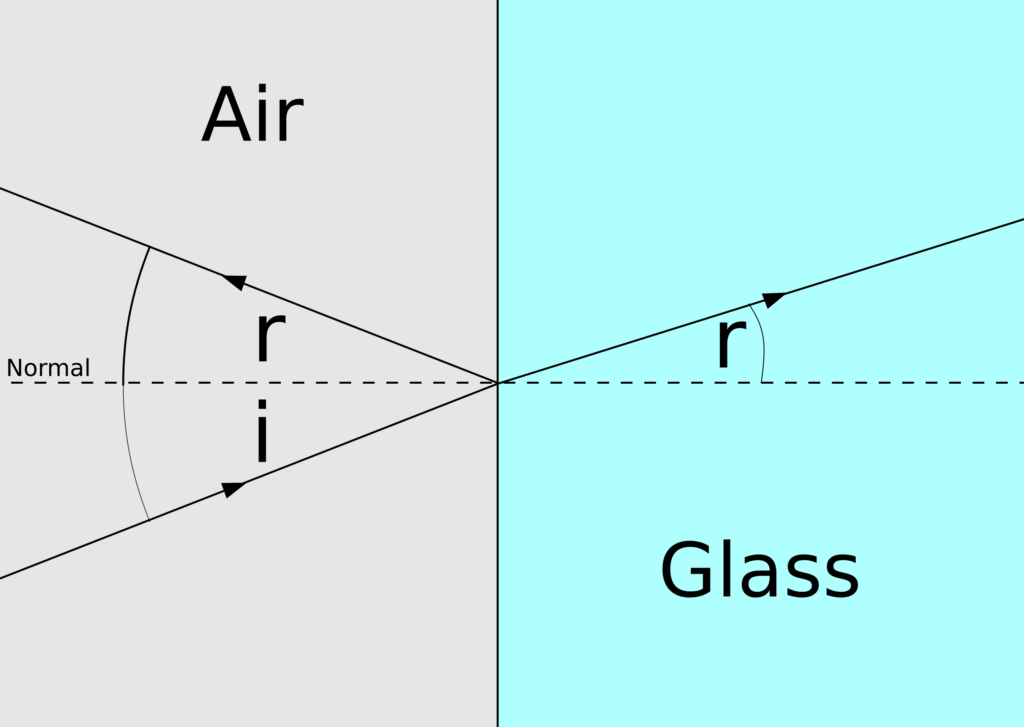
Refraction, on the other hand, is the bending of light when it passes through a medium with a different refractive index. The refractive index of a medium is a measure of how much it bends light. When light travels from one medium to another with a different refractive index, it changes direction. This is what causes the bending of light when it passes through a prism, and it is also what causes the distorted images seen through a curved glass surface.
Both reflection and refraction are important concepts in optics and have many practical applications in fields such as photography, telecommunications, and medicine.
Continue the lesson
This section is available to learners with course access. Continue learning with Knowness to unlock the full explanation, examples, revision tools, and progress tracking.
The remaining lesson content includes further guided explanation, important learning points, and supporting interactive material designed to help you understand and revise this topic.
Unlock this topic to view the full activity, worked examples, common mistakes, and additional revision support.
More content available
Knowness lessons are structured to build understanding step by step. Create an account or upgrade your access to continue from this point.
This preview does not include the hidden lesson text, answers, explanations, or embedded interactions.
Continue learning with Knowness
Sign up to access the full lesson, predicted grades, revision tools, progress tracking, and more.
Create a free account