

General
Astronomy
-
1. Introduction to Astronomy
-
Introduction to Astronomy
-
History of Astronomy
-
Fundamentals of Astronomy
-
The Solar System
-
The Moon and Planetary Science
-
Stars and Stellar Evolution
-
Galaxies and the Universe
-
Cosmology and the Early Universe
-
Observing the Sky
-
Future of Astronomy
-
Careers in Astronomy
Legacy Course
Dwarf Planets and Small Solar System Bodies
Dwarf planets are celestial objects that meet the definition of a planet, but are not considered full-fledged planets due to their size or location. There are currently five recognized dwarf planets in the Solar System: Pluto, Eris, Ceres, Haumea, and Makemake.
Pluto was originally classified as the ninth planet in the Solar System, but was later reclassified as a dwarf planet due to its small size and unique orbit. It is located in the Kuiper Belt, a region beyond Neptune that is home to many small, icy bodies.

Eris is a dwarf planet located in the Kuiper Belt that is slightly larger than Pluto. It was discovered in 2005 and was a key factor in the reclassification of Pluto as a dwarf planet.

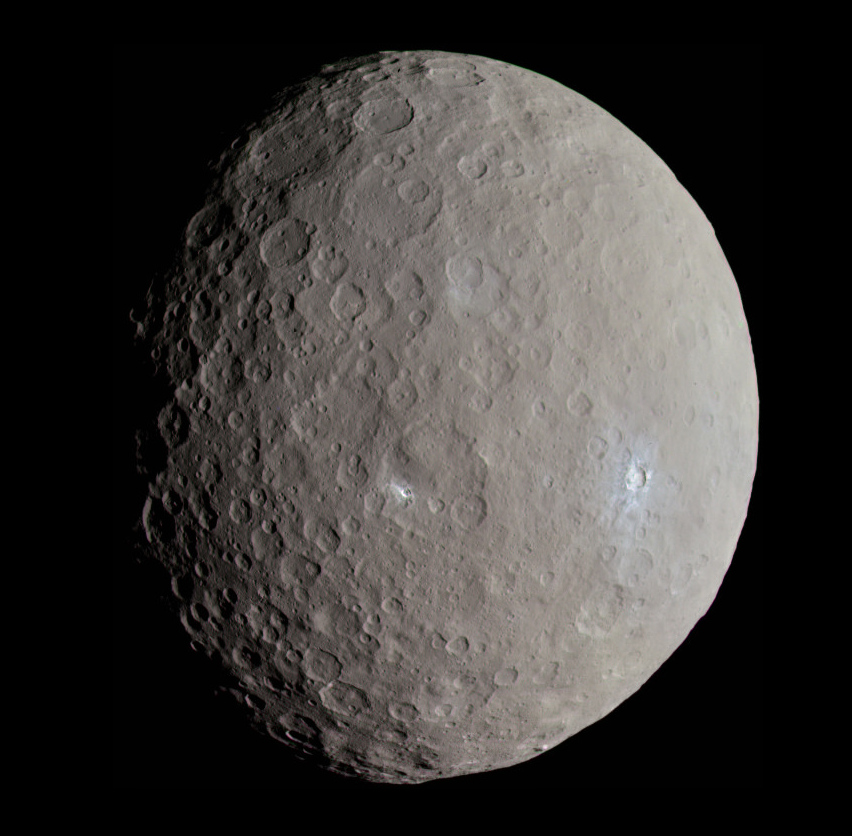
This file is licensed under the Creative Commons Attribution 4.0 International license.
Ceres is the largest object in the asteroid belt, a region between Mars and Jupiter that is home to many small, rocky bodies. Ceres was originally classified as an asteroid, but was later reclassified as a dwarf planet due to its size and shape.
Haumea and Makemake are two additional dwarf planets located in the Kuiper Belt. Both are relatively small and were discovered in the early 2000s.
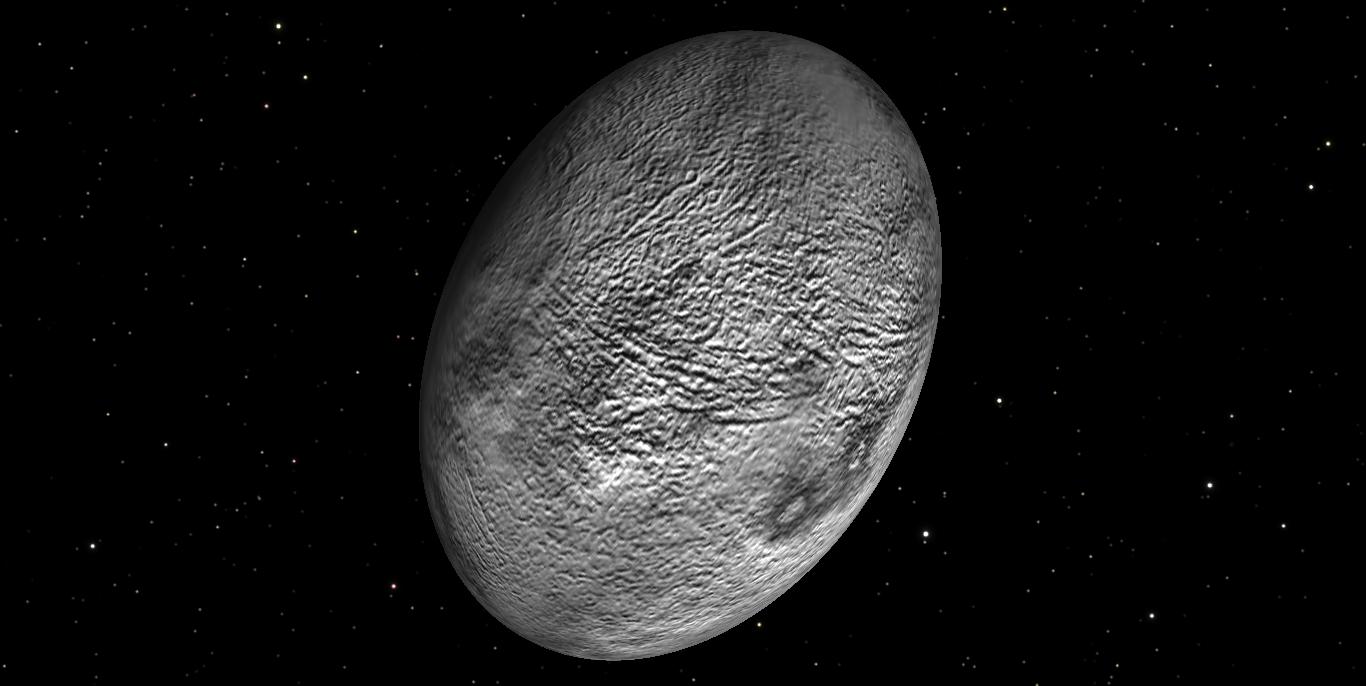
Haumea. This file is licensed under the Creative Commons Attribution-Share Alike 3.0 Unported license.
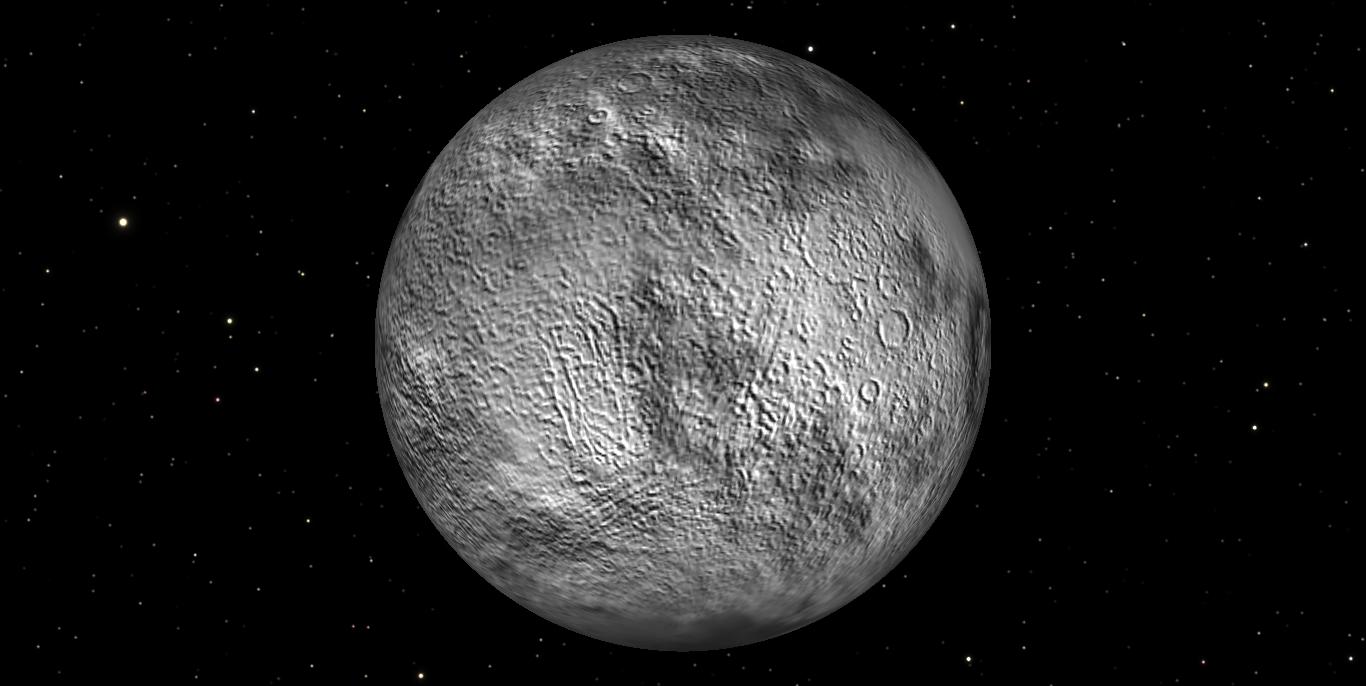
Makemake. This file is licensed under the Creative Commons Attribution-Share Alike 3.0 Unported license.
Small Solar System bodies include asteroids and comets. Asteroids are small, rocky bodies that orbit the Sun and are found mainly in the asteroid belt between Mars and Jupiter. Many asteroids are thought to be leftover debris from the formation of the Solar System.
Comets are small, icy bodies that orbit the Sun and are thought to be made up of water, methane, and other volatile materials. When a comet gets close to the Sun, the heat from the Sun causes the volatile materials to vaporize, creating a bright coma (a glowing, gaseous envelope) around the comet and a long, glowing tail that points away from the Sun.
Continue the lesson
This section is available to learners with course access. Continue learning with Knowness to unlock the full explanation, examples, revision tools, and progress tracking.
The remaining lesson content includes further guided explanation, important learning points, and supporting interactive material designed to help you understand and revise this topic.
Unlock this topic to view the full activity, worked examples, common mistakes, and additional revision support.
More content available
Knowness lessons are structured to build understanding step by step. Create an account or upgrade your access to continue from this point.
This preview does not include the hidden lesson text, answers, explanations, or embedded interactions.
Continue learning with Knowness
Sign up to access the full lesson, predicted grades, revision tools, progress tracking, and more.
Create a free account