

1.2.2 Demand
In this lesson, we will explore the meaning of demand, how to draw and interpret a demand curve, analyse shifts and movements along the curve, discuss price elasticity of demand, and evaluate its importance for consumersIndividuals or households that buy and use goods and services to satisfy their needs and wants. and producersBusinesses or organisations that combine resources to produce goods and services for consumers..
Demand
Demand refers to the desire, willingness, and ability of consumers to purchase goodsPhysical, tangible products that can be touched and stored. and servicesIntangible products that provide a skill, experience, or benefit rather than a physical item. at various price levels during a specific period. It represents the quantity of a product or service that consumers are willing and able to buy at a given price, holding other factors constant.
Drawing and Interpreting a Demand Curve
A demand curve is a graphical representation that shows the relationship between the price of a product and the quantity demanded by consumers. It slopes downward from left to right, indicating that as price increases, quantity demanded decreases, and vice versa, assuming other factors remain constant.
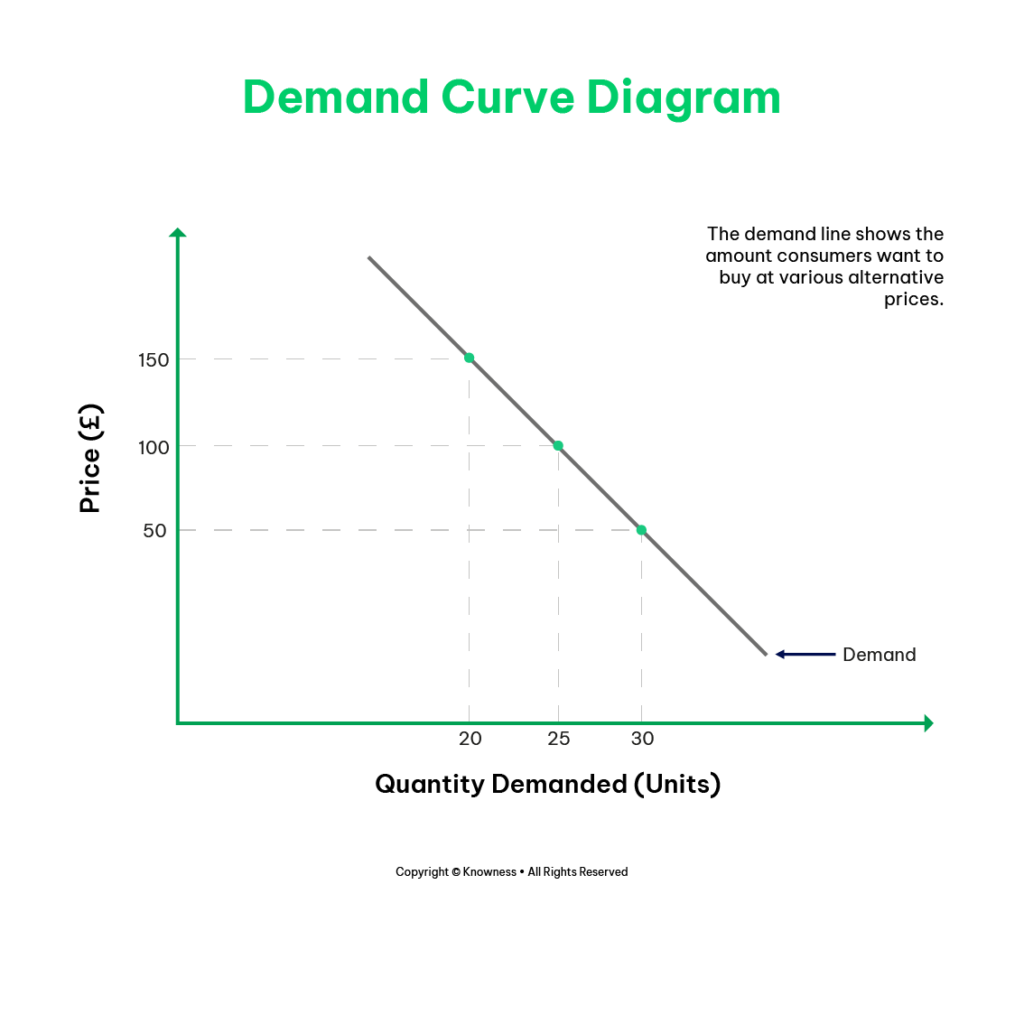
Individual demand represents the quantity of a product or service that an individual consumer is willing and able to buy at various price levels. Market demand, on the other hand, is the total quantity demanded by all consumers in the market at different prices.
Shifts of the Demand Curve
The demand curve can shift due to changes in factors other than price, known as determinants of demand. These determinants include consumer income, prices of related goods, consumer preferencesWhat customers want, value, and expect from products and services., population demographics, and more. A shift of the demand curve indicates a change in quantity demanded at all price levels.
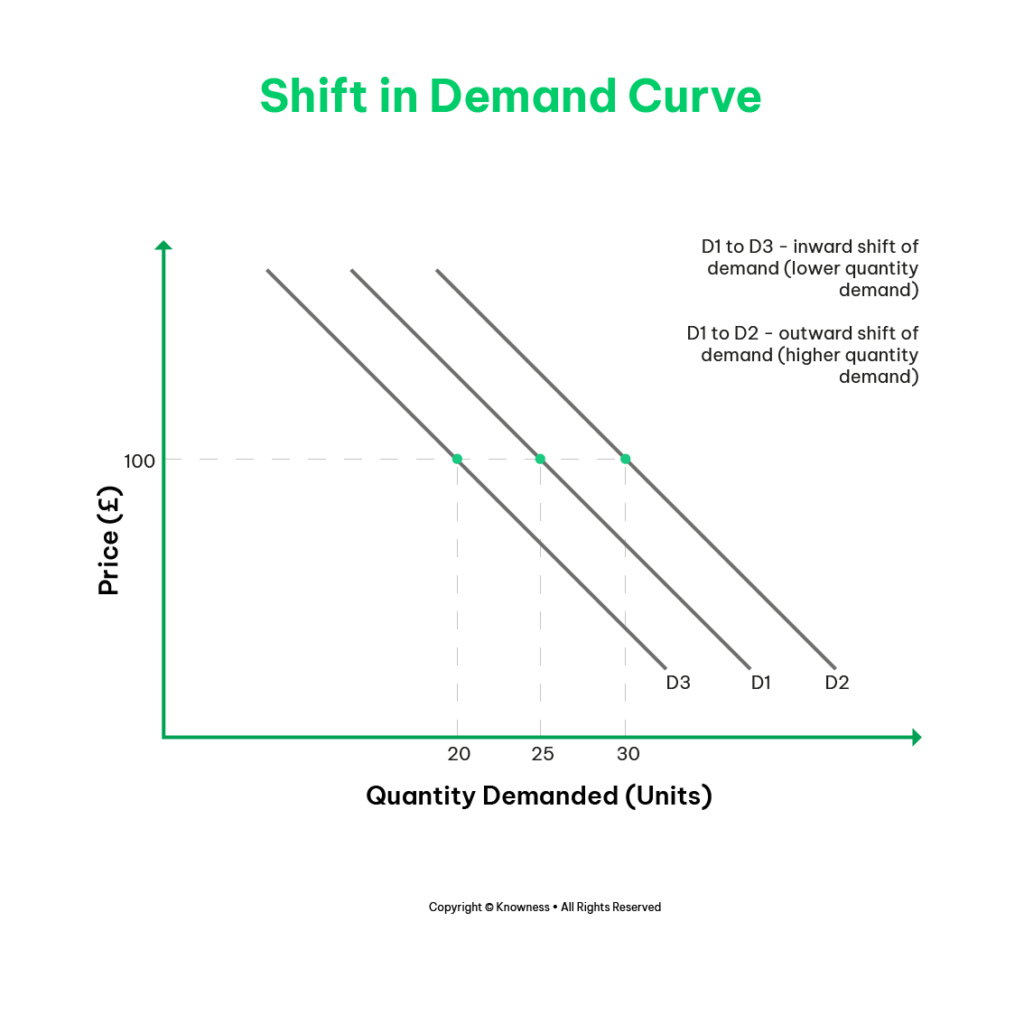
Changes in consumer income, prices of related goods (substitutes and complements), consumer tastes and preferences, population demographics, advertising and marketing, governmentThe public authority that provides services, collects taxes, sets laws and regulations, and helps manage the economy. policies, and external factors such as weather or cultural shifts can cause shifts in the demand curve.
Shifts in the demand curve have implications for both consumers and producers. If demand increases, consumers may face higher prices and potential product shortages. Producers may experience increased sales and profits. Conversely, if demand decreases, consumers may benefitThe gain or advantage received from making a particular economic decision. from lower prices, while producers may face decreased sales and potential losses.
Movements Along the Demand Curve
Movements along the demand curve occur in response to changes in the price of the product or service, assuming other factors remain constant. A change in price leads to a change in quantity demanded, resulting in a movement along the curve.
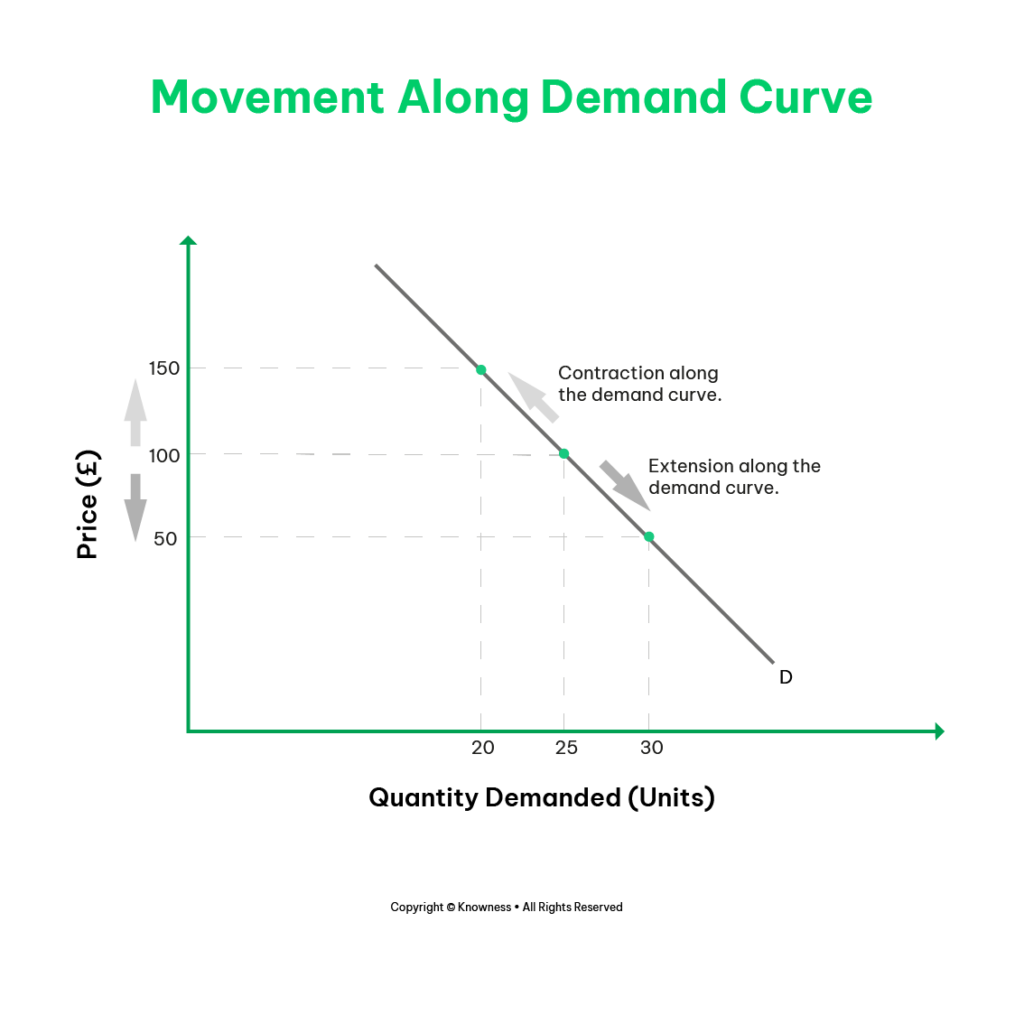
Unlike shifts in the demand curve that occur due to changes in external factors, movements along the demand curve result from changes in the price of the product itself. When the price of a product changes, consumers respond by adjusting the quantity demanded accordingly, leading to a movement along the demand curve.
A decrease in price leads to higher consumer demand, while an increase results in lower demand. On the other hand, producers respond to price changes by adjusting the quantity of the product they supply - an increase in price encourages higher supply, while a decrease prompts reduced supply to avoid losses. These movements along the demand curve eventually lead to a new market equilibrium, where the quantity demanded equals the quantity supplied, determining the prevailing market price and quantity.
Price Elasticity of Demand
Price elasticity of demand measures the responsiveness of quantity demanded to changes in price. It determines how sensitive consumers are to price fluctuations.
Elastic Demand: If a small change in price leads to a significant change in quantity demanded, demand is considered elastic. The demand curve for elastic goods or services is relatively flat.
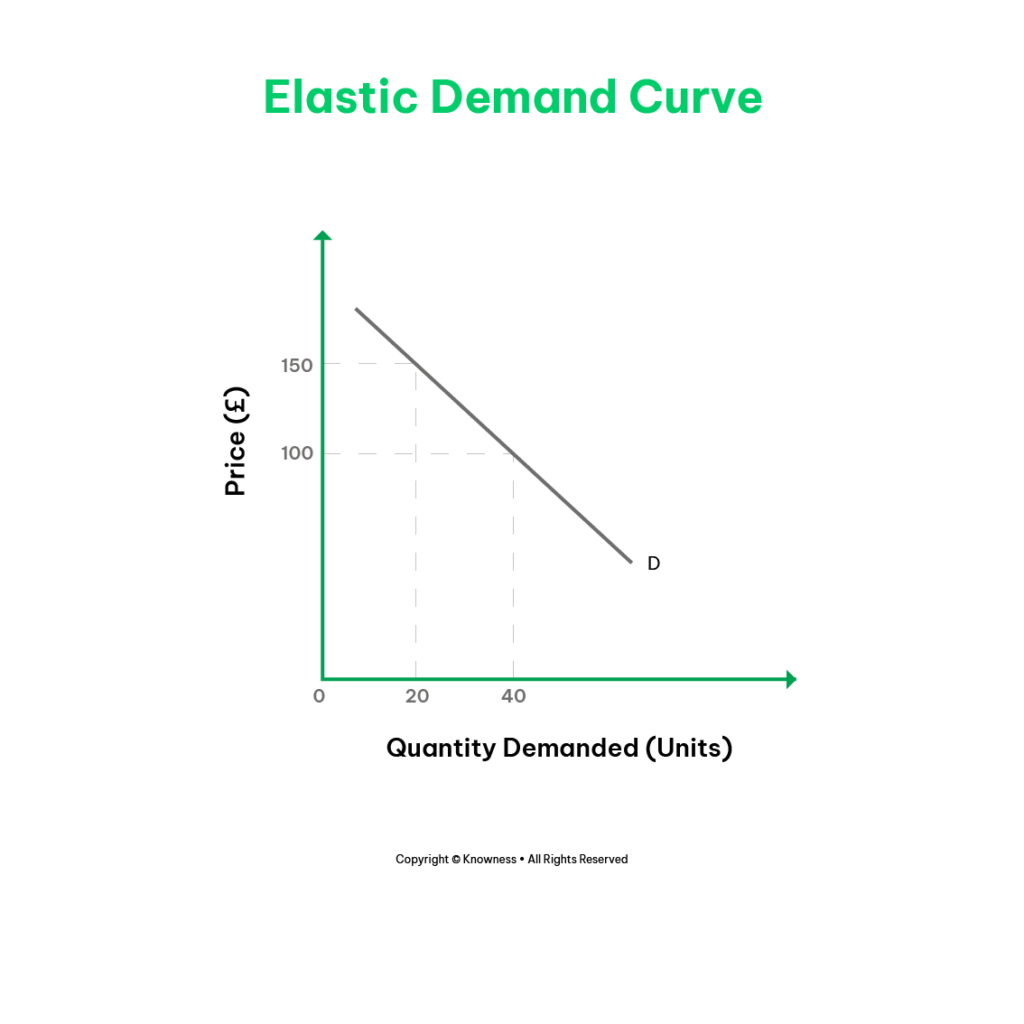
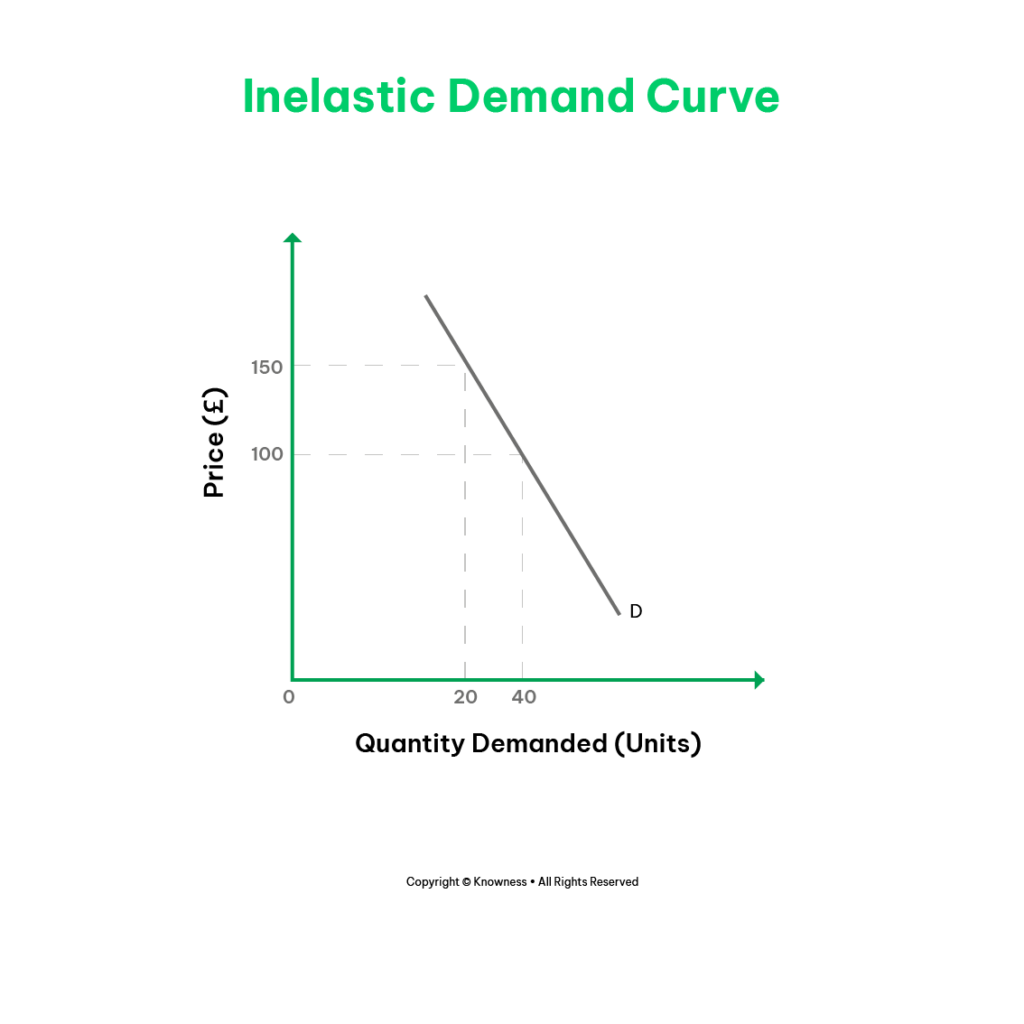
Inelastic Demand: If a change in price has little impact on quantity demanded, demand is considered inelastic. The demand curve for inelastic goods or services is relatively steep.
Importance of Price Elasticity of Demand for Consumers and Producers
Consumers: Price elasticity of demand is essential for consumers as it helps them make informed purchasing decisions. If demand is elastic, consumers can adjust their consumption patterns in response to price changes, potentially saving money. In contrast, inelastic demand may limit consumers' ability to reduce their consumption significantly, leading to higher costsThe sacrifices made when choosing a particular option, which may include money spent, time used, or resources consumed..
Producers: Price elasticity of demand is vital for producers to understand consumer responsiveness to price changes. It helps determine pricing strategies, production levels, and revenue projections. Elastic demand may require more competitive pricing and innovationThe process of creating new ideas, products, or methods. to attract customers, while inelastic demand may provide producers with greater pricing power and stability.
Conclusion
The demand curve represents the relationship between price and quantity demanded, while shifts and movements along the curve are influenced by various factors. Price elasticity of demand highlights consumer responsiveness to price changes and plays a significant role in consumer decision-making and producer strategies.